
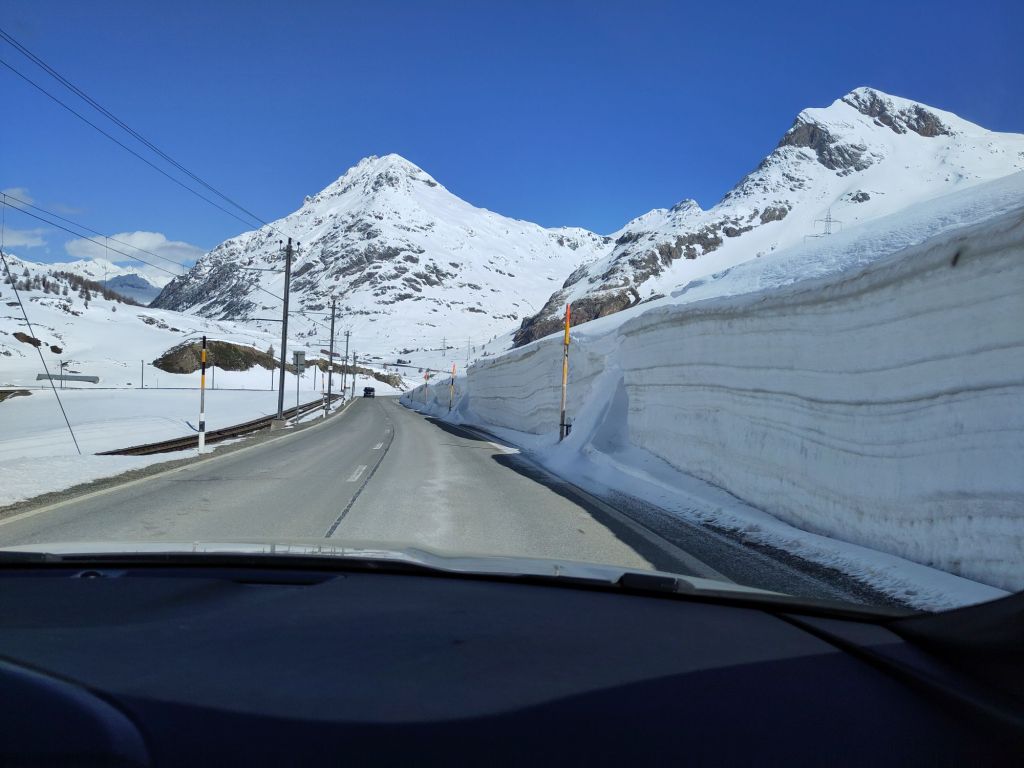
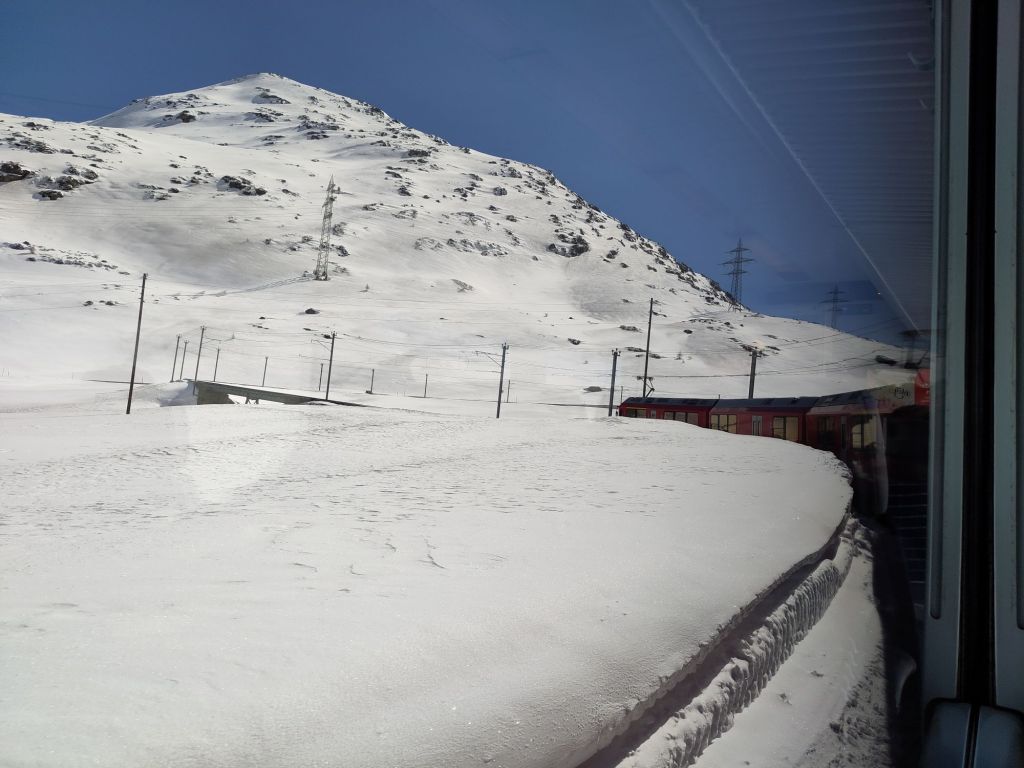
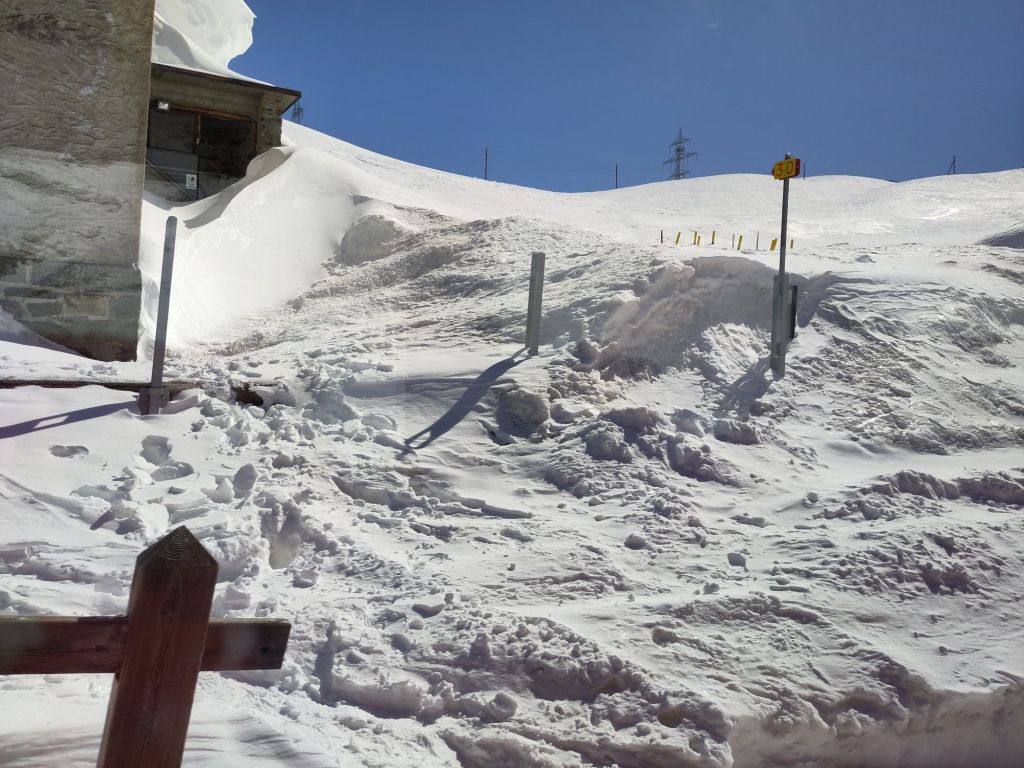
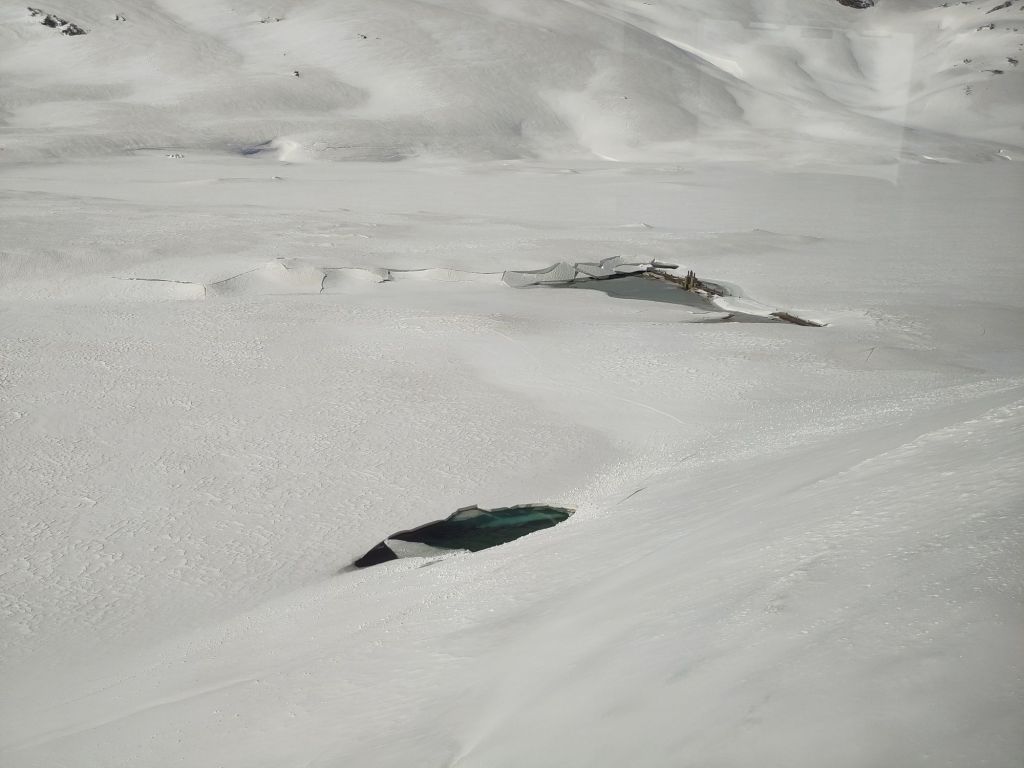
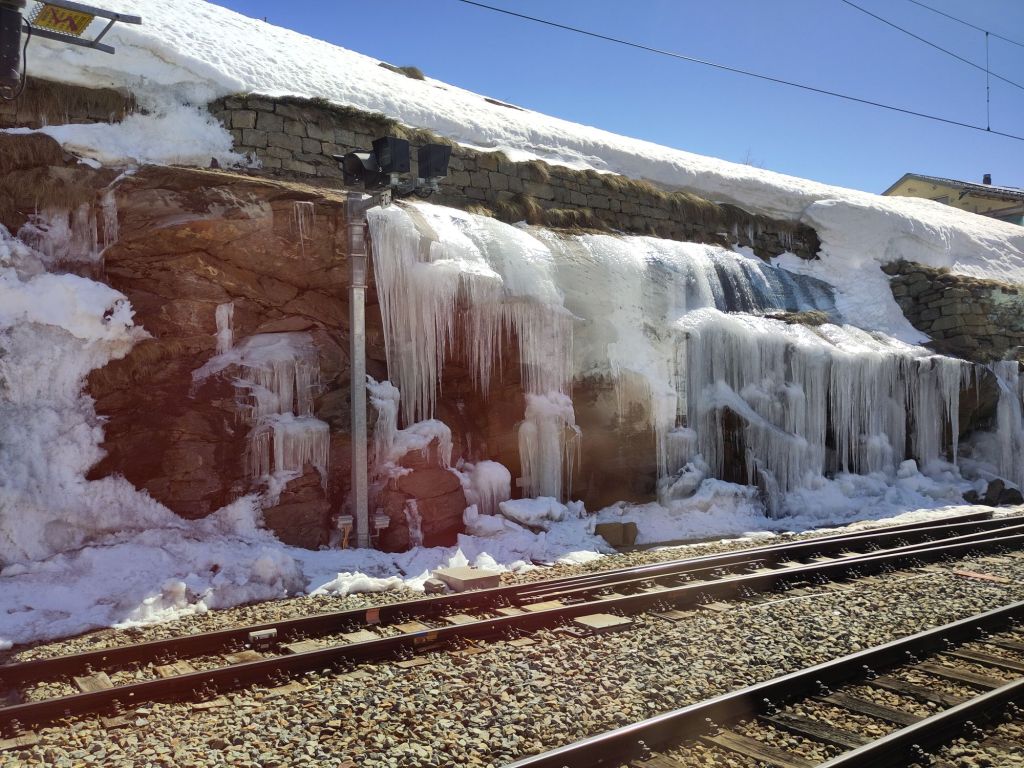
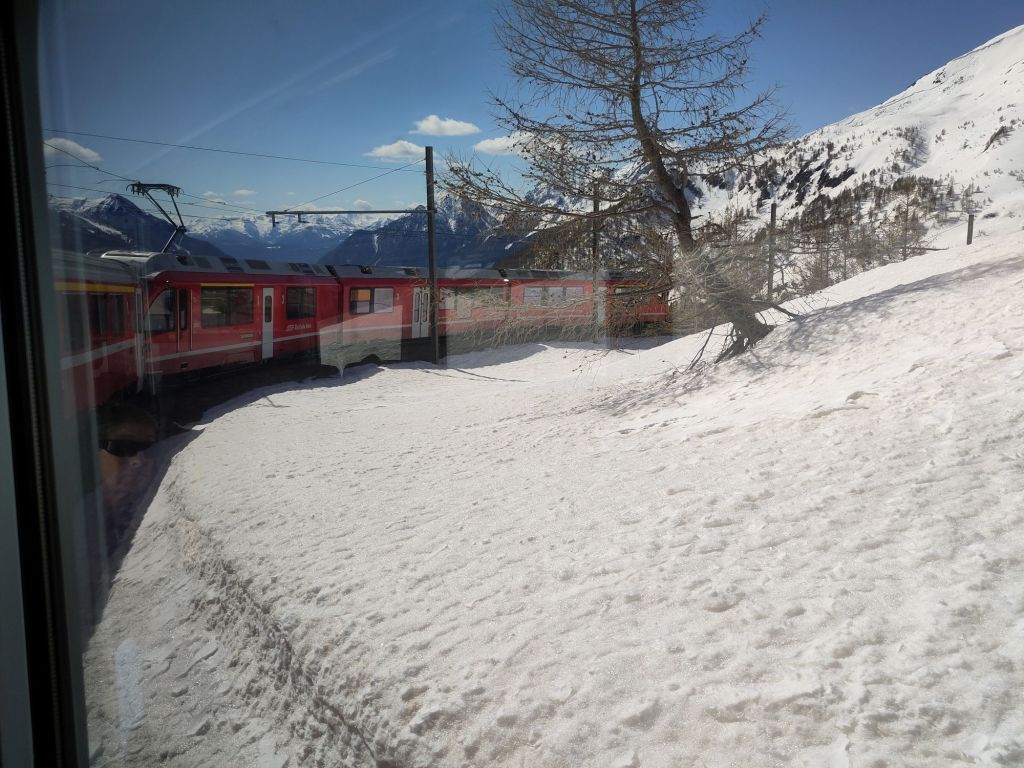
The start of my day was in the snow-bound Swiss mountain pass of Bernina, from which the train made its slow winding passage southwards down, round, across and through steep alpine hillsides towards sunnier climes.

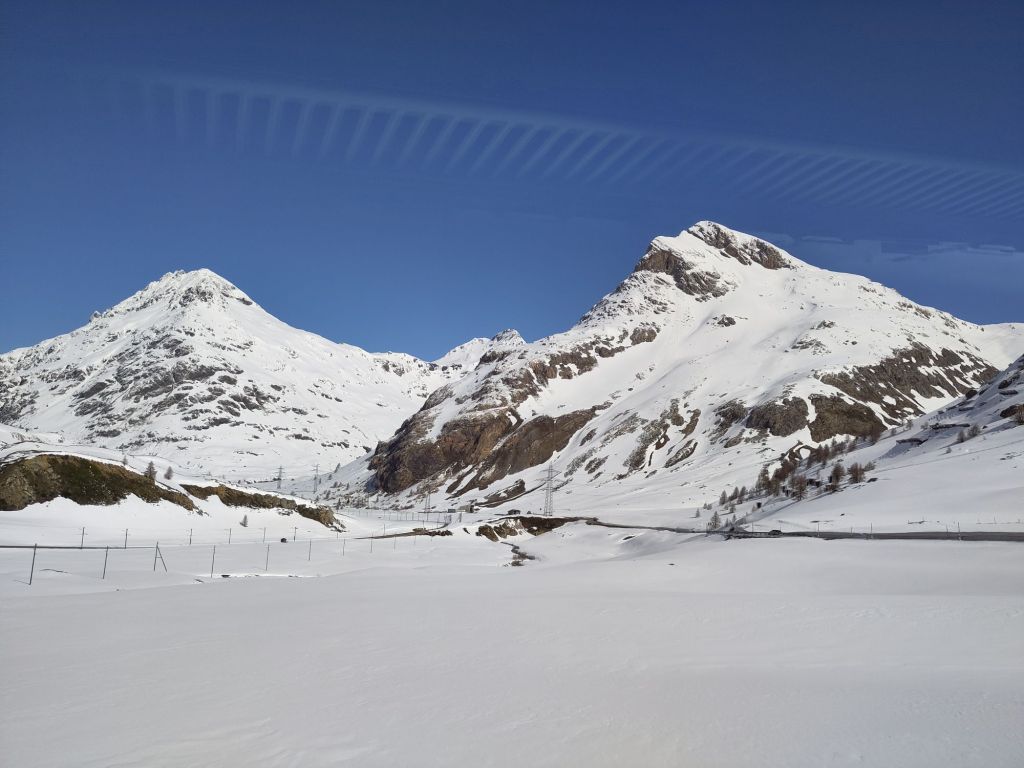
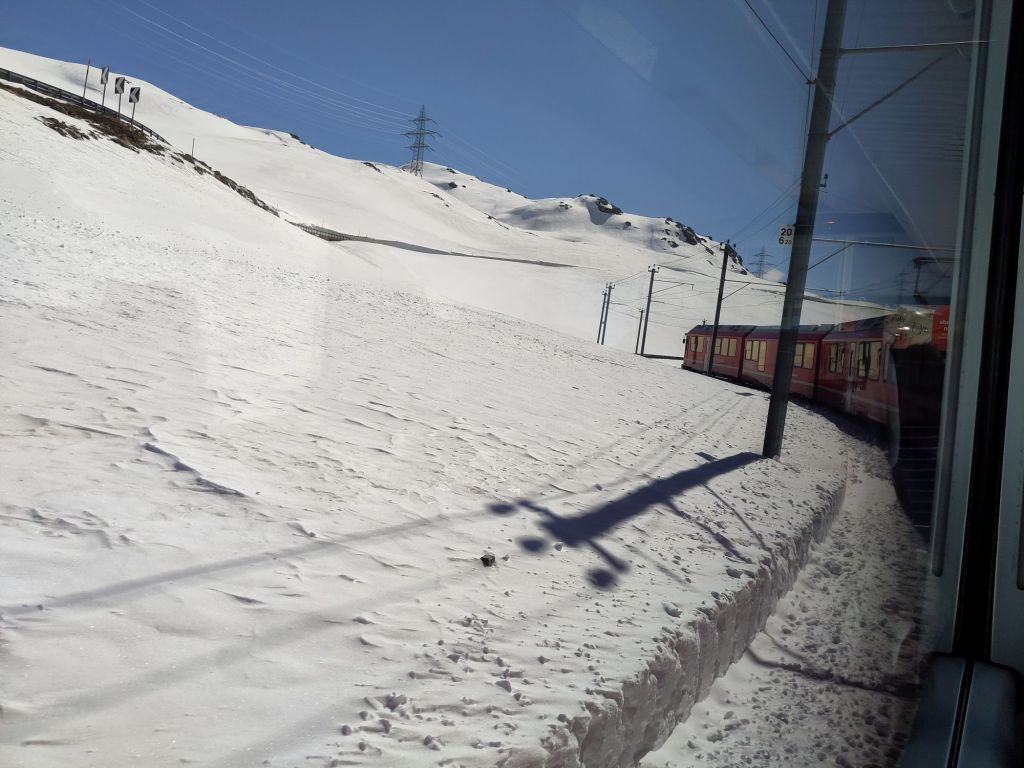
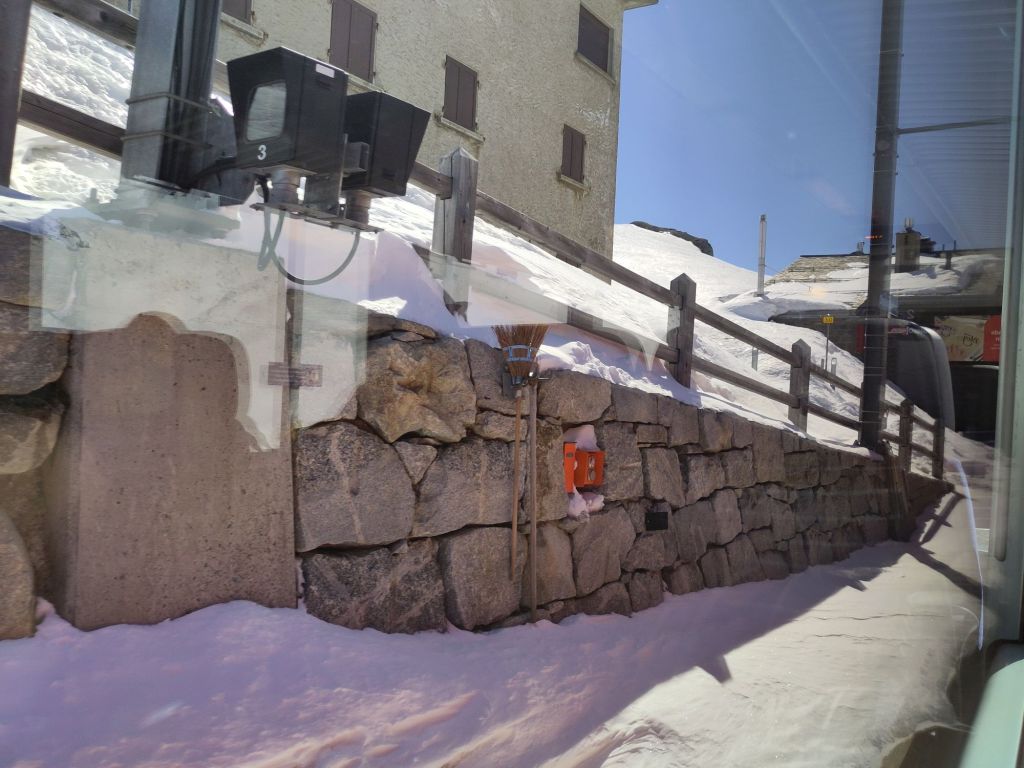
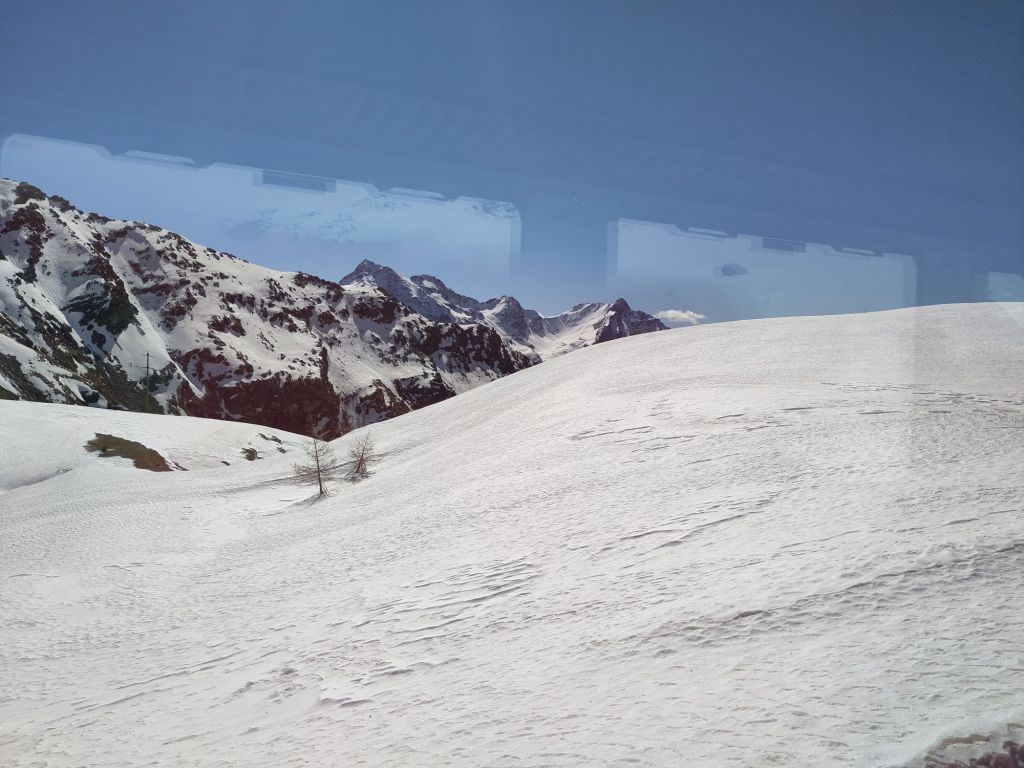
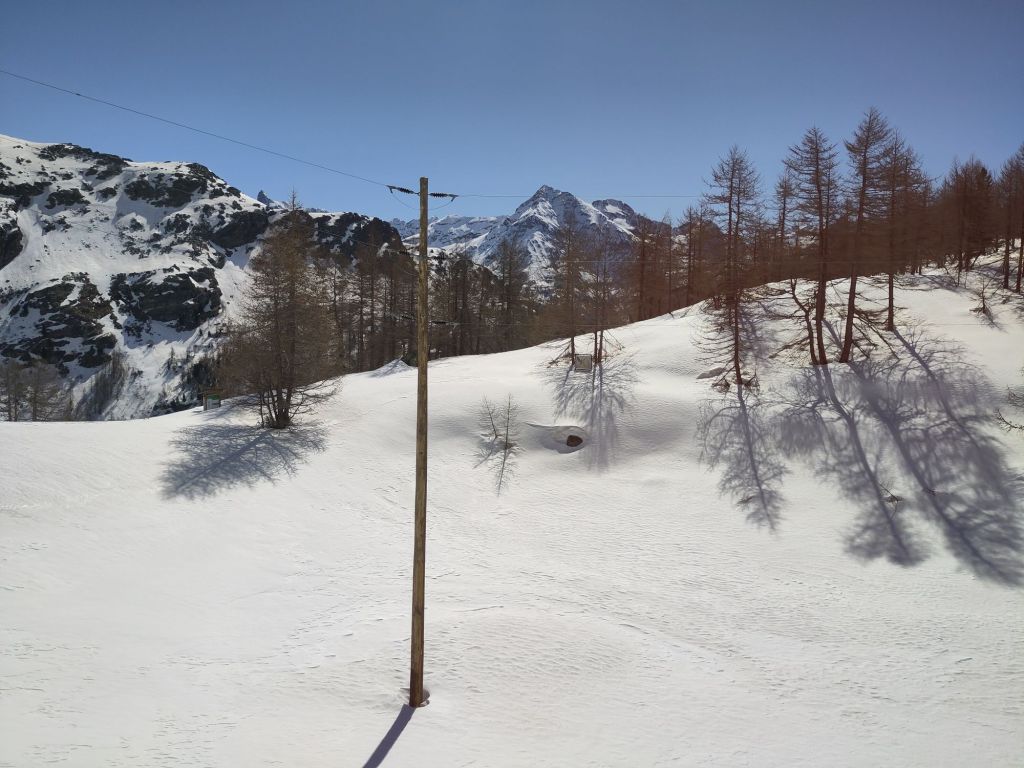
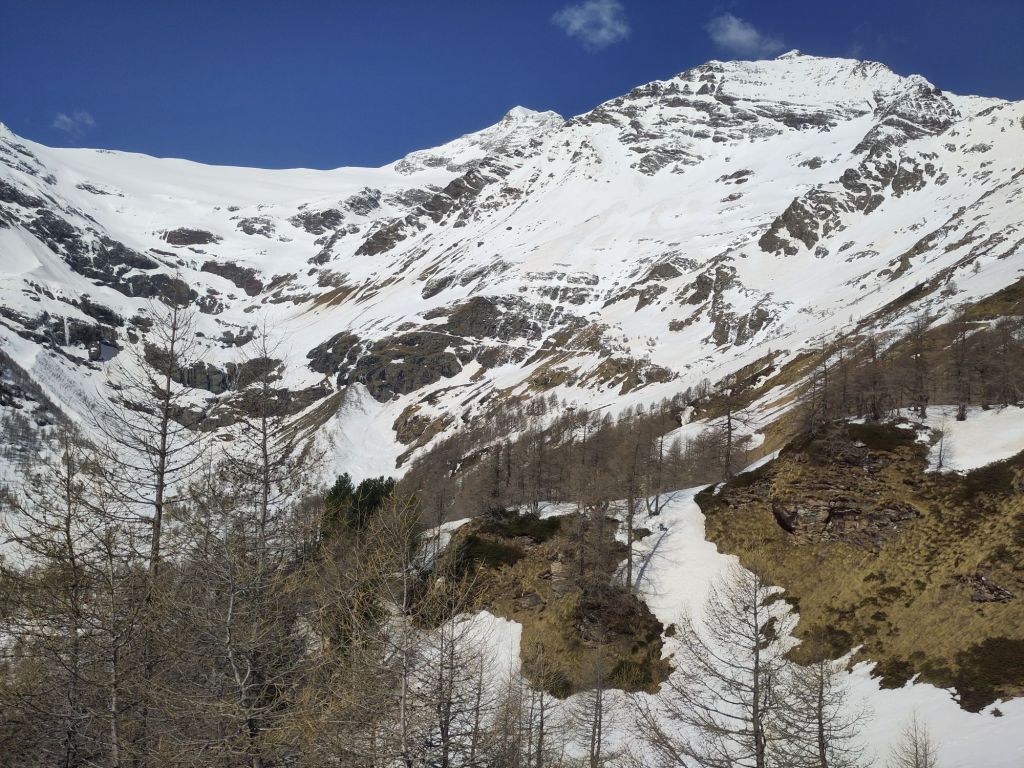
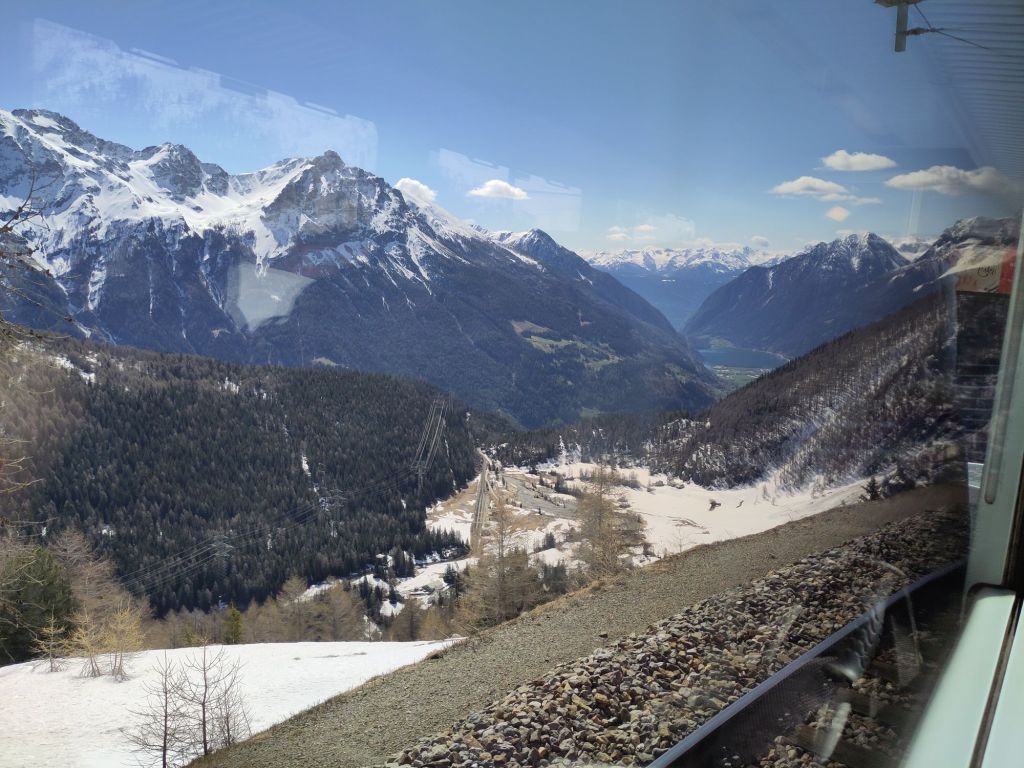
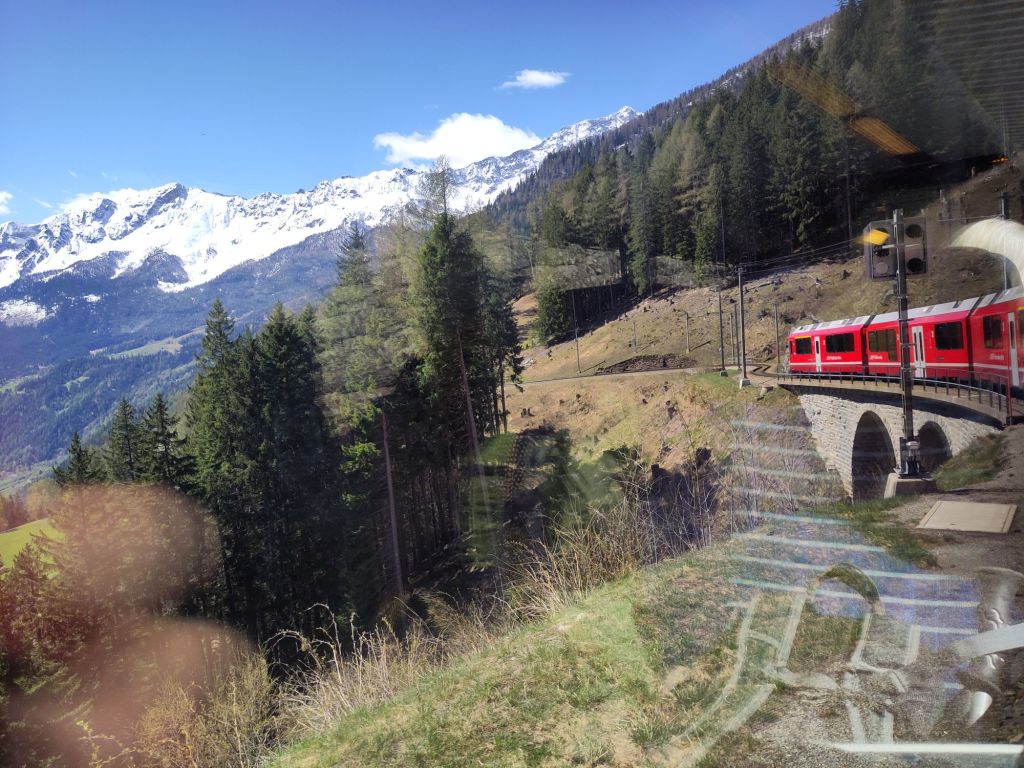
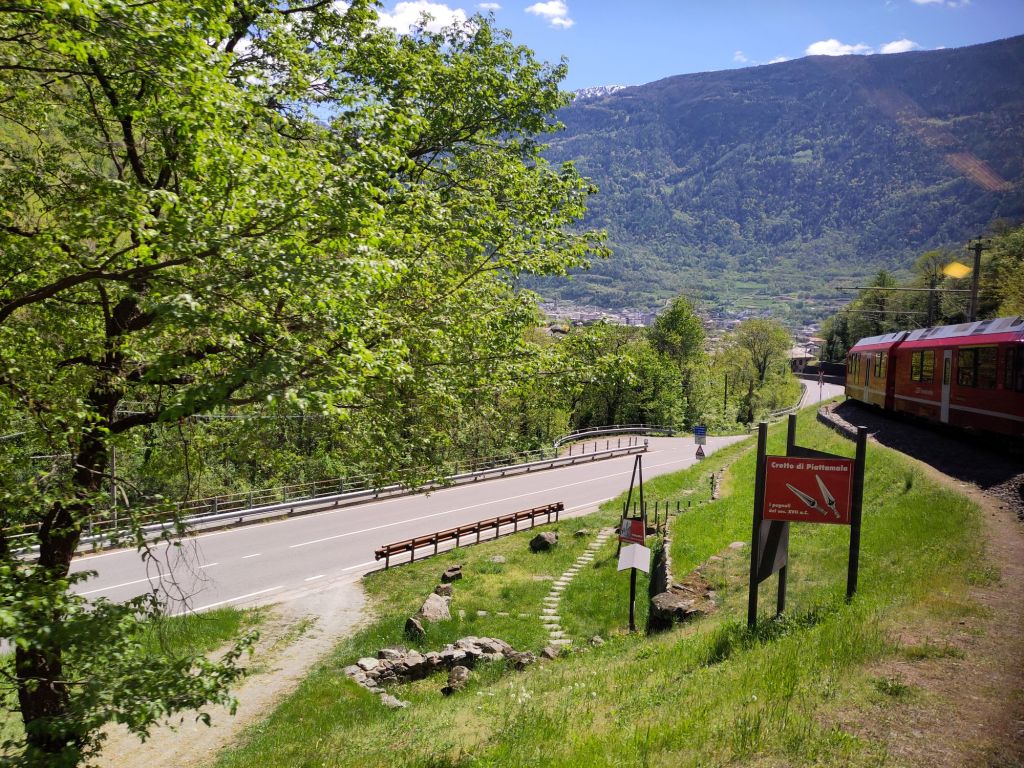
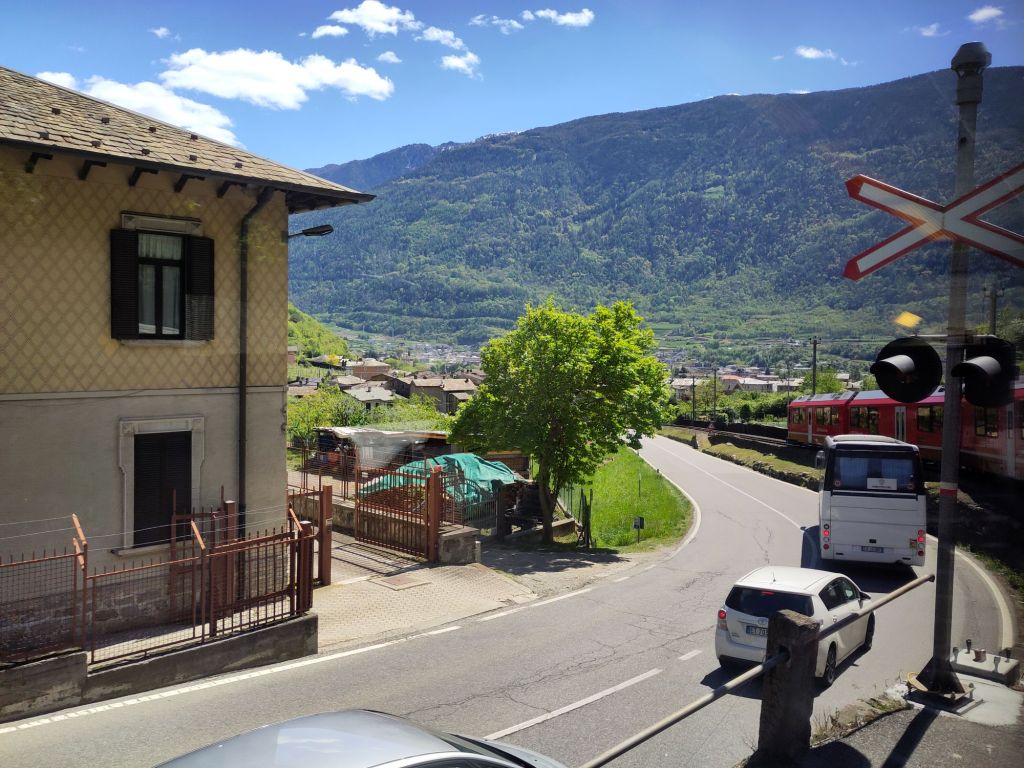


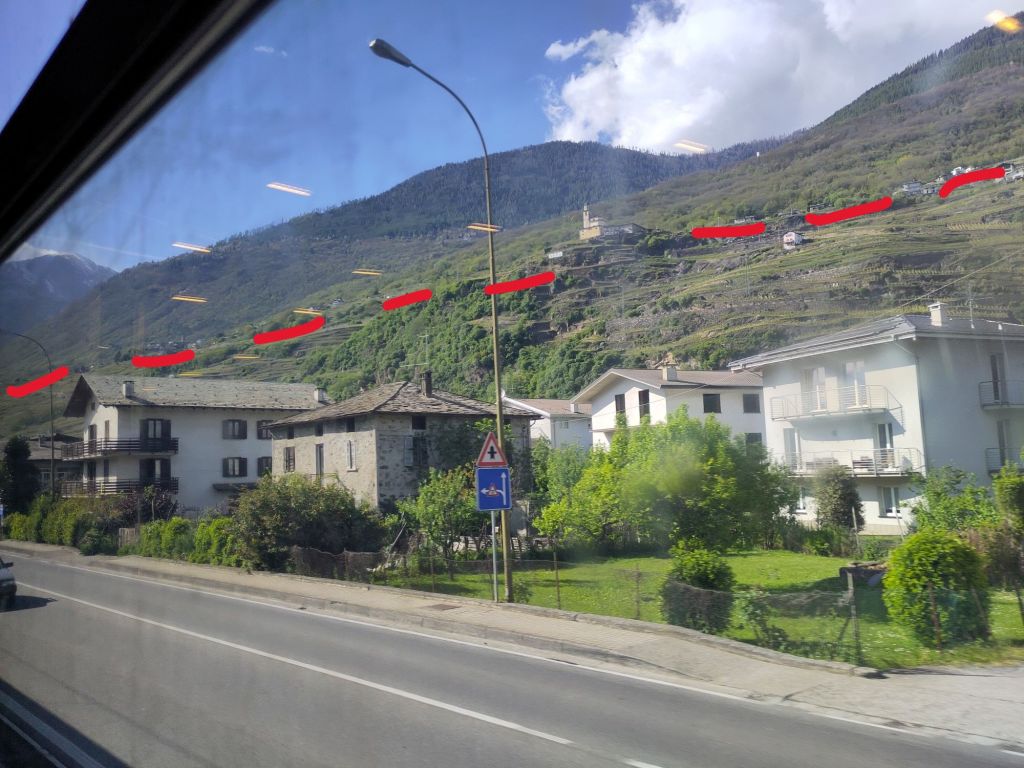
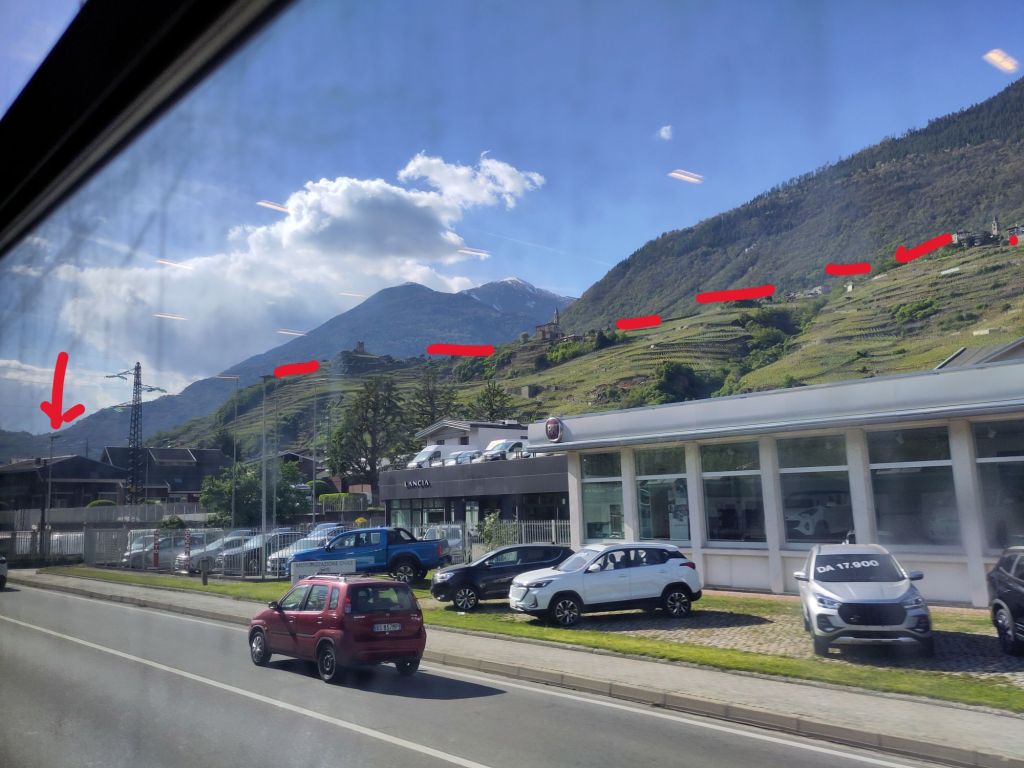
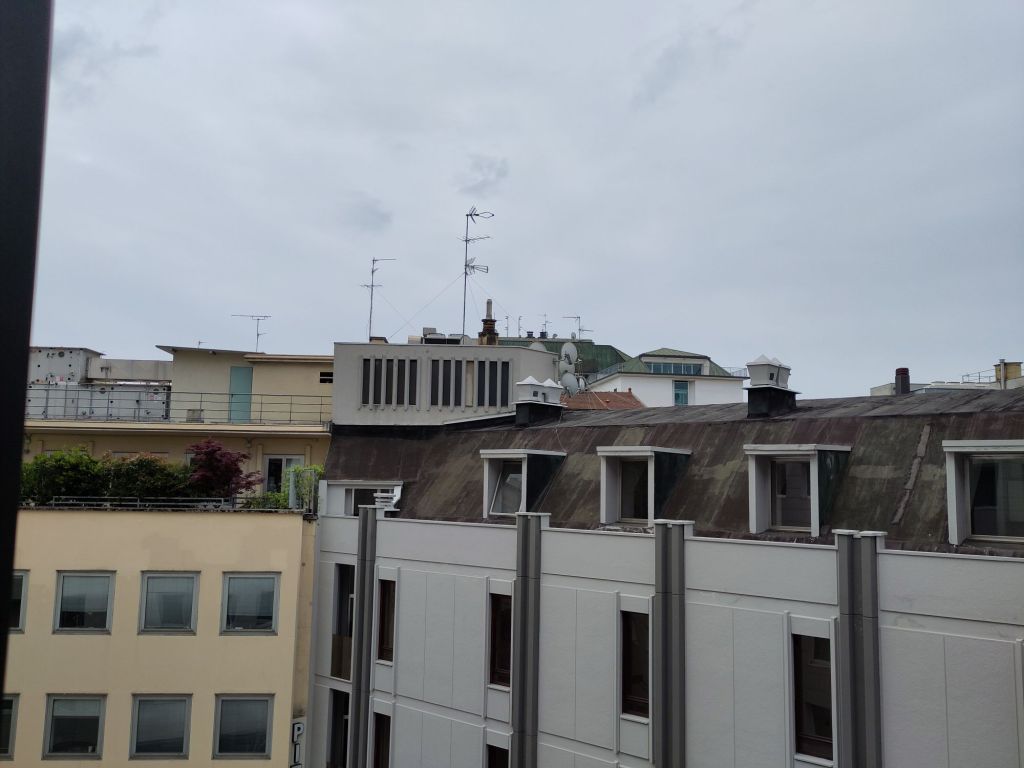
And if you look very carefully, above the building and behind the trees are the Swiss Alps from whence I came.
The rest of the train journey was pleasant, with moments of excitement travelling parallel to the tectonic boundary called the Linea Insubrica or Periadriatic Seam. The kindergarten version of a very complex story is that millions of years ago Italy was a peninsula attached to Africa before the Mediterranean Sea existed. In its place was a sea called the Tethys which separated the continental tectonic plate of Africa (with Italy) from that Europe. The African ‘plate’ rotated and pushed the promontory that was Africa up against Europe. This forced the rocks at the point of collision to move (over a few million years) several kilometres upwards and up to 50 kilometres sideways. This was called the Alpine Orogeny. The after-shock ripples extended north and west all the way beyond the Basin of Paris to Brighton and London, uplifting the South and North Downs and lowering the London Basin (see Chalk 1, Chalk 2, Chalk 3 and Chalk 4) as well as other ranges of hills and valleys.
Meanwhile, the rotation of Africa closed the Tethys ocean, but then when it continued to rotate, it pulled away from Europe, leaving Italy behind and in the process opened a new sea called the Mediterranean.
As usual it should be noted that the details are complicated. The important thing to note was that passing the Linea Insubrica (on my way to a totally boring overnight stop in Milano) I was so excited it was hard for me not to tell all my fellow passengers all about it. I wanted to tell them I am returning here for a few days on my way home because it is one of the most exciting geological areas ever!! They just looked bored until the train arrived in Milan.
<- Chalk 6 | Limestone 1 ->
 Newmarket Hill
3 replies on “Chalk: 7. Crossing the Linea Insubrica into Africa”
[…]
[…]
Just to let you know your blogs are fascinating, well written and much appreciated.
Thank you.