The history of our Earth is a long and complex one. I am trying to understand at least some of it, in particular those aspects that lead to a better understanding of the chalk South Downs.
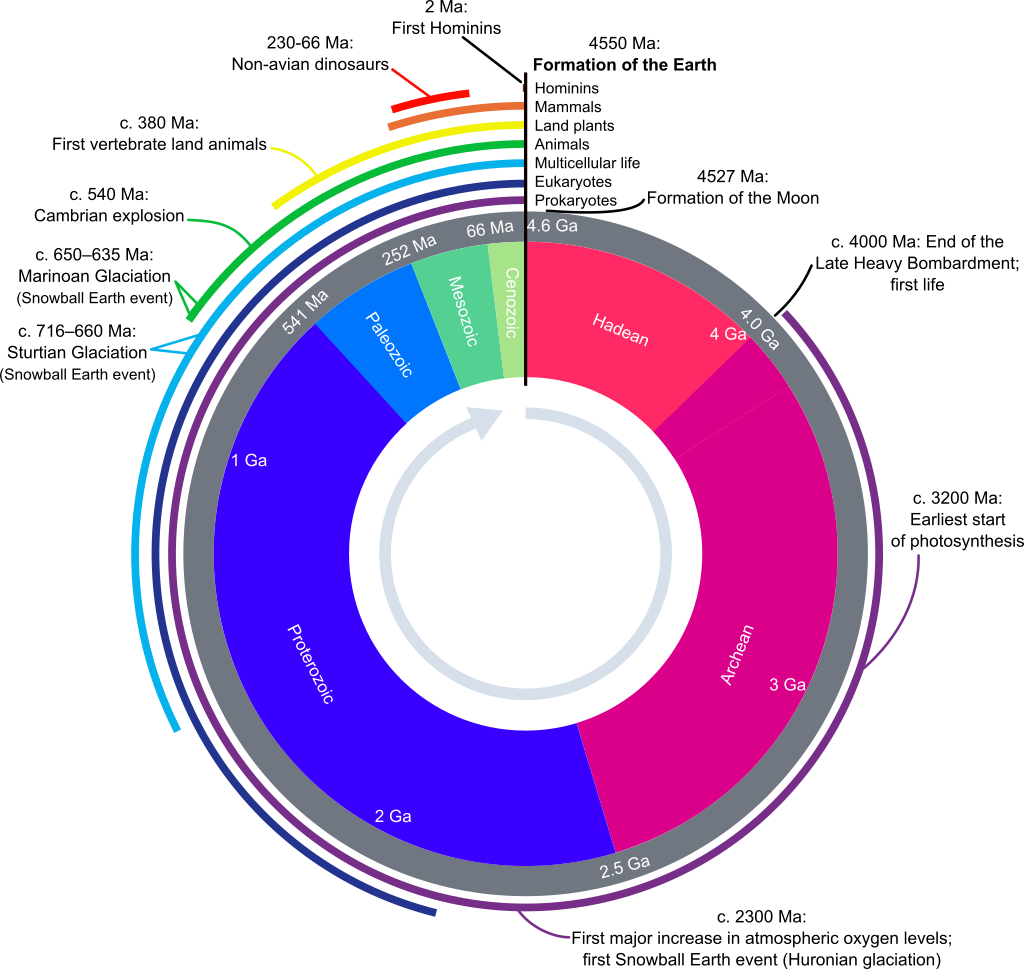
First let us get a quick overview of the Earth’s four eons (the biggest units of geological time). Unlike recent posts, I have tried to be short and to the point, with links to relevant Wikipedia pages for those who want to know more. Further details are intended to be given in future posts. I will also be returning to insights gained from the Gaia theory, but not just yet.
Hadean Eon
4567- 4000 Ma
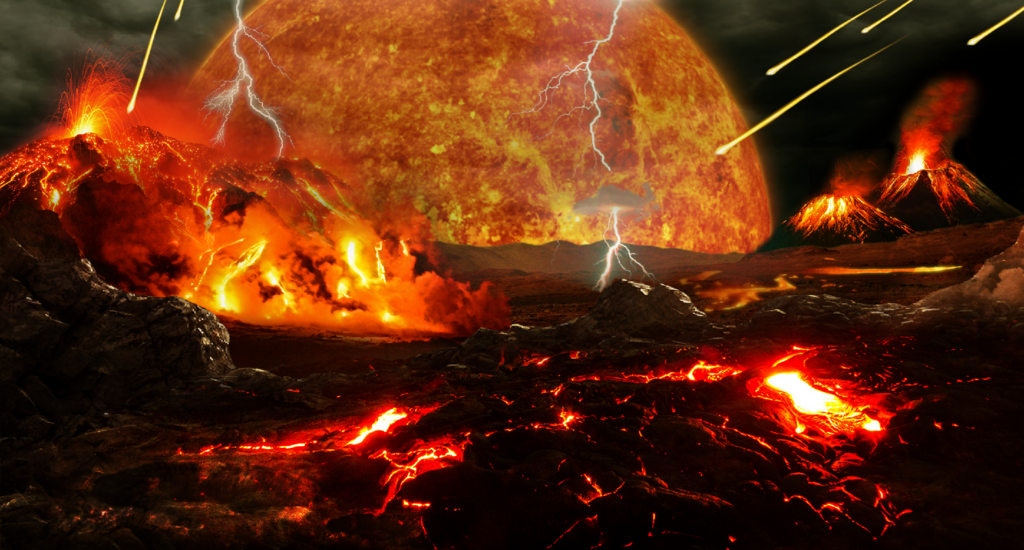
This marks the oldest (earliest) stage of our history.
- The name Hadean comes from the Greek God of the underworld, Hades and relates to its early hellish conditions.
- Starts with our planet’s formation;
- No rocks survive on Earth from this time, so a date has been obtained from the oldest meteorites to be found on Earth. Scientists believe that they were first formed at the same time as we did.
- Our earliest atmosphere was very thick, and rich in carbon dioxide and methane.
- Eventually liquid water condensed from the clouds.
- Because atmospheric pressure was much greater than it is now, though the Earth’s temperature was well above the boiling point of water today, the early oceans did not evaporate.
Archean Eon
4000-2500 Ma
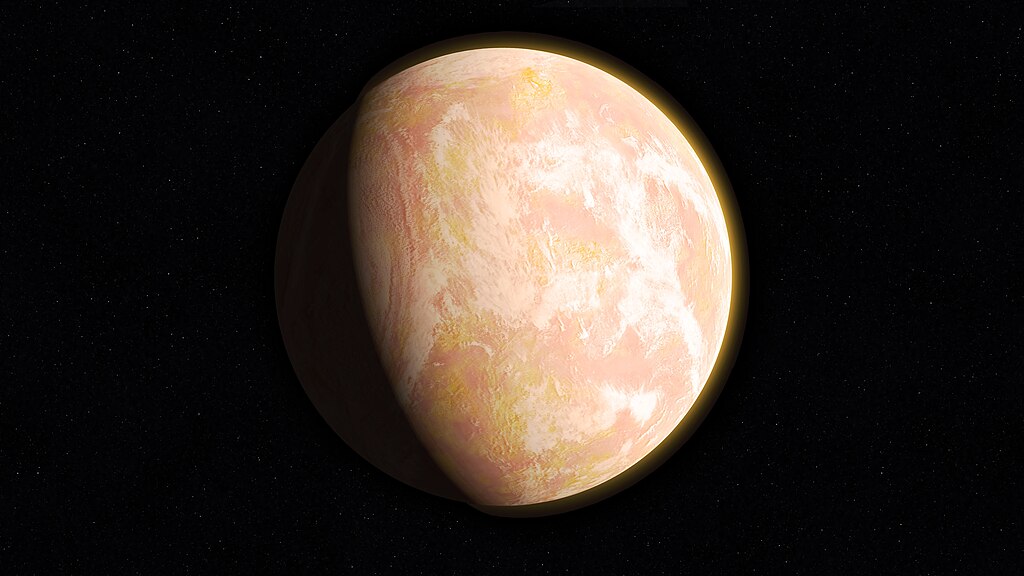
The start of this period is defined by the oldest surviving continental rocks found today on the surface of the Earth.
- The name was intended to mean of the earliest geological age, from the Latinized Greek word for ancient.
- The Earth’s surface had calmed down sufficiently for continental crust to form, though most the planet was probably under water at this time.
- The atmosphere was still high in methane and carbon dioxide, giving the atmosphere an orange colour.
- Whilst life may have existed in the Hadean, conditions only became stable enough for it to be sustained during the Archean.
- Fossilised bacterial colonies known as stromatolites have been found. For energy they used sulphur instead of oxygen, and had developed an early form of photosynthesis. They emitted a gas which was toxic to all life at this time – oxygen.
Proterozoic Eon
2500-539 Ma

It is defined by the appearance of bands of rusty red iron rocks – the first clear sign of oxygen in the atmosphere, and known for the first clear fossils of multicellular life.
- Named after the Greek words for earlier and life.
- More or less three notable periods of time (please note that what follows is a highly simplified account and may not be true in all of its details);
- Great Oxidation Event was the result of Cyanobacteria giving off oxygen as a waste product. It is recorded in the rocks as banded iron formations.
- The explosion of life may have been caused by a rise in plate-tectonic activity.
- The tectonic activity resulted in mountain building.
- Erosion of this new land would have fed life in the sea with valuable mineral nutrients.
- Thus fuelling this explosion of life.
- However, the planet’s first free oxygen would have destroyed the methane in the atmosphere.
- Methane is a powerful greenhouse gas.
- Its destruction may have led to a dramatic cooling of the Earth.
- Carbon dioxide, when dissolved in water, forms an acid which can react with calcium or magnesium and silicate bearing rocks, with the result that it is converted into limestone. This could have removed this other greenhouse gas from the Earth’s atmosphere.
- Removal of these greenhouse gasses would have cooled the planet, triggering (an) ice-age(s) lasting millions of years.
- The controversial theory of one or more global ice-ages is known as the Snowball Earth.
- During this time dark coloured dust would accumulate on glacier surfaces, which would warm the ice and cause local melting.
- Volcanos emit both carbon dioxide and dust. They could have accelerated the melting of the ice.
- Boring Billion, a period in the middle of the Proterozoic during which not very much changed;
- More or less tectonic stability.
- Climatic stasis.
- Slow biological evolution.
- Low oxygen levels;
- As fast as cyanobacteria emitted oxygen, newly exposed rocks on land may have absorbed it.
- No evidence of glaciation.
- Breakup of the super-continent Rodinia.
- As before, this may have fertilised life in the oceans, thus triggering another even bigger (but still controversial) Snowball Earth event.
- New tectonic activity was again the most likely cause of glacial melting.
- High levels of minerals have been recorded in the oceans, which may have been responsible for a new expansion of life and a second oxygenation event.
- Life gained a new diversity.
- Great Oxidation Event was the result of Cyanobacteria giving off oxygen as a waste product. It is recorded in the rocks as banded iron formations.
Phanerozoic Eon
539 Ma-Present
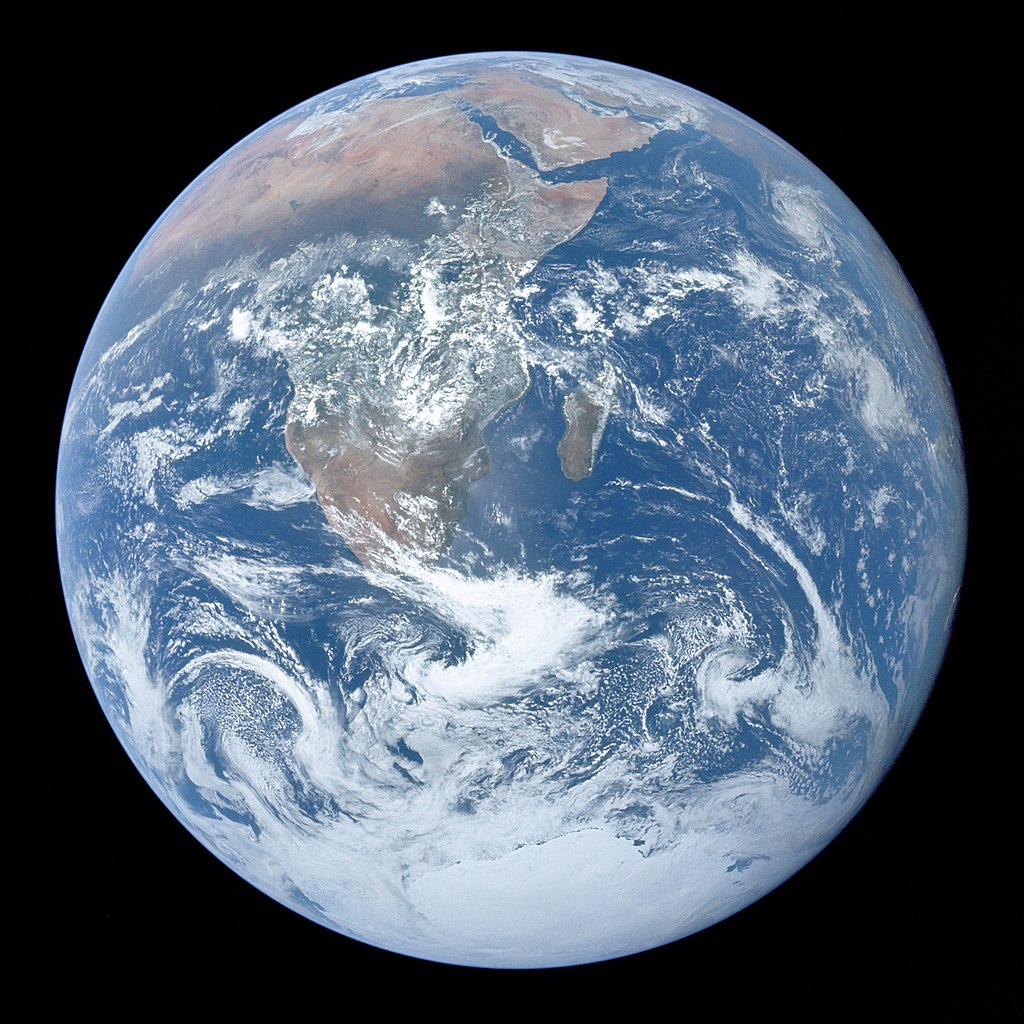
The Phanerozoic has just one main characteristic feature – abundant, complex life, despite a number of major extinction events.
- Named from the Ancient Greek words for visible life.
- The continents drifted apart, then rejoined as the supercontinent Pangea, then separated again to their current positions.
- As a result of these tectonic movements, the mountains that exist today were formed.
- It is divided into three eras;
- Paleozoic
- Mesozoic
- Cenozoic
- All three of these eras played their part in the geological story of the South Downs – which will be explored in a new post.
 Newmarket Hill


One reply on “Geology of the Earth – 1”
Wonderful post 🌹🎸please visit my website universe discoveries freinds