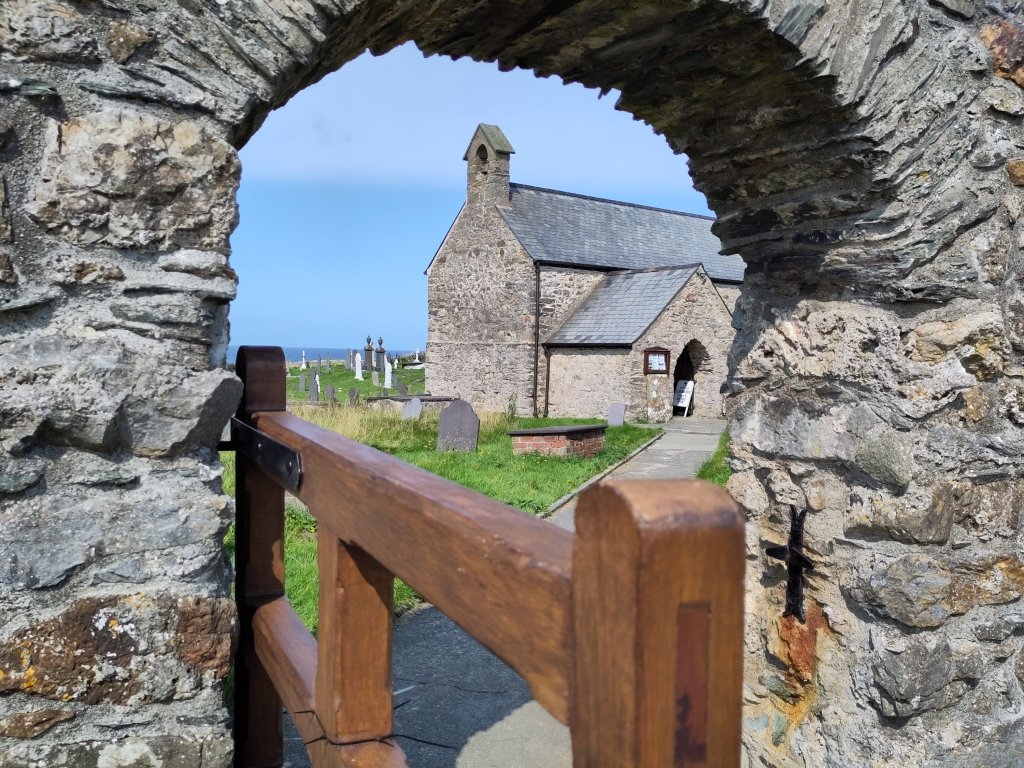
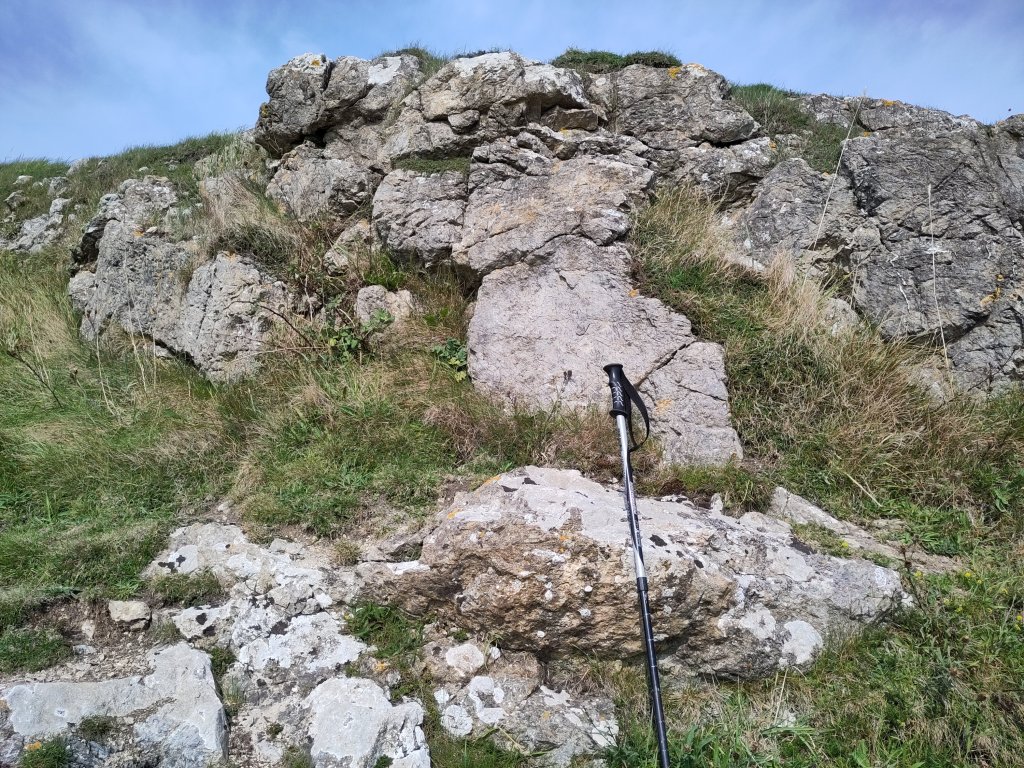
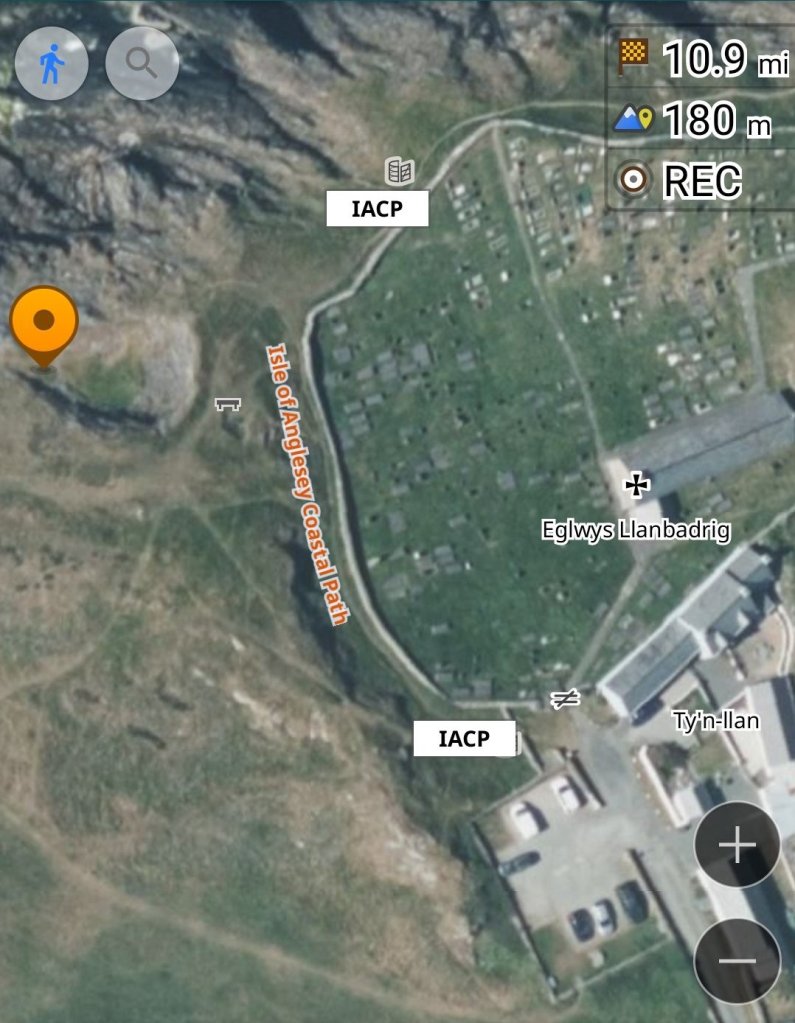
Between the lovely little church of Llanbadrig (which I didn’t have time to visit but is very much worth doing) and the bay of Porth Padrig is a limestone knoll. More or less ignored by tourists, this spot should be a major attraction for it possesses the oldest fossils in England and Wales!
Nevertheless, I failed to find the exact spot where Margaret Wood identified her fossil stromatolite bearing limestone. The limestones in this area vary in textures. I hoped to find one with layers.
Stromatolites
RICHARD BIZLEY / SCIENCE PHOTO LIBRARY
Caption
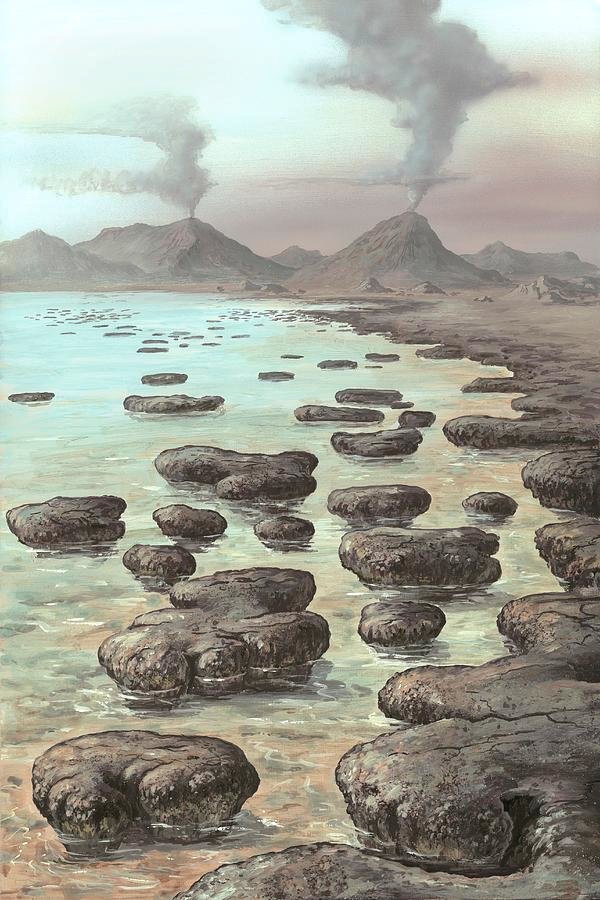
Artwork of stromatolites on early Earth. Stromatolites are mineralised microbial communities formed from cyanobacteria (blue-green algae).
I like the above painting. It shows volcanoes in the background. Under their roots, granite would have formed. I imagine this to be a seamount island, similar to that of the Island arc of Hawaii. Except that some 860 million years ago the only life was (more or less) bacterial. Stromatolites survived as fossils because they built up layers of limestone around them, like the rings of a tree, as they grew to form large colonies.
The Boring Billion
They were the first living organisms to convert the gas carbon dioxide into carbohydrates (for energy and body building) and to give out oxygen. This happened about 2 billion years ago.
Oxygen is a highly reactive, toxic gas! At least it was for early forms of bacteria. To survive they had to develop antioxidants. Eventually they learnt to make active use of it. It is effectively rocket fuel, and enabled complex life to evolve and eventually take over the whole planet.
Meanwhile, for about a billion years, ending at the time of Anglesey’s earliest fossils, not a lot happened in terms of geology or life.
Life requires essential elements to survive. Geological activity is required to erode or explode these elements across the planet to enable life to expand and evolve.
Rodinia Breaks Up
The time period we are looking at is the Tonian (towards the end of the Precambrian). Apparently all the continents were grouped together into a supercontinent called Rodinia.

Rifting, such as occurs as a result of an expanding mid-ocean ridge (see Ancient Geology 4.1: Wandering (In)Continents), occurred to break up Rodinia at the same time as Llanbadrig’s stromatolites were preserved, at the end of the ‘boring billion’. Our oldest fossil stromatolites in Anglesey therefore record a transitional period, more or less when their heyday was ending. However, they also mark a time when new forms of life started to develop.
What may enable such energising, life promoting geological rifting is a controversial thing that I explored on my train journey back to Brighton. But that is for another post.
<- Ancient Geology 6.2: Granite, Serpentine and Mantle Plumes
<- Ancient Geology 8.1: Tropical ‘Coral’ Atolls and Foliated Schists
 Newmarket Hill
4 replies on “Ancient Geology 8.2: Tropical ‘Coral’ Atolls and Life Changing Stromatolites”
Hi David,
I enjoyed these posts and reading about awesome (in the real sense of the word) tectonic treasures.
Cheers.
Dominic
[…] Ancient Geology 8.2: Tropical ‘Coral’ Atolls and Life Changing Stromatolites -> […]
[…] Ancient Geology 8.2: Tropical ‘Coral’ Atolls and Life Changing Stromatolites -> […]
[…] <- Ancient Geology 8.2: Tropical ‘Coral’ Atolls and Life Changing Stromatolites […]