Blog

  • Newmarket Farm Dig Progress

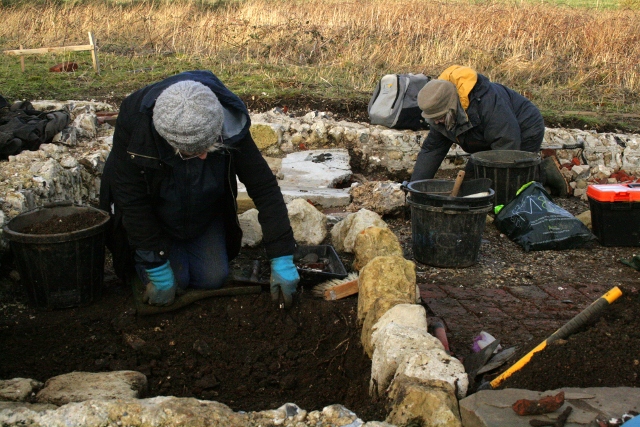
    The Newmarket Farm Dig project may have slowed right down, but I certainly haven’t given up! Given that it is one of the most ambitious projects I have ever attempted – my first ever dig and I am in charge – I think I have done pretty well so far. I fairly recently had a really useful chat with Hilary Orange (Senior Archaeologist at University College London’s Centre for Applied Archaeology). From her, and others I have spoken to over the past few weeks, I have learnt that I could do so much better if I gain more practical experience before I start digging again, including the post-excavation stage of last year’s dig where I am right now.

    With this in mind I signed up to a one week archaeological training course last June with the Sussex School of Archaeology’s Roman dig at Plumpton. It was really good to be able to learn directly from ‘real archaeologists’. Again I learnt, whilst I didn’t always manage to follow best practice last year, I did not do such a bad job. I have also started volunteering with Sussex Archaeological Society’s Bishopstone Tidemills dig, where I am also gaining yet more skills and practical advice.

    It is important that I build a network of useful contacts. I have already made some good contacts with bone and military finds experts, which I will be making good use of when I start processing our finds during the next couple of months. Any pot and glass (1830-1942) experts out there – I would love to hear from you.

    I have also made contact with an English Heritage expert in farm buildings – Jeremy Lake. He has recently completed a mapping of all the historic farmsteads and outfarms in Sussex. His earlier work includes an excellent report on the historic farmsteads of South East England. It is hoped that we can meet sometime – if his busy schedule allows.

    Next year I hope to have completed writing up last year’s dig. Before then I have to decide whether I need to spend that year gaining more practical experience, and to apply for grant funding to enable us to spend money on tools, outside services and expertise. This could enable me to do a better job understanding the original purpose for the construction of the Newmarket Farm – particularly the barns and farmyard  which were built to help manage the stock and crops at the western end of the Kingston estate back in 1830. An excavation of the farmyard structures would involve a very much bigger area of interest than that of which we previously managed to do. This can easily be seen in the following image:
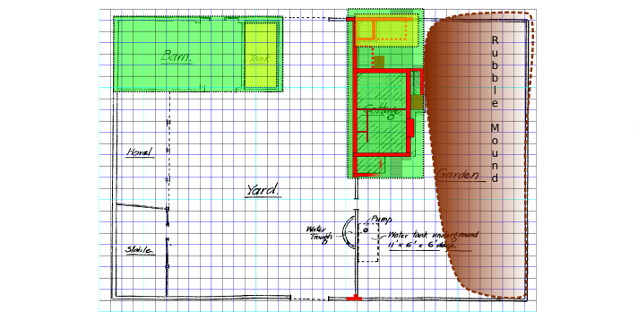
    Plan showing the area of the barn in green superimposed over the excavated area of the cottage.
    Plan showing the area of the barn in green superimposed over the excavated area of the cottage. Base plan from ESRO.

    It took 2 days a week over 10 months to complete an open area excavation of the cottage and its immediate surroundings. This was more than I could easily manage. Therefore, next time I would prefer to dig just one day a week, and over a more sensible period of April to October (6 months). This would mean that the trenches would need to be very carefully placed to maximize the information they might provide.

    However, I still haven’t fully explored the domestic area of the site. The yard area in front of the house revealed the original 1830 ground surface under a relatively deep made-up layer of domestic rubbish. It would be nice to look at that surface – with its flint paved path between the front door and the front garden gate – underlying the probable early 1930’s remodelling/rebuilding of this area, including the outside toilet.

    The question of their domestic water supply – well or water-tank – has also not been answered. Some of the areas where a well might be located have yet to be excavated. At the very southern edge of the excavated cottage an intriguing ceramic glazed pipe headed south away from the corner of the ‘lean-to’ extension. This may have been fed by a rainwater down-pipe from the cottage roof. Did it lead to a nearby ‘well’ or the water-tank shown to exist further down the garden on the plan shown below? Two Ordnance Survey maps also showed a variety of structures in the south-west corner of this domestic area in about 1873 and 1930:
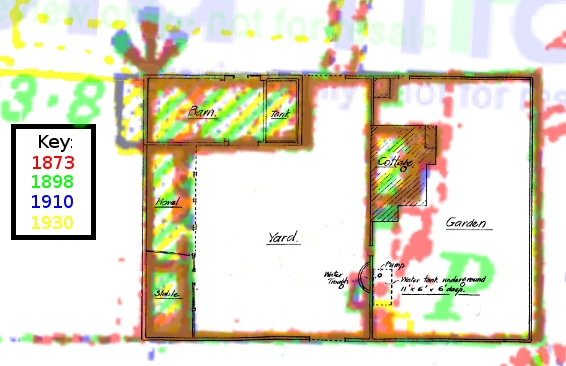
    Coloured overlay map of OS maps and a plan dated 1873-1930
    Coloured composite of OS maps (old-maps.co.uk) and a farm plan (ESRO), dated 1873-1930.

    Plenty to keep me busy with for the next few years – don’t go away!

     

  • Distractions

    Image courtesy of http://www.autismawarenessuk.com
    Image courtesy of http://www.autismawarenessuk.com

    I guess I have already said that I have AD(H)D and Asperger syndrome. Its easy for me to volunteer to do things. Hard for me to judge how long it will take to complete them. Researching a new topic is exciting. Like volunteering to give a talk on the WW1 origins of the village of Woodingdean (not far from Newmarket Farm) with its strong family connections since the 1920’s. However, dealing with existing commitments is not so exciting!

    I still have a big existing commitment to write up last year’s dig of the Newmarket Farm cottage. Progress is slow. I now have many more family commitments than I had when I started. But most of the time its just having to deal with the stuff that ‘other people’ seem to take for granted. All the little stuff – like getting used to my new Android phone – the one I am writing this on right now. It is my first touchscreen phone. And I have spent a lot of time over the past month trying to get it to do exactly what I hoped it would do, but doesn’t quite manage to do.

    Don’t get me wrong. This phone is an amazing gadget. It is just that it has so much complexity, so many quirks and foibles, so many distractions – by the way what is a foible? Let me just google that… See what I mean! I am currently in a cafe with no Internet (I asked). My Bt-Hotspot app tells me there are 2 nearby but it couldn’t get a good connection. And mobile reception is poor… Aghhh! Do I really need to know what a foible is right now?

    Having not only AD(H)D and Asperger’s as well as having an above average intelligence all helped me to start this project. I have done really well – especially since I haven’t done any archaeology before. I now need to make sure I don’t get too distracted along the way.

  • Woodingdean and the Great War – Common Origins

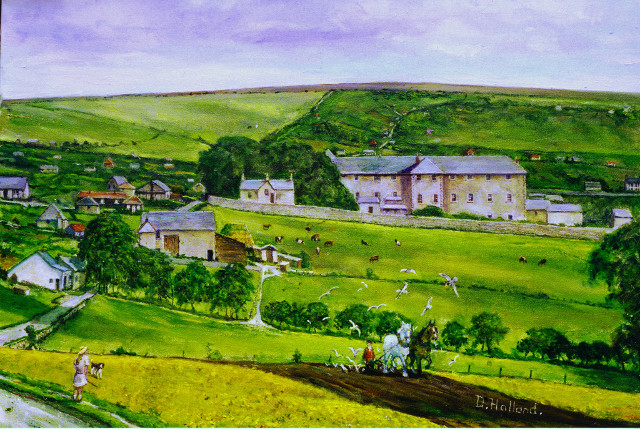
    Painting by Douglas Holland from a photograph of early Woodingdean taken early 1920's from the Racehill, Brighton.
    Painting by Douglas Holland from a photograph of early Woodingdean taken early 1920’s from the Racehill, Brighton.

    Back in July I volunteered to speak at a commemorative event in Woodingdean for the start of World War One. It was too good an opportunity to miss. I knew that the first building plots on the farmland which were to become the southern half of modern Woodingdean were sold in 1913. The second area of building plots in Woodingdean, adjacent to the Brighton Racehill, were sold in 1919. This meant that the origins of Woodingdean started one year either side of WW1. Coincidence?

    Lots of reading about Victorian and Edwardian Anglo-German relations and British agriculture of this period proved me right. I like being right! Back in Victorian times we had an Empire at a time when our close cousins, the Germans, had just become a newly emerged nation. They were poor and we were rich. And they were understandably jealous.

    We were rich, not only because of cheap imports of food and raw materials from our Empire. Also, our factories made huge quantities of cheap products for export. British farming became a marginal activity. Our population increasingly left the fields to work in our towns and cities. Farms lost money, and much land went out of production. So shortly before the start of the Great War a land tax was proposed. The government needed the money to defend our increasingly threatened Empire upon which our country had grown to depend. This was a bitter blow to our already impoverished farmers. So they started selling their land to housing developers, who saw a profit in selling such cheap land to those desperate to escape our overcrowded slums.

    And so Woodingdean was born. Created by the same driving force that just about inevitably led to the World War.

    The other strand of my research was to look at the local story of Edwardian Brighton, and the farmland that was to become Woodingdean. I found books and documents which provided strong evidence for a story of small market gardeners selling baskets of fresh produce to the hungry population of Brighton. This coincided with a new electric tram extending all the way to the top of Elm Grove by the Brighton Race Course which would have made transport of their goods so much easier.

    At the time of WW1 central Brighton had the densest housing in Britain outside of London’s east end. More babies died at home then soldiers in the trenches. Disease in Brighton slums was rife. One of the early pioneers in Woodingdean was also the most ambitious. Oscar Selbach was both an engineer and an entrepreneur. He believed that because of its situation on the south facing slopes of the highest hill near Brighton (Newmarket Hill), directly overlooking the sea, it was the healthiest place in Britain. He bought the farmland to the north and east of the crossroads which now form the centre of modern Woodingdean. The south facing slopes were for housing, but the rest of the land was for farming. Industrial production in Britain during WW1 was heavily geared to the production of barbed wire and explosives. Cheap barbed wire after the war could be used for fencing, which meant less labour costs for shepherds and the like. Explosives are largely nitrate based which is the main component of artificial fertilizer. Industry, after coming to our towns, had now arrived on some of the most unspoilt downland in Britain. Len Tuppen, a shepherd who worked for Oscar Selbach on his remote downland farm of Balsdean later told his son that he didn’t stay there long. He didn’t like towns.

  • Talk in Falmer on the History of Newmarket Farm

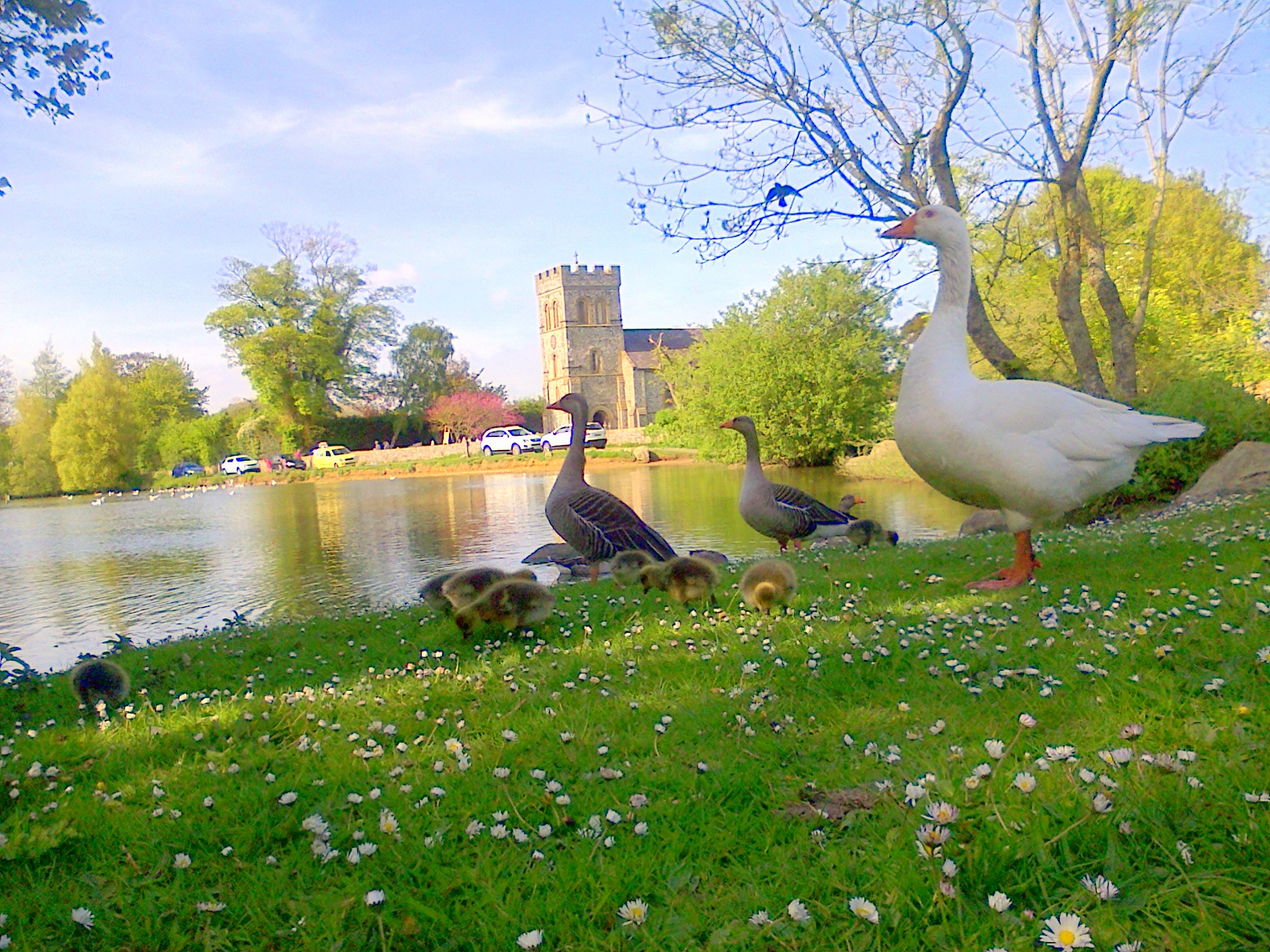
    Falmer Pond and Church
    Falmer Pond and Church.

    Apologies for the late notice! Next Tuesday, 10th June, I will be giving a talk on the history of Newmarket Farm for the Falmer Ladies Group. All are welcome, for a modest entrance fee of £2 to cover their costs. The venue is the Falmer Village Hall, by the pond, 7.00 for 7.30pm. The talk will be for about an hour, with questions afterwards.

    I now have my own computer projector, so hopefully it will be an illustrated talk this time. For those who weren’t able to attended my talk in Woodingdean in January, technical difficulties prevented my slides from being shown! For those who did attend my last talk, the emphasis will be different this time – I will be including more of the Newmarket Farm’s many historical connections with Falmer.

    As I have said before, things have got very busy for me over the past few weeks & months, so I haven’t had a chance to visit the site of Newmarket Farm for a long time now. But I haven’t forgotten it! I have no idea at present when I might next have the time to do any work up there this year. Though my current priority is writing up last year’s dig, my efforts to make contacts with academics from Brighton University and other professionals in the hopes of getting some much needed support have taken up far more of my time and energy than I thought it would. I am uncovering so much fascinating history both of the Newmarket Farm and its wider area that I believe it is well worth the effort for me to continue. And I am getting to meet some really interesting people along the way.

    I look forward to the possibility of seeing you Tuesday, and will try to keep you informed of any developments in the future – when I have the time – and energy!

  • Talks, Tours, Meetings & Distractions

    Its all happening – I just wish it wasn’t all happening at once!

  • Update on Past, Present and Future for Newmarket Farm Dig

    Watercolour of Newmarket Farm by Bob Phipps
    Watercolour of Newmarket Farm, painted from memory by Bob Phipps, in about 2010.

    The dig was successfully backfilled almost three months ago now. It was a sad moment to see all our hard work being buried. But I know that it was the right thing to do, to protect the delicate walls and other features from damage in the future.

    We made some wonderful discoveries, which have enabled us learn more about the everyday lives of those that lived in the Newmarket Cottage than we could ever have done from just reading dusty documents. Its situation is amazing, on top of the highest hill between the historic county town of Lewes, and Brighton, the largest town in Sussex since at least the 1640’s. The hill, and the downs beyond, were especially famous for visitors during the 19th century, for it had one of the largest areas of unspoilt chalk downland on the iconic South Downs, with magnificent views in all directions. And today, a surviving remnant – Castle Hill NNR – inside which our dig site was located, has European recognition for the special wildlife which lives there.Our dig has shed a lot of light on the lives of those whose actions were – at least in part – responsible for what we see today. However, what struck me most about those who lived there was that, despite living in poverty, they had used lots of nicely decorated ceramics, paste jewellery, and many items belonging to children. We also know that at least 3 of the farmers they worked for took care of their living conditions, maintaining the cottage and outbuildings to a good standard.

    Meanwhile, my personal situation has changed. I no longer have the time available to be able to commit myself to another dig this year. My elderly father has had a bad fall and my parents are likely to require a lot more support from me in the foreseeable future. This also means that, at least in the short term, there will be a delay in the production of any reports about last year’s dig.

    May I take this opportunity to thank all those who have been involved in our dig over the past year or so. It has been an amazing experience, which I have enjoyed very much. I certainly hope to be able to do a lot more work on the site of Newmarket Farm in the future. However, this year, it is more likely to be ‘gardening’ than archaeological digging. The brambles and nettles which covered the site two years ago will return very quickly unless we manage to keep them in check. I very much wish to give some more guided walks and talks on its amazing history, so it would be nice if the site remains accessible to the general public.

    I intend to continue sending these emails, to keep you informed of any progress, as well as of any site visits in the future. I have a lot of work ahead of me which will keep me locked up indoors; writing up our last dig, and processing all our amazing finds. But I certainly hope to get back up on the hill sometime soon – especially now summer is here!

    Looking East along northern site boundary
    Looking East along northern site boundary.
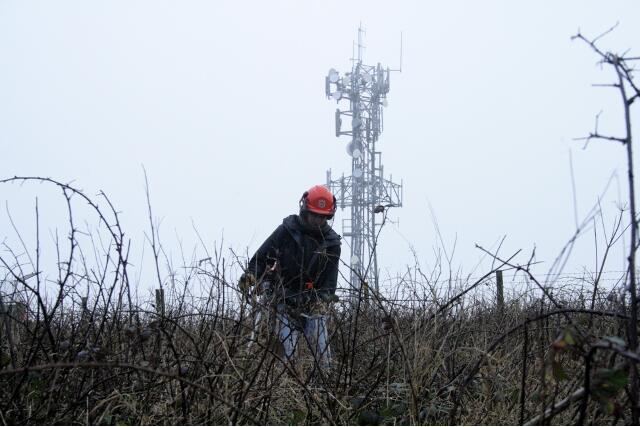
    Looking W at Newmarket Farm site being cleared of brambles
    Looking W at Newmarket Farm site being cleared of brambles
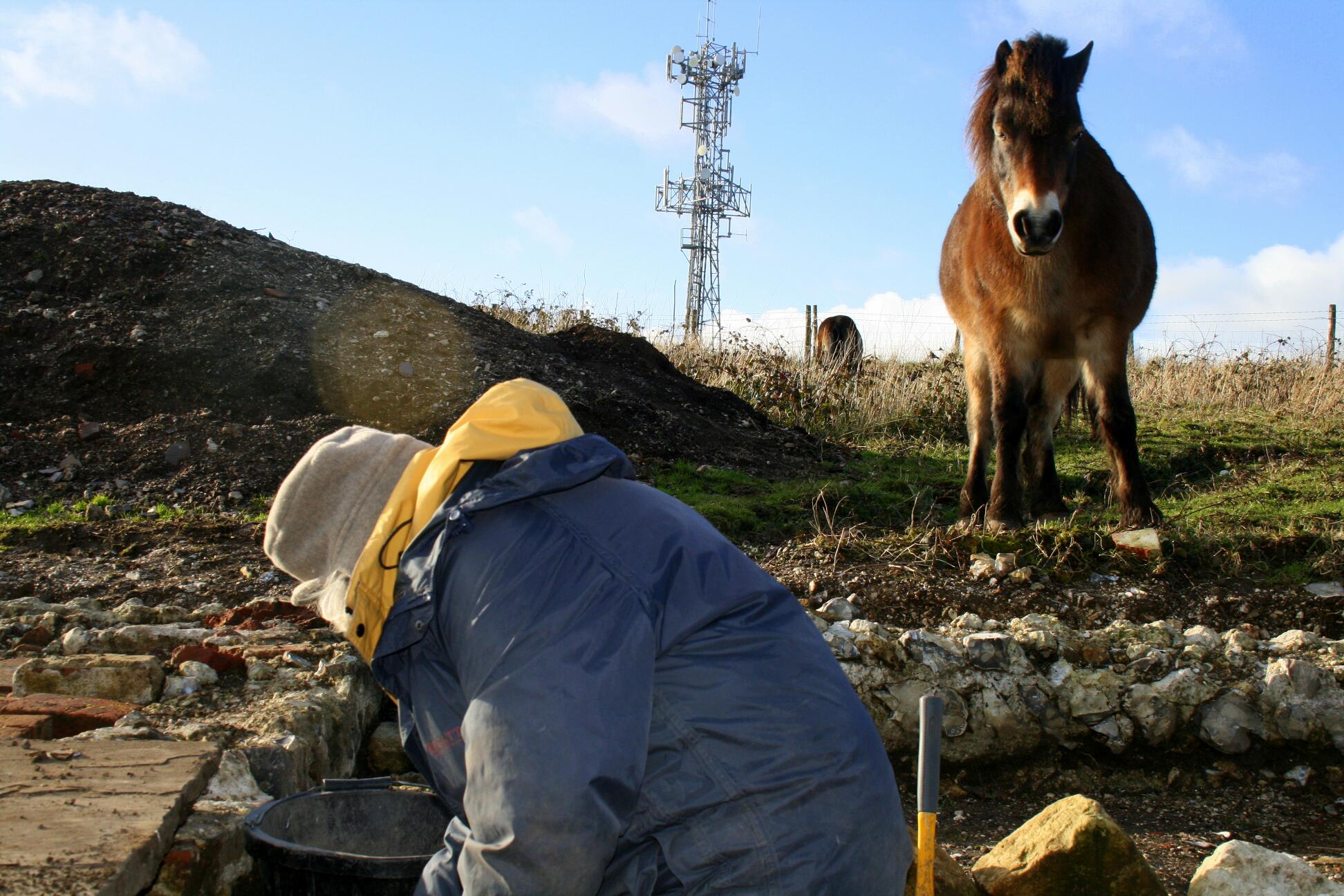
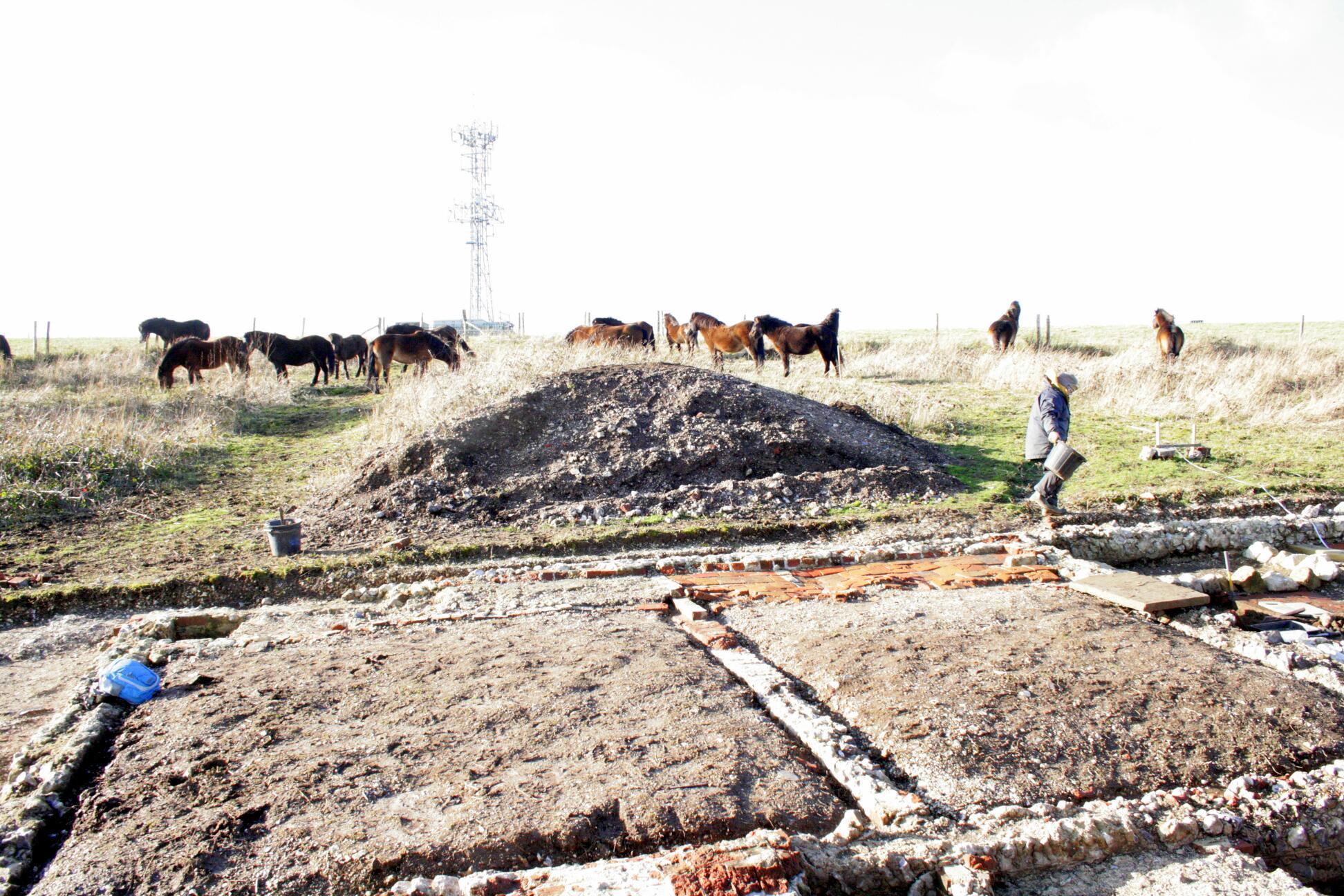
    Exmoor ponies visiting dig site
    Exmoor ponies visiting dig site
    Exmoor ponies visiting dig site
    Exmoor ponies visiting dig site
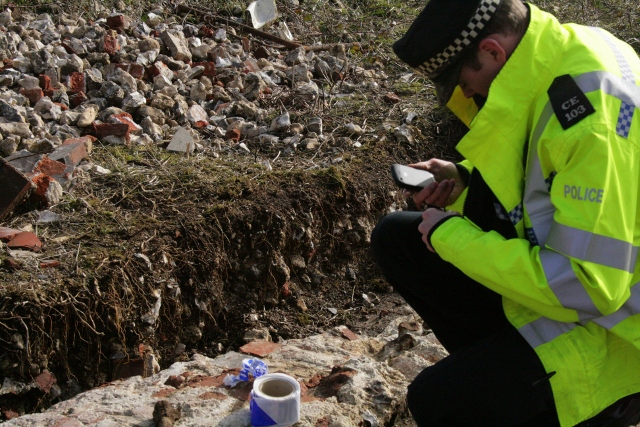
    Police inspecting 3" mortar
    Police inspecting 3″ mortar
    Finds from 1x1m sondage in centre of front yard, N of cottage
    Finds from 1x1m sondage in centre of front yard, N of cottage
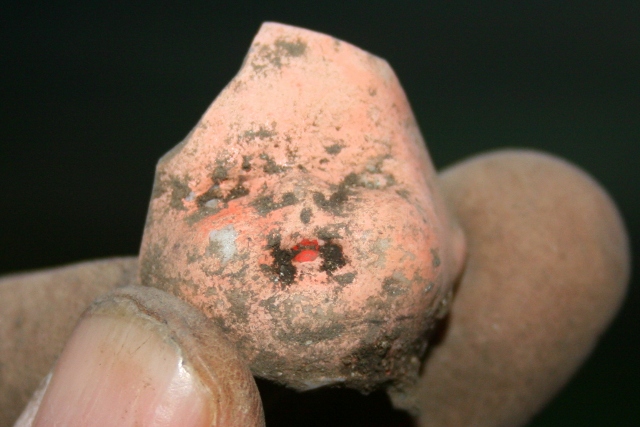
    Cherubic face of ceramic doll
    Cherubic face of ceramic doll
    Shards of an 'aesthetic movement' design plate
    Shards of an ‘aesthetic movement’ design plate
    Paste 'sapphire' jewel
    Paste ‘sapphire’ jewel
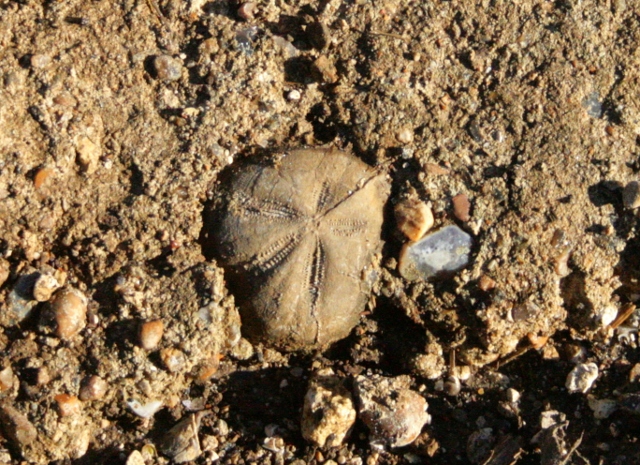
    Fossil sea urchin ('shepherd's purse') embedded in mortar at base of foundation trench against east wall of cottage
    Fossil sea urchin (‘shepherd’s purse’) embedded in mortar at base of foundation trench against east wall of cottage
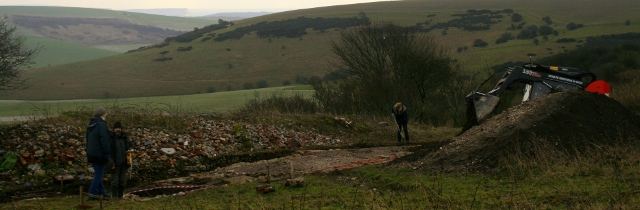
    Loking E at sunset and full moon over dig site and Castle Hill NNR
    Looking E at sunset and full moon over dig site and Castle Hill NNR


  • Backfilling Newmarket Farm Dig – Tuesday 18th February 2014

    Looking SSE at backfilling of dig site
    Looking SSE at backfilling of dig site.

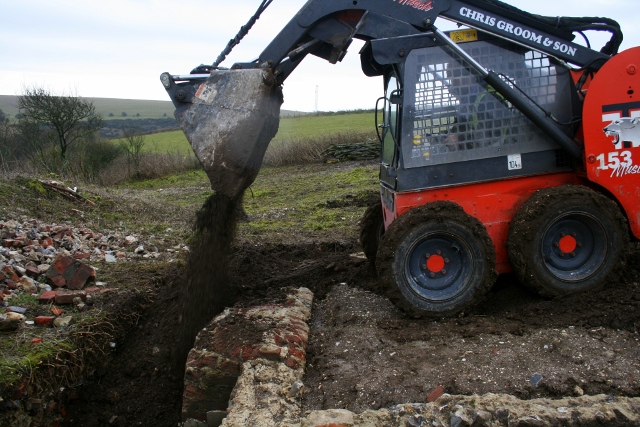
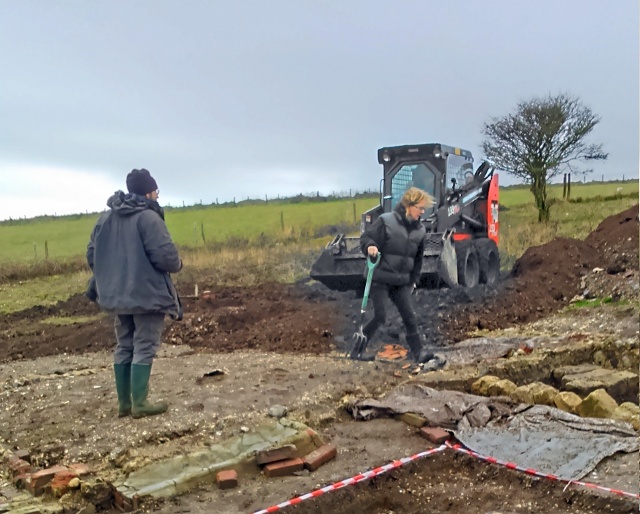
    Tuesday 18th February brought our dig to a close when it was backfilled by Chris Groom and his wife Tina, with their skid-steer digger, and a garden fork!

    Looking S at backfilling of E side of cottage
    Looking S at backfilling of E side of cottage.
    Looking SW at backilling of dig site
    Looking SW at backfilling of dig site.
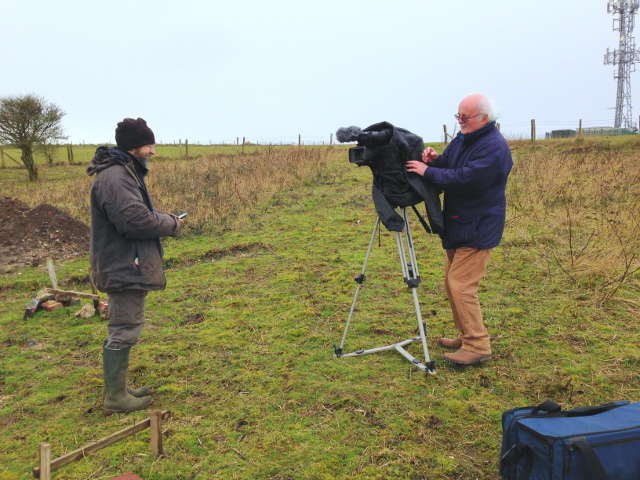
    Filming by Barrie
    Filming by Barrie Wood.

    The sad moment was filmed by Barrie Wood, who is also interested in filming our finds, as well as our excavation if we obtain permission to dig again this April.


    Now I am busy with writing up the dig, including finds processing, as well as preparing for giving some more talks in the coming weeks and months. Also there are exciting possibilities of support, with a forthcoming meeting to explore the possibility of an application for a Heritage Lottery Grant for a community based oral history project which would be in some way related to the history of Newmarket Farm. On a more personal level, both my own and my family circumstances have changed, such that I currently have less time to spend on the Newmarket Farm history project. All this has meant that although I have received permission to do more work on site this year, this will have to be limited to just vegetation clearance work, landscaping the cottage site, and surveying the surviving above ground remains of the site as a whole.

    So further excavation work has now been postponed till next year. Whilst the majority of the objectives of the 2013 dig have been answered, we still do not know where they obtained their water. All we can say for sure is that their water supply was from outside the area excavated.

    There is both a small area to the north-east of the cottage, and a larger area to its south which would require excavation if this important question is to be answered. The memories of three former residents, back from when they were children over 70 years ago, all differ – with the exception that they all remembered a well and not a water-tank. Unfortunately the only dig target we know of for certain is a water-tank!

    There is also the story that two local boys during the war dropped a live artillery shell down the Newmarket Farm well, and were disappointed when it didn’t go off!! If – and that is a very big ‘if ‘- we find this shell (carefully) we would have both confirmed a local story, and know we had found the ‘well’. People drop things down holes in the ground, so there should be some interesting finds (even if – hopefully – there are no explosive devices). The presence of spearmint over the site of the water-tank indicates the possibility of waterlogged sediments, so the preservation of any finds may be good.

    I can only apologize that this blog entry is considerably overdue. I have lots more exciting news to share and I certainly hope it won’t take over two months till my next blog post.

  • Eightieth Dig Day – Sunday 16th February 2014

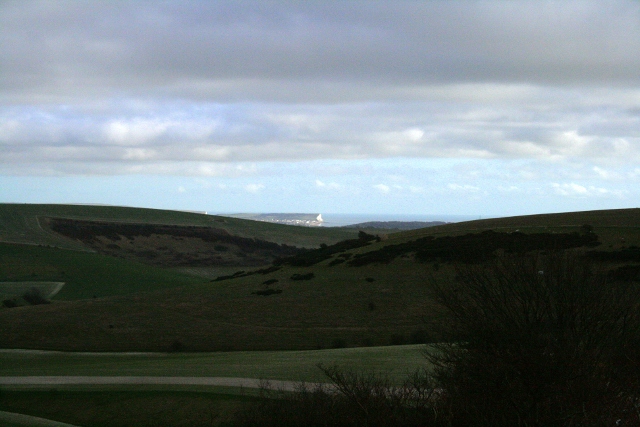
    Looking SE towards Seaford Head
    Looking SE towards Seaford Head

    One the warmest and sunniest days for a long time. So our volunteers did some more arm twisting, and convinced me to allow some more digging before the backfilling of the site – on Tuesday 18th February – weather permitting! We also had the promise of a cameraman joining us to film the event.

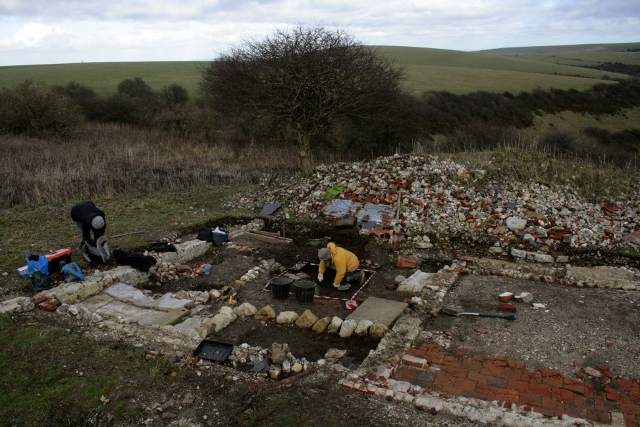
    Looking NE at N end of cottage from top of spoil heap
    Looking NE at N end of cottage from top of spoil heap

    So the day was spent doing some tidying up of the earlier excavations in front of the cottage, along with some more digging for the missing well (or water-tank) in front of the cottage. We knew, beyond reasonable doubt, it was not directly in front of the kitchen window. So we started exploring the previously unexcavated, or only partially excavated, area to the north of the shed which was on the cottage’s east side, directly opposite the front garden gate.

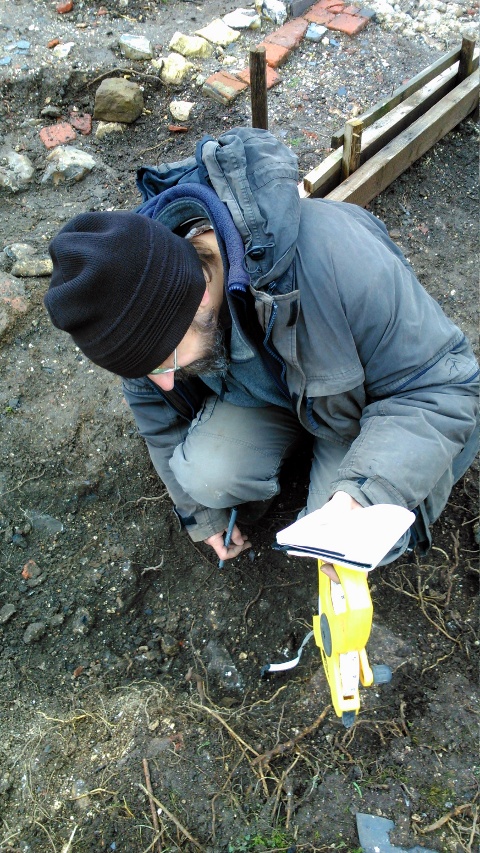
    Looking NW at me recording excavation of area between shed and front garden gate
    Looking NW at me recording excavation of area between shed and front garden gate

    We found the 1942 ground surface, under about 10-15cm of demolition rubble, sat on top of a fill containing a range of mostly ceramic and metal finds, deeper than that further west towards the front of the cottage. Also present in this fill was a higher quantity of construction debris, including roofing slate. Almost no chalk was found in the fill, so it was not from a deeper excavation. Flints were found in the bottom of this trench, but we ran out of time to determine whether they were part of an archaeological feature.

    What we did determine was that this area, between the front garden gate and the shed, is worth further investigation. But this would be for another dig. Hopefully this may be possible in April.

    Meanwhile I am busy report writing, finds processing, and with the formalities of applying for a continuation of our dig in April (as well as with family and other personal commitments) – all in just a month and a half(?)!

  • Seventy Ninth Dig Day – Sunday 9th February 2014

    Looking NE at Newmarket Farm Dig site
    Looking NE at Newmarket Farm Dig site

    Every cloud has a silver lining! We have found a superb digger owner & driver, Chris Groom, who owns 3 diggers. He is also a monumental stonemason and worked on the renovation of the 200 year old remote downland monument, “Harvey’s Cross”. He has passed on my contact details to media cameraman David Barrie who is interested in filming our dig. Unfortunately the digger trailer needs work on its brakes, which has delayed backfilling till next week. This led to our dig volunteers encouraging me to use this delay to do some final digging.

    Fortunately I succumbed to their gentle pressure, for we found two new features below the 1940’s ground surface! These were found following a thorough sweep of a metal detector across the site, in case we had missed anything in our search for a well or water-tank.

    Whilst there is still no evidence for such a structure in front of the cottage, we did find some nicely laid large flint slabs, 5-10cm under the front yard surface, in a straight line diagonally between the front door and the front garden gate. They sat on clean sub-soil, and passed under the edging stones of the last phase of the cottage’s path (which was probably contemporary with the early 1930’s rebuilding of the outside toilet), and they may date back to the original construction of the cottage.

    Looking S from E of outside toilet at sondage below 1940's ground surface
    Looking S from E of outside toilet at sondage below 1940’s ground surface & N of edging stones of path
    Looking W at sondage between E side of outside toilet & edging stones to N of path
    Looking W at sondage between E side of outside toilet & edging stones to N of path
    Looking S from E of outside toilet at sondage below 1940's ground surface, at foot of N side of edging stones to path
    Looking S from E of outside toilet at sondage below 1940’s ground surface, at foot of N side of edging stones to path

    The other feature was a ‘rain water soak-away’ which extended about 40 cm east from under the foundations of the outside toilet. It was not fully excavated.

    The metal detector proved that the areas assumed to be free of archaeology were clean of at least metallic objects. Elsewhere it mostly detected the inevitable rusty nails, as well as a variety of larger miscellaneous iron objects, including a small rusty padlock in the floor of the indoor ‘coal cupboard’. Also found, in front of the cottage, was the oldest coin of the dig – an 1881 farthing. Our ceramic finds, from this latter area, were very nice indeed and included most of a small ceramic frog, as well as another fragment of the hatching chick egg cup.

    More worrying/exciting was that one of the metal detector targets inside the cottage has now been confirmed by EOD (bomb disposal) as the lower part, with fins, of a previously fired 3″ mortar. It was removed by them for safe disposal, since explosive material can sometimes find its way into the rear section.

  • Seventy Eighth Dig Day – Sunday 2nd February 2014

    Looking at N at W side of front yard of cottage
    Looking at N at W side of front yard of cottage

    Sunday was our last day’s digging for our 2013 dig of the cottage and its front yard. It was a beautiful day, relatively mild and mostly sunny.

    Looking W at 1x1m sondage in centre of front yard, N of cottage
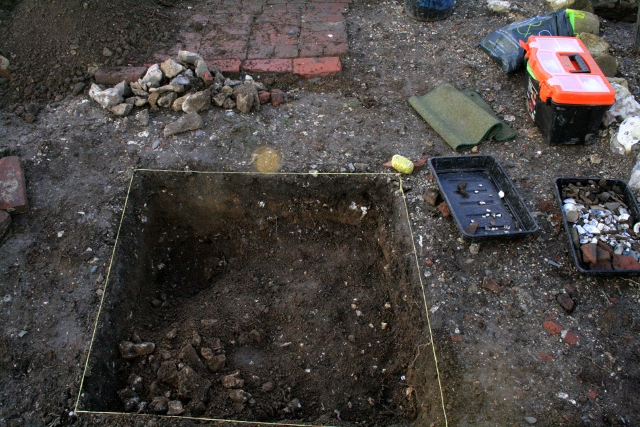
    Looking W at 1x1m sondage in centre of front yard, N of cottage

    Three volunteers were involved in a final search for either a well or water-tank in front (north) of the cottage. A 1x1m test pit was dug down into the yard surface in the area remembered by a former resident from when she was a young child.

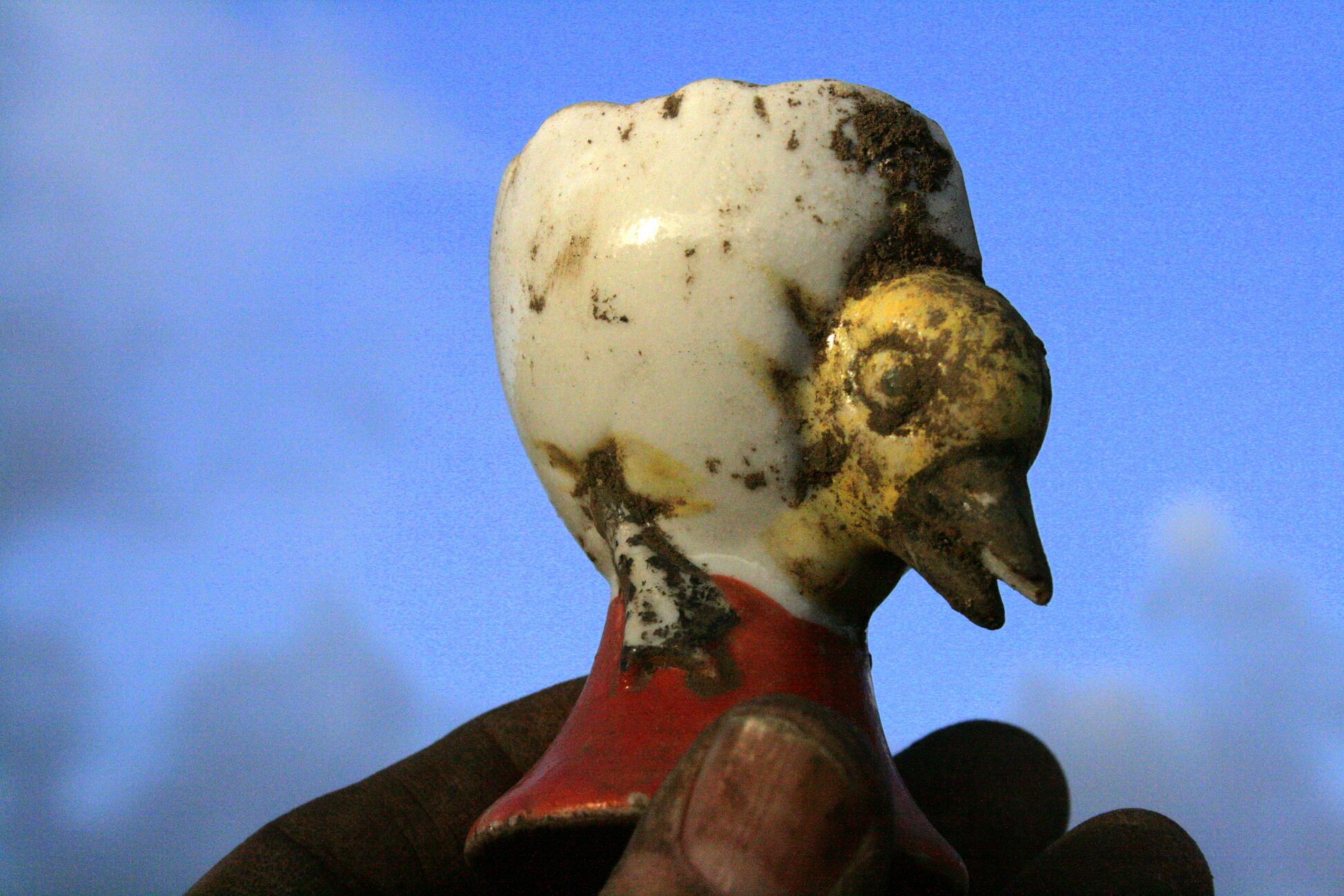
    The top 10cm was full of finds, consistent with having been ‘dust’ from the fire as well as broken ceramic and glass used to consolidate the front yard’s surface. The finds included a wide range of decorated ceramics, the best of which was an egg-cup decorated as a chick hatching from an egg, with its head and feet breaking out of the shell. Its feet were webbed – so it might have been an ugly duckling! Also nice was a complicated looking rusty hinged bit for a heavy horse. At its base were a few flints showing some signs of wear on their upper surfaces, but there was no indication of their having formed a continuous cobbled surface. Below it the natural geology of ‘clay with flints’ was met, which was at least 20cm deep. This was completely clean of any signs of archaeology, except at the very top of this context. The yard area was relatively small, so any well or water-tank in this immediate area would have been detected.

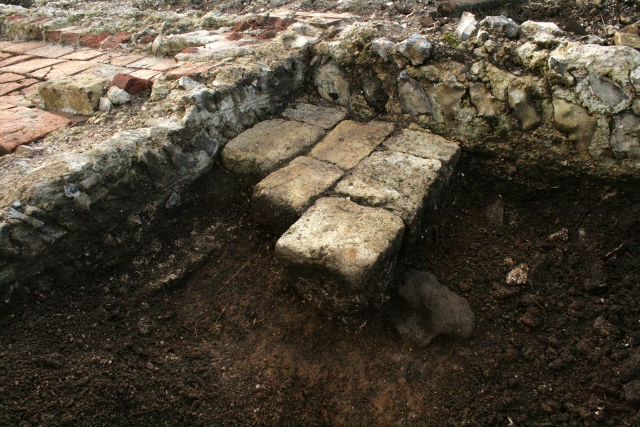
    Looking SW at excavated fill surrounding unbonded masonry platform, below water pipe (just out of photo)
    Looking SW at excavated fill surrounding unbonded masonry platform, below water pipe (just out of photo)

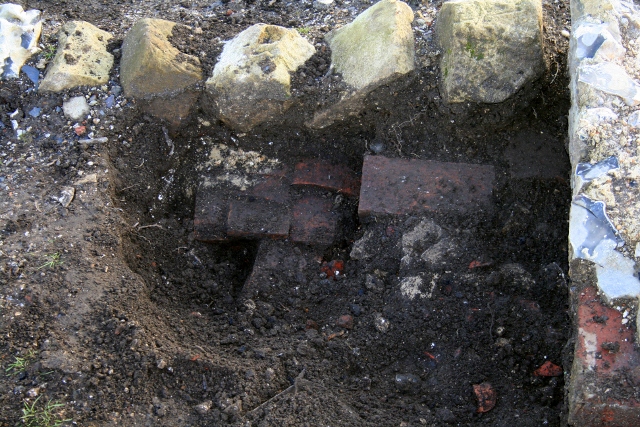
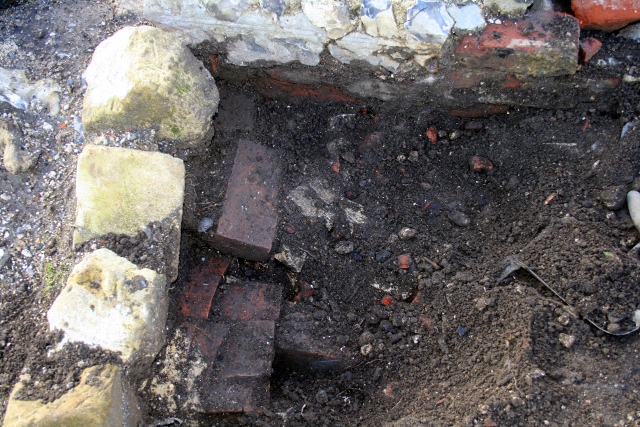
    A water-pipe which ran from a large rainwater collection tank in a nearby barn, may have fed some sort of a water barrel or tank which would have sat on the unmortared stone platform in the south-west corner of the area in front of the cottage. A sondage was excavated on either side of this platform in case this was a filter tank which gravity fed a nearby underground water tank. Whilst the top 10cm contained a range of finds, there was no sign of any structures under the original ground surface. The level below it appeared clean of any archaeology, or disturbance. Some very large flints embedded in the surface of the ground between the adjacent front door and the stone platform indicate that they were placed there to access this structure, without getting muddy feet.