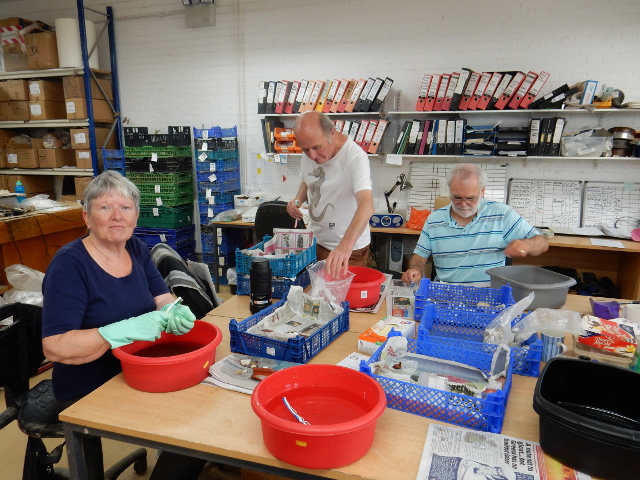
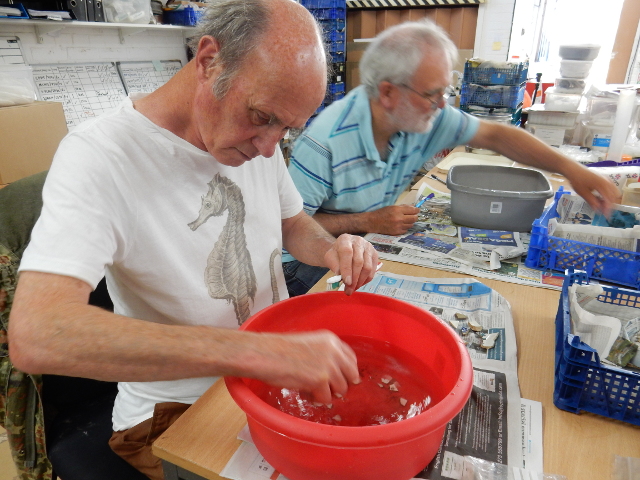
We had a good day Friday washing our pot and glass, thanks to the generous offer of the use of Archaeology South East’s finds unit for the day.
Pot Washing NMF13 finds at ASE.
A total of 6 volunteers managed to wash about half of our finds.
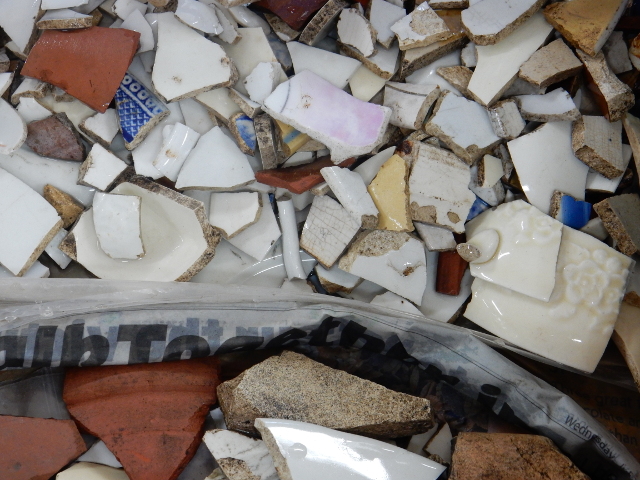
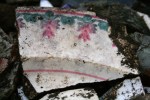
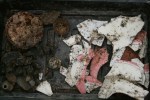
Washed NMF13 pot.
It was great to see our finds looking nice clean and shiny.
If you are free on Monday 13th (short notice I know) we have been kindly invited back to finish washing the rest of our ceramics and glassware. If you are free to join us, anytime between 11am and 4pm, your help would be very welcome. Just email me for details (no experience necessary): scienceinthegreen@gmail.com
We excavated some amazing ceramics and glassware, particularly considering the Newmarket Farm was only occupied by farm labourers and their poverty stricken families. Many of these are to be washed on Friday 10th July – do you fancy joining us?
Finds from 1x1m sondage in centre of front yard, N of cottage; 2nd February 2014
Finds from 1x1m sondage in centre of front yard, N of cottage; 2nd February 2014
Finds from 1x1m sondage in centre of front yard, N of cottage; 2nd February 2014
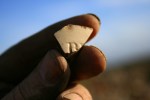
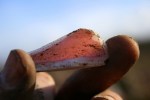
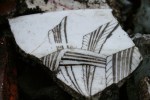
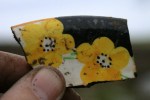
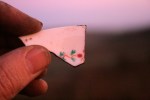
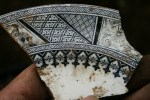
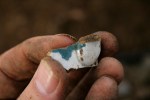
Decorated ceramic shard from under front doorstep; 27th January 2014
Decorated ceramic shard from under front doorstep; 27th January 2014
Decorated ceramic shard from under front doorstep; 27th January 2014
Decorated ceramic shard from under front doorstep; 27th January 2014
Decorated ceramic shard from under front doorstep; 27th January 2014
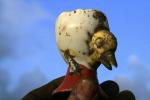
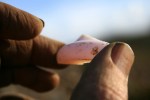
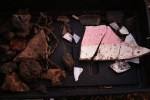
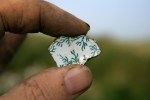
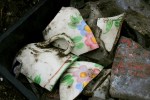
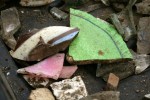
Pink and white cased glass from under front doorstep; 27th January 2014
Pink and white cased glass from under front doorstep; 27th January 2014
Ceramic shard from fill of construction trench for gully drain; 24th January 2014
Ceramic shard from fill of construction trench for gully drain; 24th January 2014
Ceramic shard from fill of construction trench for gully drain; 24th January 2014
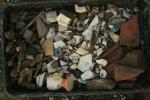
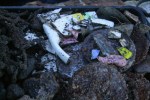
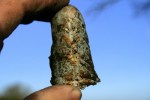
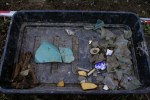
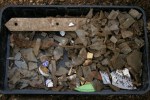
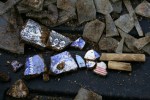
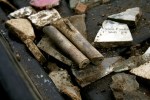
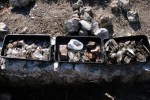
Finds tray at end of day from midden at base of chimney; 29th December 2013.
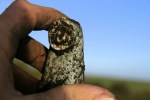
Inner face of shoulder? joint of ceramic arm? of figurine? 20th December 2013.
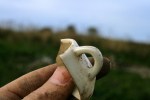
Ceramic arm? of figurine? with gilt decoration; 20th December 2013.
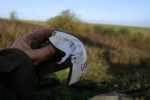
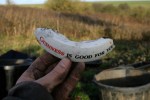
Guinness ashtray; 20th December 2013.
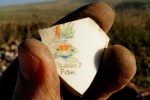
‘Guinness is good for you’ ashtray; 20th December 2013.
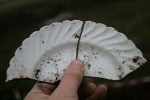
Large shards of a small decorated plate; 20th December 2013.
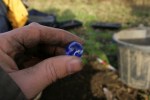
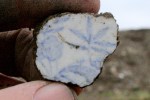
Blue and white marble; 20th December 2013.
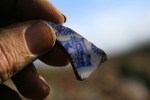
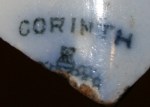
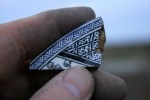
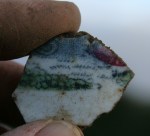
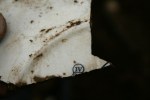
Reverse of blue and white shard bearing ‘CORINTH’ name over part of a crown design; 15th December 2013.
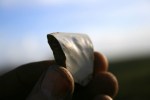
Blue and white ceramic shard; 15th December 2013.
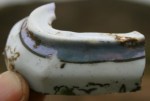
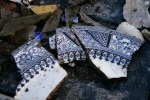
Moulded pattern on outside of large rim shard of ceramic wash bowl; 13th December 2013.
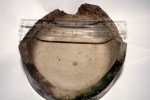
Rim shard of large wash bowl; 13th December 2013.
A shard of a decorative ceramic object with a narrow slot in the top; 13th December 2013.
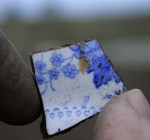
One of a few shards of a floral design plate; 13th December 2013.
Ceramic shard with ‘MADE IN ENGLAND’ inscription; 13th December 2013.
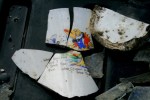
Ceramic side plate shards; 13th December 2013.
Pink and white wash jug shards; 13th December 2013.
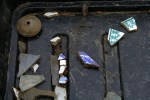
Finds tray from E of chimney base; 13th December 2013.
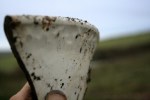
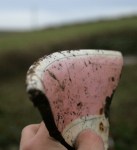
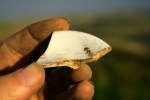
Ceramic shard, in late afternoon sun, from excavation of demolition rubble from E of chimney base; 8th December 2013.
Finds tray from excavation of demolition rubble from E of chimney base; 8th December 2013.
Decorated base of clay pipe bowl; 8th December 2013.
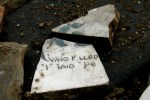
Shard of cup decorated with verse from ‘Who Killed Cock Robin’; 8th December 2013.
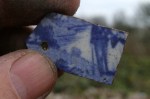
Light blue and white decorated ceramic shard; 1st December 2013.
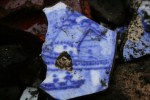
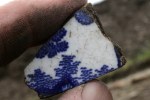
Blue and white decorated ceramic shard; 1st December 2013.
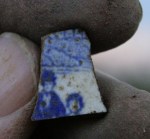
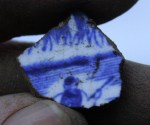
Blue and white ceramic shard of gentleman and lady in front of a pond or lake; 1st December 2013.
Blue and white ceramic; decorated with image of 2 figures; 24th November 2013.
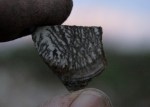
Brown and white mocha ware sherd; 24th November 2013.
Blue and white ceramic; decoration with image of fisherman? 24th November 2013.
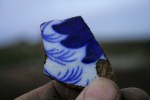
Blue and white ceramic sherd; 24th November 2013.
Blue and white ceramic sherd; 24th November 2013.
Sherds of an ‘aesthetic movement’ design plate (same design as before); 24th November 2013.
Finds tray from 2x2m grid sq S of cottage E of extension; 24th November 2013.
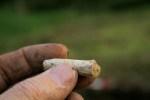
Broken top of a bottle with internal screw thread on left hand side for rubber stopper; 22nd November 2013.
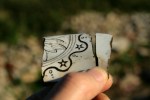
Decorated ceramic sherd; 22nd November 2013.
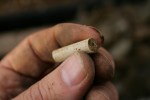
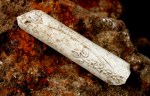
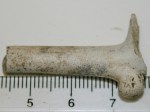
Decorated clay pipe stem fragment; 22nd November 2013.
Shards of an ‘aesthetic movement’ design plate; 22nd November 2013.
Part of pottery mark for ‘aesthetic movement’ plate; 22nd November 2013.
Decorated ceramic sherd; 17th November 2013.
Bottle base; 17th November 2013.
Bottle base; 17th November 2013.
Decorated ceramic sherd from partially excavated grid square S of cottage, E of ~1880 extension; 25th October 2013.
Decorated ceramic sherd from partially excavated grid square S of cottage, E of ~1880 extension; 25th October 2013.
Reverse of decorated dinner plate shard from partially excavated grid square S of cottage, E of ~1880 extension; 25th October 2013.
Decorated dinner plate shard from partially excavated grid square S of cottage, E of ~1880 extension; 25th October 2013.
19thc clay pipe stem shard from partially excavated grid square S of cottage, E of ~1880 extension; 25th October 2013.
Cup handle shard from partially excavated grid square S of cottage, E of ~1880 extension; 25th October 2013.
Finds tray from partially excavated grid square S of cottage, E of ~1880 extension; 25th October 2013.
Decorated ceramic sherds; 23th October 2013.
Decorated ceramic sherds; 23th October 2013.
Fragment of 19thc clay pipe stem; 21st October 2013.
Some finds from S of cottage extension; 18th October 2013.
Finds tray with a large proportion of window glass; 12th October 2013.
Decorative ceramic sherds and clay pipe stems; 12th October 2013.
Porcelain doll’s cup; 12th October 2013.
Porcelain cup shards with colourful flower design and intact handle; 22nd September 2013.
Shard of ‘mochaware’ ceramic; 13th September 2013.
“OXO” bottle from the drain; 30th August 2013.
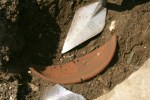
Terracotta bowl; 23rd August 2013.
Clay pipe stems; 23rd August 2013.
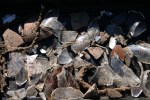
Ceramics and pink glass; 23rd August 2013.
‘Who killed Cock Robin’ saucer or tea plate; 23rd August 2013.
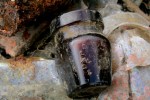
Possible ink pot; 23rd August 2013.
Close up of decorated pipe stem; 16th August 2013.
Child’s cup or mug; 9th August 2013.
Shippam’s fish/meat paste jar shards, and other finds; 14th June 2013.
Looking W at finds trays; 14th June 2013.
Finds, including brown teapot spout; 14th June 2013.
Clay pipe stem with star shaped makers mark on heel, 19th c.(?) from rubble mound; 7th April 2013
Decorated clay pipe bowl, 19th c.(?) from rubble mound; 7th April 2013
Decorated clay pipe bowl, 19th c.(?) from rubble mound; 7th April 2013
Stoneware jar base, from rubble mound; 7th April 2013
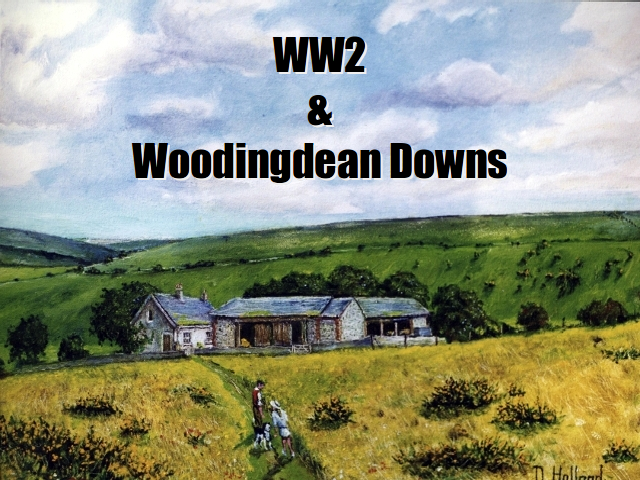
WW2 & Woodingdean Downs; painting by Douglas Holland.
Last month I gave a talk as part of the Woodingdean V.E. day commemorations. It was about the demise of Newmarket Farm and the Balsdean downs east of Woodingdean (a village near Brighton), 1938 – 1945. Unfortunately I was so busy (and anxious) researching the talk I didn’t get around to telling many people about it. I always do far more research than I can fit into a talk. I could easily have spoken for an hour or two, but my time slot was for just 20-30 minutes. Fortunately I managed to finish preparing it in time, and it seemed to get a good reception. I have since been asked to give a summary here so that others who couldn’t make it might read something of what I presented.
The opening slide was of a painting of Newmarket Farm – birth place of my mother Peggy in April 1942 – painted by her uncle Douglas Holland, based on his vague memories of teenage visits.
Punch Cartoon 1938, Chamberlain & World Crisis.
The talk itself started with the lead up to the second world war, and the crisis of 1938.To add some atmosphere I used a section of original newsreel footage which I edited from “The Crisis – Latest (1938)”, a British Pathé newsreel clip I found on YouTube:
For good measure I edited in the iconic Pathé title sequence with the crowing cockerel, from this newsreel showing items from June and July 1938. It includes gas mask production, part of our air raid precautions for an increasingly possible world war:
I enjoyed the bout of rowdy behaviour from several of the older members of the audience, fondly reliving their childhood memories of Saturday morning matinées at the cinema. My original choice of film was “Time To Remember – Wind Up Week 1938 – Reel 4 (1938)”. I felt it gave a better feeling for the life and times of a week which brought us frighteningly close to an early start to a war with Hitler, though sadly it was too long to use:
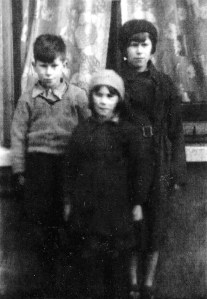
Phipps family children; Desmond (Bob), Lucy, Sylvia.
1938 was not only a challenging time for the Prime Minister Neville Chamberlin. The photo above shows the Phipps family children some time during or shortly after the Second World War. 1938 was very much a year of crisis for them. Their father worked for Mr Guy Woodman of Balsdean Farm. Newmarket Farm was where they had lived since their father started his employment on the farm in 1934. It had always been an isolated farm labourer’s cottage and barns since it was built in about 1830. It was situated about a mile and a half away from Balsdean, near the top of the highest hill in the area. The fast developing village of Woodingdean was about a mile and a half in the other direction. The Phipps ‘children’ were interviewed in about 2010 for a dvd as part of the ‘Woodingdean Then and Now’ history project. I edited it down to the most relevant few minutes. I have now posted it on YouTube:
Watercolour of Newmarket Farm, painted from memory by Desmond (Bob) Phipps, in about 2010.
I have written more about their lives, and the farmer who they worked for, in a draft copy of the Newmarket Farm book linked to at the top of this webpage. The picture shown above was painted from memory by Bob Phipps and he put it on display at the Woodingdean Then and Now history event. He wrote a request for any information on the history of the farm. Peggy recognised the painting as resembling her uncle’s painting and the two families were immediately introduced to each other. I was asked by them if I would be willing to research the Newmarket Farm’s history and the rest is, er…, history!
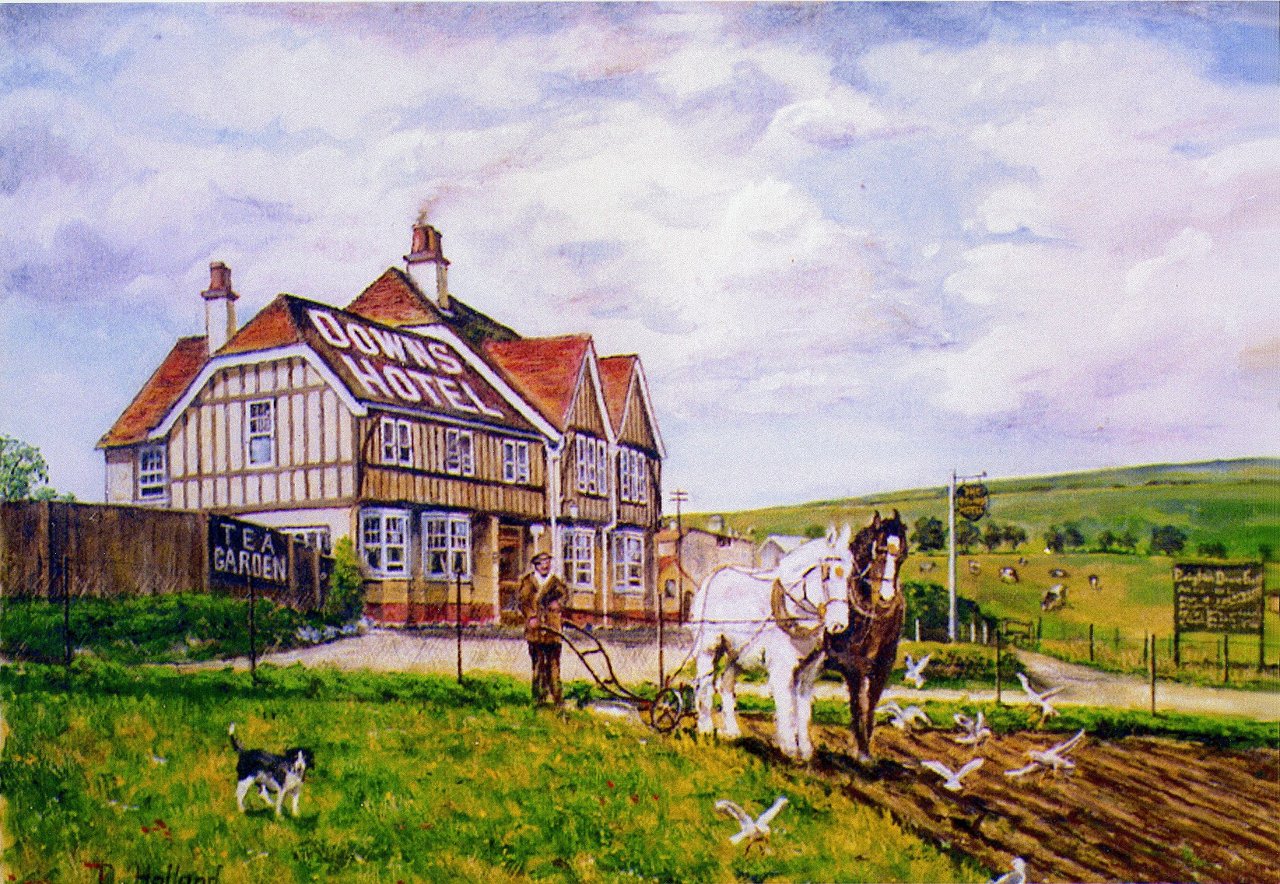
Horse Ploughing, Downs Hotel, Woodingdean from a painting by Douglas Holland.
One of the first things the three Phipps ‘children’ asked Peggy was “how come your dad got our dad’s job?” I discovered from them that their father, Edward Phipps, worked with horses – like the ploughman in Douglas Holland’s painting in front of the nearby Downs Hotel in Woodingdean.
Landgirl during Second World War disk harrowing. Photograph probably taken at Woodingdean[?] by Brighton Parks & Gardens Dept. Image from The Royal Pavilion and Museums, Brighton & Hove.The Woodingdean historian Peter Mercer, for his book ‘The Hunns Mere Pit’, recorded an interview with the farmer’s son of this time, Mr Gerald Woodman. Part of that recording was played to the audience immediately before my talk. Mr Woodman told how, before the war, his father bought two Fordson tractors to meet the demands of the War Agriculture Committee. Some family history research, by one of Peggy’s relatives, revealed that her parent’s marriage certificate recorded her old man, Reginald Latham’s stated occupation as tractor driver. So in all likelihood the Phippses were replaced by the Lathams because horses were replaced by tractors.
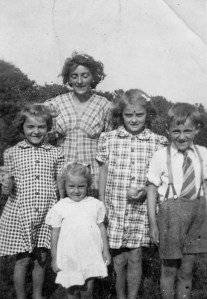
Latham family shortly after the war, Peggy at front.
However, Mr Woodman’s memories didn’t entirely make sense. My studies of WW2 agriculture all indicated that the War Ag Committees didn’t start dictating to farmers how much of their grassland to plough till after the start of the war. I learned that, except for a few short years during and shortly after WW1, there was very little money to be made from farming in the inter-war years. It was cheaper to import food than to grow it. However, this made us vulnerable to a naval blockade. This was something that looked increasingly possible as the 1930’s progressed. Therefore in 1937 the government encouraged farmers to plough up their permanent pastures and grow more cereals, which could be stockpiled in case of an emergency. This was done by means of guaranteed prices and discounted fertilizers.
On the 3rd of September 1939 Mr Neville Chamberlain declared to the nation that Britain was at war with Germany.
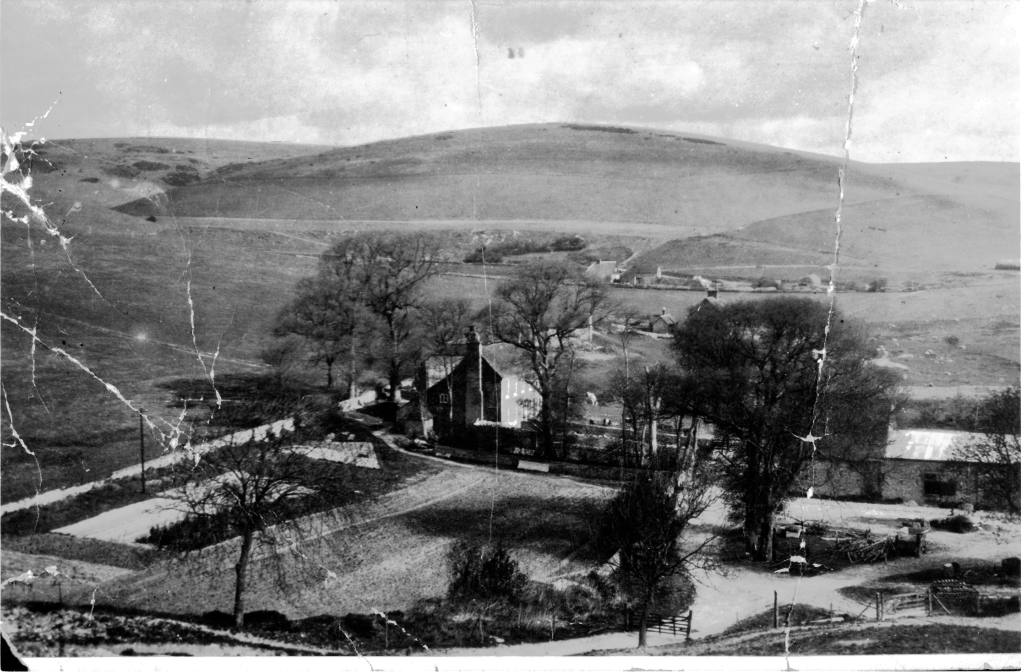
Balsdean Hamlet. (Photo: Part of the Holland – Mercer collection).
This announcement signalled the beginning of the end of not only Newmarket Farm, but also of the tiny hamlet of Balsdean;
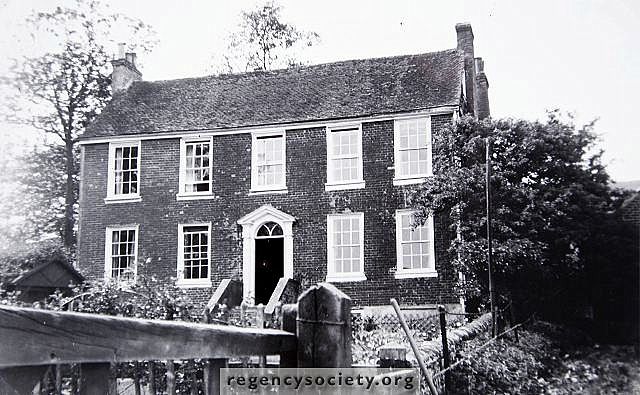
The Georgian farm house of Balsdean. (Photo: James Gray Collection, Regency Society).
Balsdean Farmhouse, residence of the Woodman family;
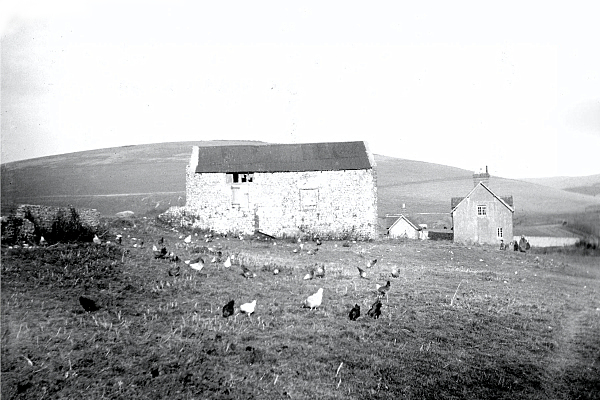
Norman chapel, used as a cow shed. (Photo: Part of the Holland – Mercer collection).
The (de-consecrated) Balsdean Chapel, and labourer’s cottages, and part of the former Norton Farm in the background. Balsdean was an isolated but beautiful downland hamlet, all that remained of a larger medieval settlement. As early as 1937 the Phipps family recall soldiers on training exercises over these hills. By 1941 one of the two farmers wrote a letter to Brighton Corporation, their landlord, complaining of the number of soldiers interfering with the running of their farm. However, both farmers signed up to serve with the Home Guard.
Mr Arthur W. H. Dalgety, who was also Master of the Southdown Hunt, rode with the Lewes mounted Home Guard, otherwise known as the Lewes Cossacks. For my talk I showed this British Movietone News clip which featured two former Grand National winning jockeys who were also members.
Auxiliary Unit issue Fairbairn-Sykes Fighting Knife [2nd Pattern], modified, with scabbard; image courtesy of Imperial War Museum.The other farmer, Mr Guy Woodman, volunteered with the ‘Auxiliaries’. They were a top secret resistance unit, trained to slow down a German invasion using guerilla tactics. They were given a life expectancy in such a situation of just 2 weeks. If caught they were not covered by the Geneva Convention and would have been shot. Recruits were chosen for their military experience, trustworthiness, and knowledge of the land. More information on the Rodmell Auxiliary Unit, of which Mr Woodman was for a short while in command, can be found in the excellent book “Secret Sussex Resistance” by Stewart Angell. Information about the Auxiliaries in general can be found on a number of websites:
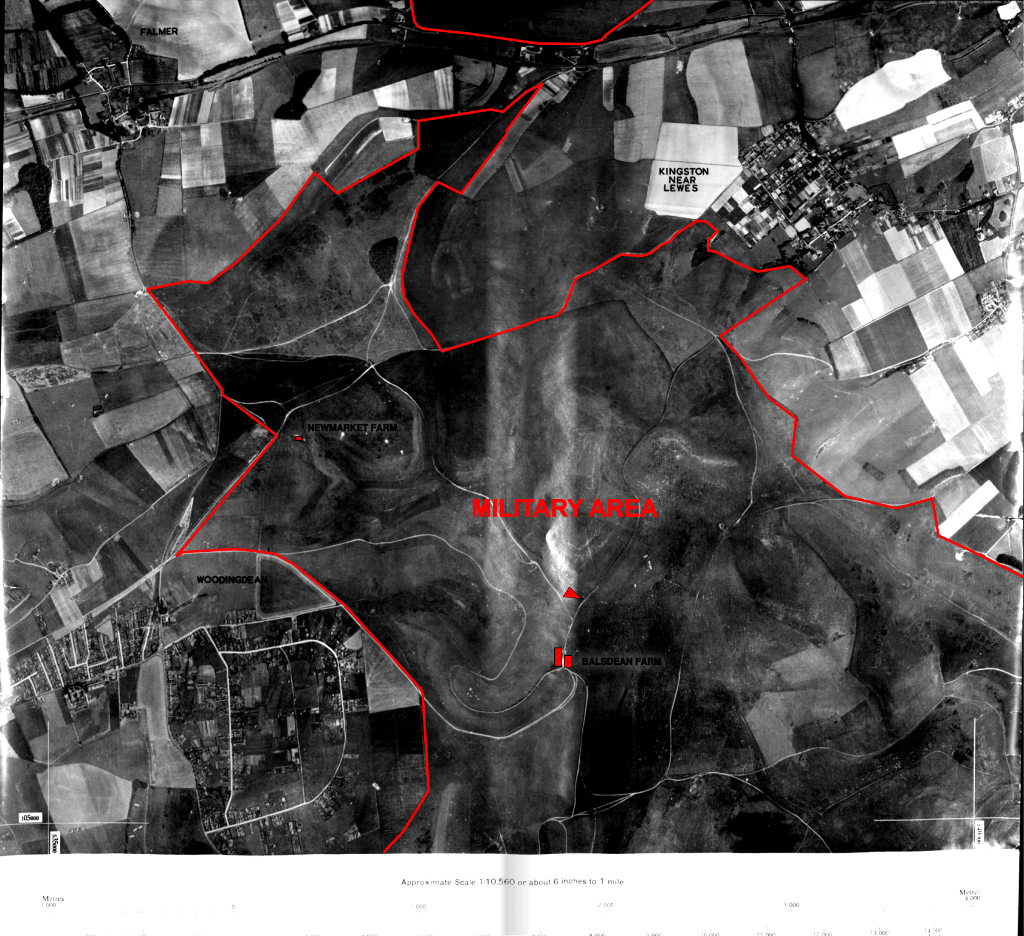
Military Area east of Woodingdean; Base image from East Sussex Record Office, The Keep.
About three weeks after the birth of Peggy in Newmarket Farm, the military gave those who lived and worked in Balsdean Farm just two weeks notice to leave, sometime in the middle of May 1942. They wished to use the relatively open downland both as a training area and so they could have room for defensive manoeuvres should the Germans invade anywhere along this stretch of coast. Interestingly, the track leading up to Newmarket Farm was just outside of the Military Area. This would help with the family story that they didn’t leave Newmarket till October that year. Apparently an officer, either Home Guard or Canadian, was billeted with the Latham family after their father had signed up as a mechanic with the RAF in North Africa sometime before August 1941. The army had been remembered as training on the South Downs east of Woodingdean as early as 1937 by Bob Phipps.
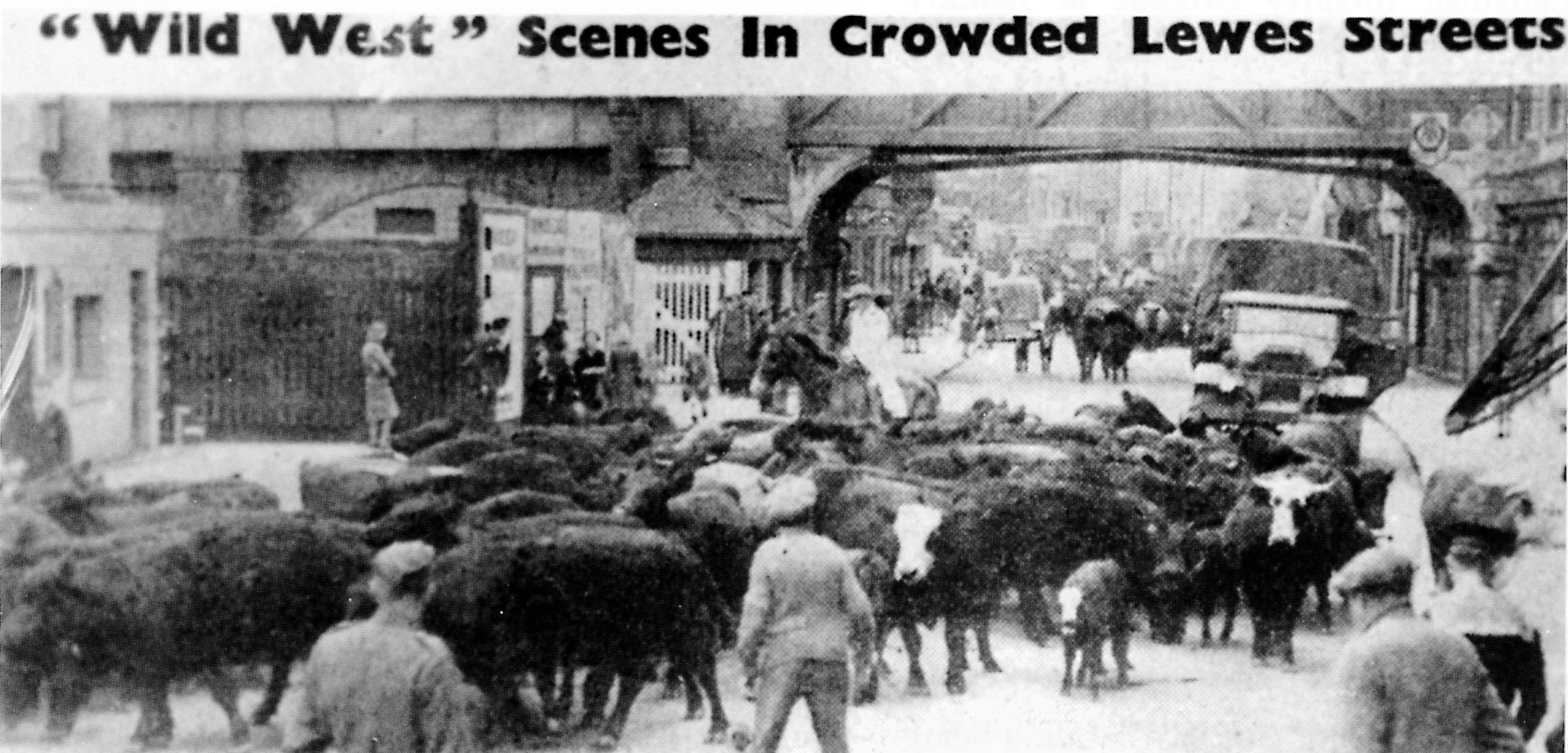
Wild West Balsdean cattle roundup in Lewes; Sussex Express, 18th May 1942.
The Woodman’s found a farm in the west country to move to, but had to leave much of their furniture and other possessions behind. Dalgety, with help from the army as well as members of the Southdown Hunt, drove the farm’s cattle over the downs to Lewes where they were loaded onto a train to a farm in Yorkshire. The Lathams had to leave their mother’s piano behind.
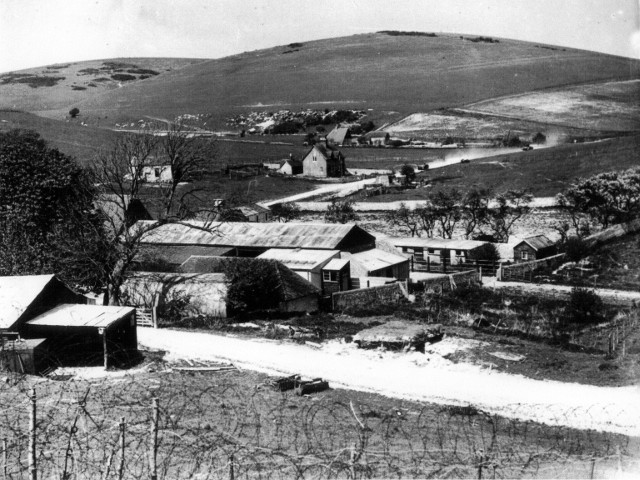
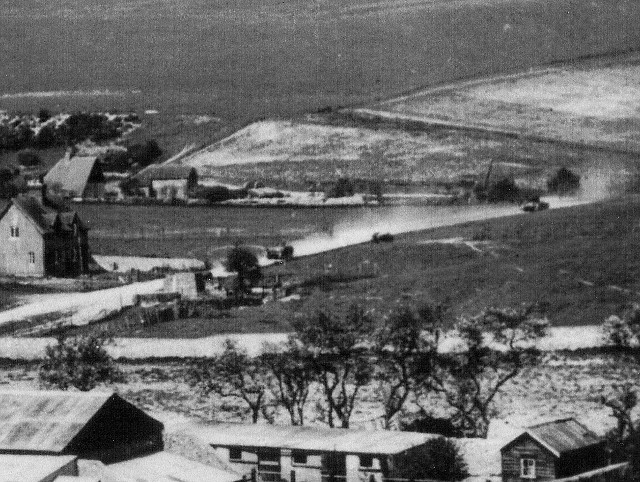
Tanks move into Balsdean. Photo: Holland – Mercer Collection.Tanks move into Balsdean – detail of photo. Photo: Holland – Mercer Collection.
Local history recounts that it was mostly Canadian’s who trained in Balsdean prior to the tragic Dieppe Raid on 19th August 1942, which departed from the nearby port of Newhaven. Of the 4,963 Canadians that departed for France, only 2,210 returned, and many of these were severely wounded. This was a casualty rate as bad if not worse than just about any other battle during either the first or the second world wars.
Balsdean shell craters. Background RAF aerial photo from 1945. East Sussex Record Office, The Keep.
I highlighted most of the larger shell craters and associated WW2 features in this aerial photo to help show the extent of some of the training in this area. Just outside of this photo (taken by the RAF shortly after the war), to the north west, was the demolished remains of Newmarket Farm and three large German bomb craters on a nearby hillside. These were considerably larger than the artillery shell craters shown in this image. The many mortar craters which would have also existed across this area, many of which can be seen in a photo of the hillside to the east of Balsdean Farm given towards the end of my talk, are too small to be seen in this image. The double line of yellow dots, centre left, is evidence for one of the many anti-landing defences laid across the relatively flat hilltops in this area. The figure-of-eight shaped feature was a narrow gauge railway which was probably used to tow a target for anti-tank weapons training.
This is a video I put together as part of the talk. The audio was downloaded from part of a podcast on military activities across history on the South Downs and was commissioned by the South Downs Joint Committee in about 2008. The series was called “Landshapers. Voices from the South Downs landscape. An Audimus[?] Production.” Sadly it and all the other superb audio documentaries of the series are no longer available on the Internet (because of the replacement of the S.D. Joint Committee by the S.D. National Park?). This particular podcast was called “Conflict and War”. I very much hope the South Downs National Park is able to reinstate them.The pictures were not part of the original broadcast:
The first was of the isolated downland Balsdean Farm, shortly after the military took over;
The next few are of a range of Imperial War Museum photos of generic training activities;
The tank picture is also from the IWM, and was taken in the village of Rottingdean, immediately to the south west of the Balsdean military area;
The plane crash pictures were of a Dakota (C47) allied troop transport plane which crashed on a hill top near Kingston Ridge, opposite Newmarket Plantation, in the north eastern part of the military area, on the 19th November 1944, killing all on board;
The last image is of Balsdean towards the end of the war.
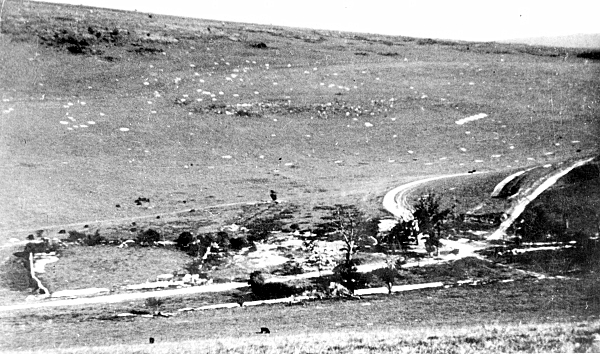
Shattered remains of Balsdean Farm at the end of the war, showing mortar and shell craters on hillside. Photo: Holland – Mercer Collection.
Balsdean Farm was the last survivor of a medieval deserted village. The remnants shown here are from the very end of the war. They show a picture of utter and complete destruction. Of the beautiful Queen Anne style Balsdean Manor house, only low stumps of wall remains to be seen in the front centre of this photograph. A thousand years of history had been swept away in just a very few short years. A plaque has now been set in the grass over the site of the altar of the former Norman Chapel. By the time of the war it was used as a cattle shed, but services were still held there at Easter by the vicar of Rottingdean.
My father and most of the other children who lived in the nearby village of Woodingdean had a wonderful war – the only injuries being self inflicted accidents from illegally collected ordnance from the military training area, much of which was still live. Fortunately all survived, with the exception of an unfortunate donkey killed by a German bomb.
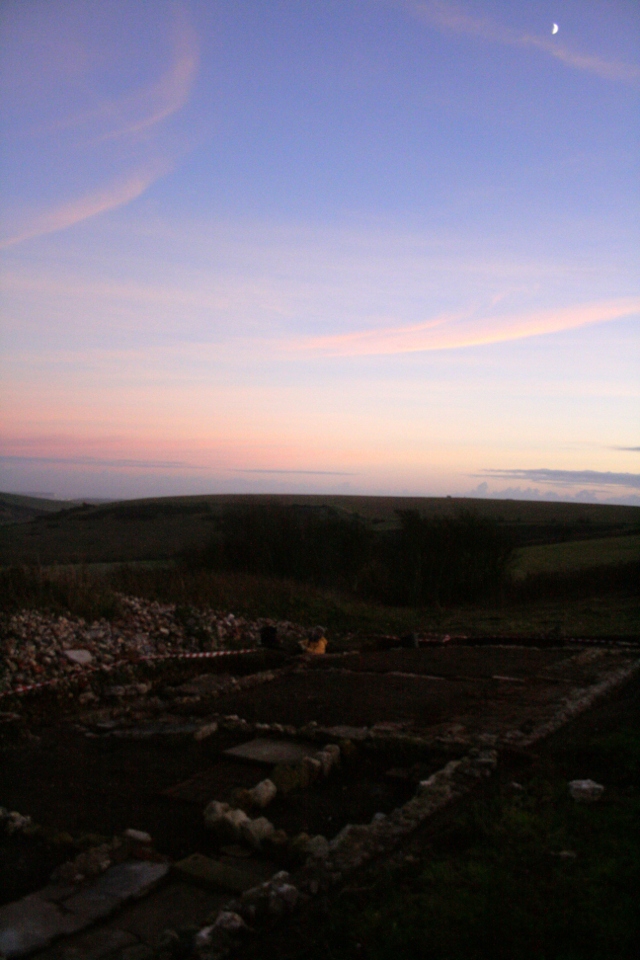
Looking SE at Newmarket Farm dig site at sunset.
All good talks should end with a sunset and a happy ending! In 2013 my mother and I were fortunate to be given permission to excavate the demolished remains of the cottage where she was born. It was a beautiful place. Full of memories.
I closed the talk with that most ridiculous of wartime songs, and a favourite of my dad:
As you may know I have both AD(H)D, Asperger’s and an above average intelligence. Just like the archetypal mad professor, it is a wonderful combination of traits to have in order to start an exciting and ambitious project. However I do have a tendency to allow things to get out of control 🙂
Newmarket Farm Dig (2013) by Dominic Sladden
About 5 years ago I started researching the history of Newmarket Farm. I amassed a large number of notes and put many of them into an early draft of a book which is available here, though without illustrations as yet. Two years later I received permission to excavate its demolished remains. This meant teaching myself archaeology. Then a roller coaster ride of digging, photo editing, computer drawn plans, research, blogging, and poor record keeping, which lasted about year. Last year I gave some talks about the dig, which took up a lot of my time researching its historical background to be able to further interpret the excavated structures and finds. This resulted in more scattered notes, annotated maps and plans. I also joined some digs to gain some practical experience under the supervision of experts, as well as attending a number of introductory courses which helped me to further learn best archaeological practice.
During last year I struggled to write my dig report. And it was a struggle! It was becoming an extremely large somewhat rambling in depth book describing my personal experiences in struggling to manage a dig project. And it had been (and still is) an extremely exciting dig project in an iconic location, with personal connections and lots of (if I say so myself) well researched history. If completed it would form the basis of an excellent book. However the primary need was a preliminary report, which is basically a technical catalogue of the excavated contexts. No report, no more digging. But it was the technical recording of my archaeological contexts that I had biggest problems with.
So it is, two years after I started digging, that I am now working on my limited records in parallel with processing my many bags of finds and tagging my thousands of photos. The outcome should be some retrospectively generated context records.
**** If you find yourself in charge of an archaeological dig do not wait two years to formally record your contexts 😉 ****
I did try. Honest I did. I believe that I managed to do the best that I could at the time.
Fortunately I am in the privileged position to have the time to learn how to complete this essential part of an archaeological dig project. And in the past few months I have been making reasonable progress…
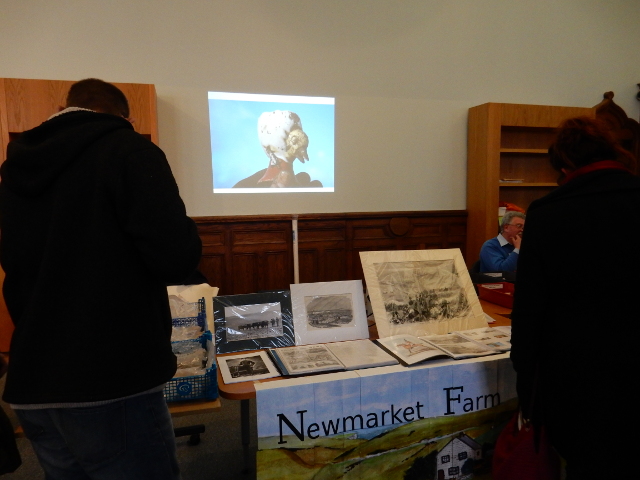
The Whitehawk Camp Family Archaeology Day – at which we had a stall – was a great success. The Museum recorded well over 500 visitors – many of which stopped to admire our display – and very good it looked too, if I say so myself!
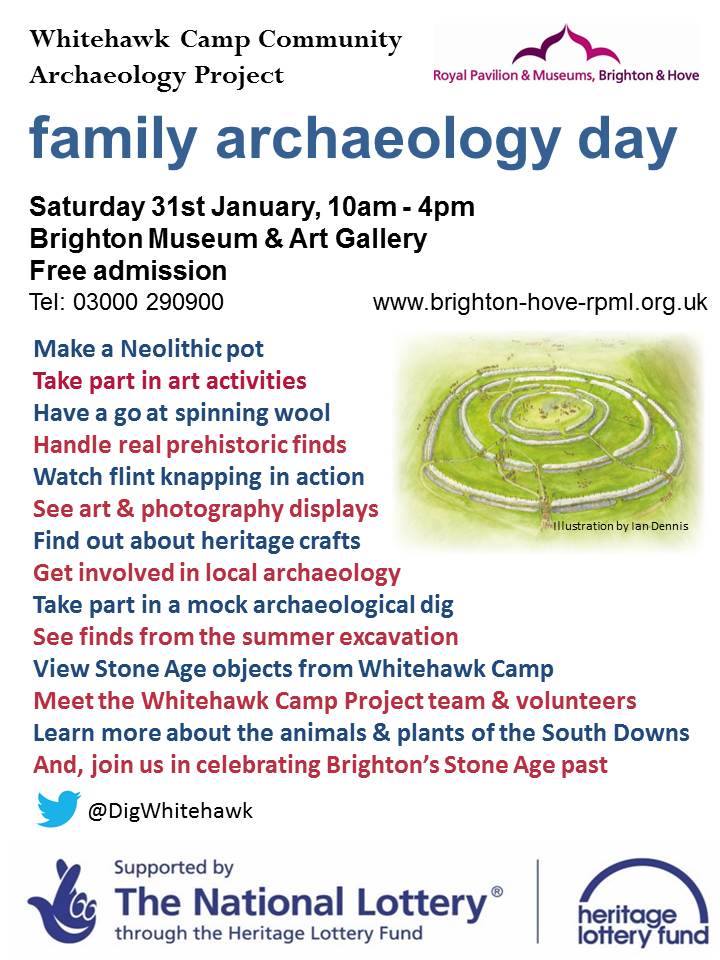
Great news! The Newmarket Farm Dig project is to participate in the Family Archaeology Day at Brighton Museum, Saturday 31st January 10am-4pm. We hope to have lots of pictures as well as finds from our last dig on display.
Archaeologist, Hilary Orange, wearing her manager’s hat for the Whitehawk Camp Community Archaeology Project passed on this invite – our biggest venue yet – which gives us a wonderful opportunity to share some of the amazing history we have been discovering about the Downs between Brighton and Lewes.
The Whitehawk Neolithic causewayed enclosure (to give it its proper name) is located on the hill top immediately east of Brighton, partly under the start of the Racecourse. It is one of the oldest ritual monuments in Britain, built at a time when the whole of Sussex may have consisted of just a few dozen families. They were the first to start farming the South Downs, and would have had to come from far and wide to help in the construction of such a large monument, and to participate in the ritual gatherings held some 500 years before the building of Stonehenge. Last year the Whitehawk Camp Community Archaeology Project received funding to research, promote, and protect this little known, nationally important site.
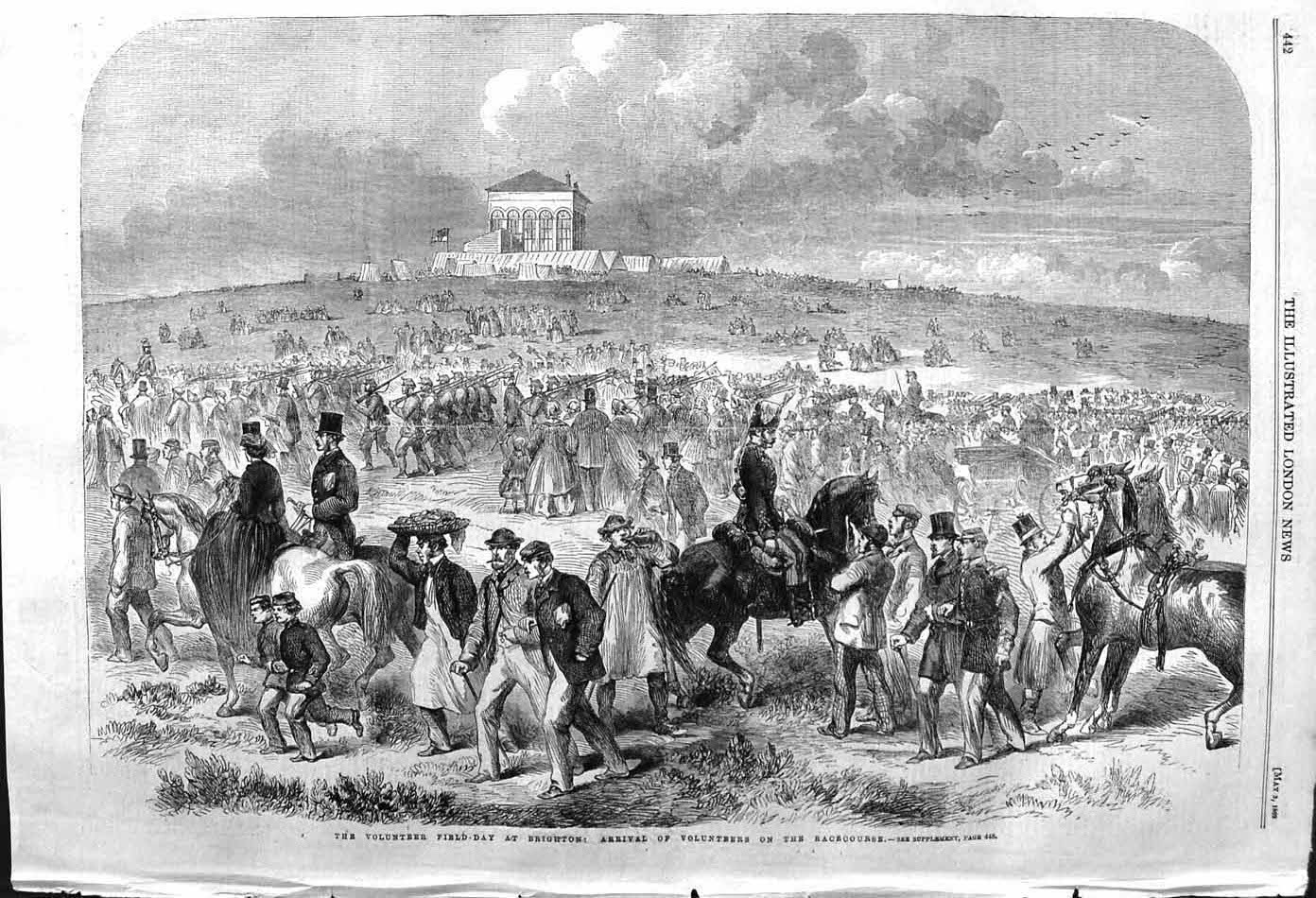
Interestingly, for our project, looking at the very much more recent history of this area of the Downs, the next big ‘ritual’ gatherings on Whitehawk Hill were those organised by and for that great and (in)famous ‘tribal leader’ the Prince of Wales (later to become George IV)! His greatest monument was the building and decorating of the Royal Pavilion in Brighton – very different from the banks and ditches of the nearby hilltop. He initiated, and participated in, several huge mock battles on the South Downs east of Brighton, involving thousands of troops, and tens of thousands of spectators from both Britain and Europe. These military events became a regular spectacle right through the nineteenth century. In 1862, 132,000 people were reported to have travelled by train to Brighton to participate in one of these events. On the day of the main event, the evidence seems to be that spectators gathered on the first available open downland outside Brighton for a picnic – by the Racecourse on Whitehawk Hill. From its associated ridge top (now known as the Race Hill, which leads on behind modern Woodingdean onto Newmarket Hill) magnificent views are to be obtained of the hills and deans in which they held they ‘battles’.
Volunteer Field-Day at Brighton: Arrival of Volunteers on the Racecourse; Illustrated London News, 1862.
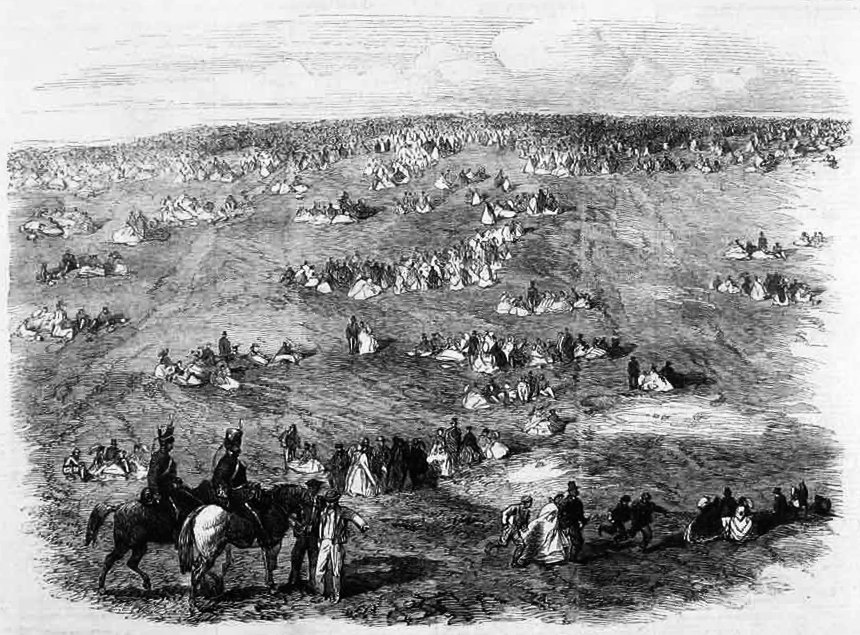
I may be wrong, but I understand that the Whitehawk Camp archaeologists digging in the vicinity of the Neolithic enclosure last August, instead of their hoped for prehistoric remains, apparently found large quantities of what appeared to be nineteenth century picnic debris. Luckily Hilary Orange is an archaeologist with an interest in such relatively modern ‘rubbish’ and asked for it to be saved. The images I show here may well be able to help the police identify some of those responsible for littering such an historic monument!
Volunteer Field-Day at Brighton: People on the Downs; Illustrated London News, 1862.
It is a wonderful feeling, knowing that I am not on my own, and that similar work has been considered to be of historical importance.
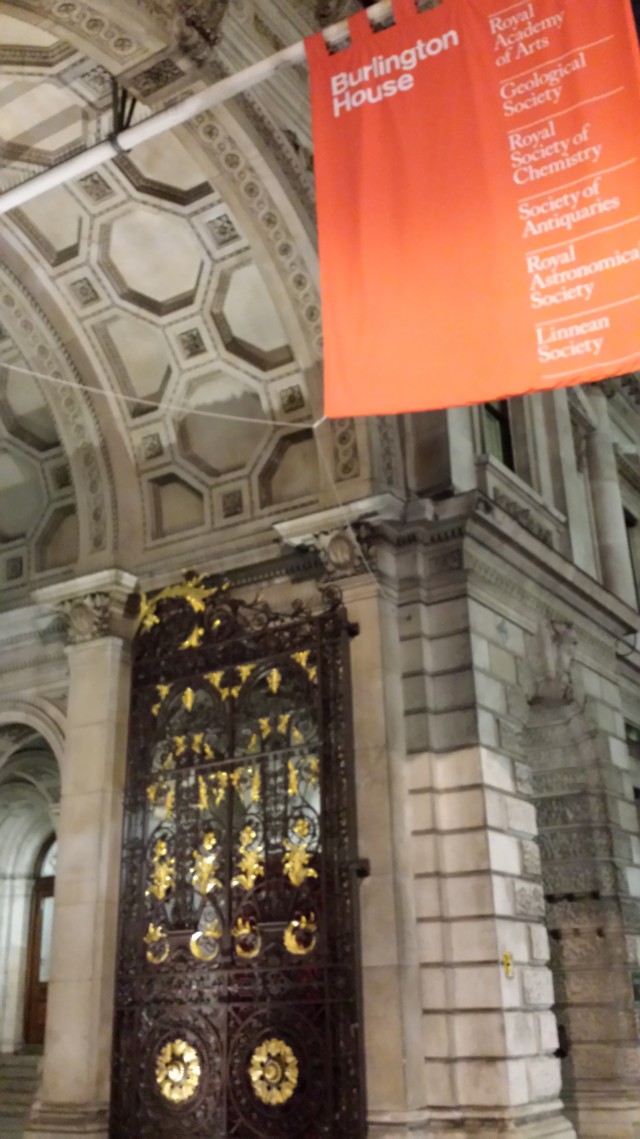
So it was, on Monday, that I attended the The Society for Post-Medieval Archaeology AGM and talk, at the Society of Antiquaries in London. My first time, and needless to say it was well worth the usual feeling awkward – the not quite knowing whether to butt into other people’s conversations or stand around feeling like a lemon waiting for someone to come to my rescue – during the drinks interval! The heroic knight who came to my rescue was Hilary Orange with whom I had previously been in contact. She had told me there was a chance of obtaining grant funding for the project and at the meeting informed of a new community grant which would exactly match my type of project. She also introduced me to Lara Band an archaeologist who has an interest in buildings, homes and the people who live(d) in them.
Lara sent me information about an amazing archaeological project – the Sandhills Project – which included the excavation of some 19th c. workers cottages at Alderley Edge. Their aims were more or less identical to mine, and their full report is freely available online – exciting isn’t the right word any more – wow(?)!! And they have written a book!! I wonder whether Father Christmas has room on his sleigh for it? It is good to know that this multi-disciplinary team of professionals considered such a research excavation of these workers cottages as a novel undertaking in 2009. They called it historical archaeology, since written, photographic, and oral history could be compared and contrasted with the archaeological evidence. Built in the late 18th c. and demolished post WW2, but with surviving memories of two of the people who lived there as children, it is surprisingly similar to the Newmarket Farm – which gives me great hope for my own project’s future.
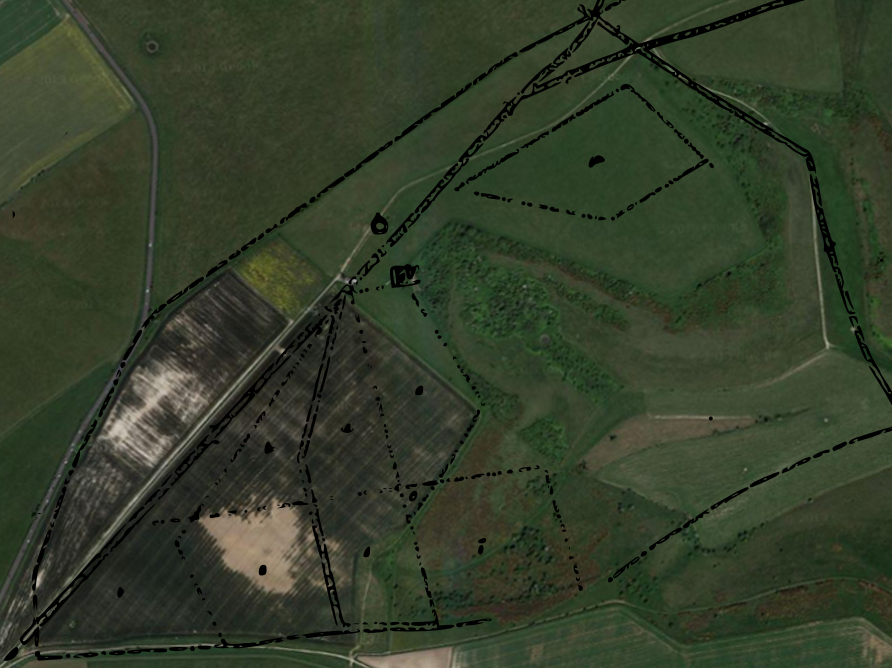
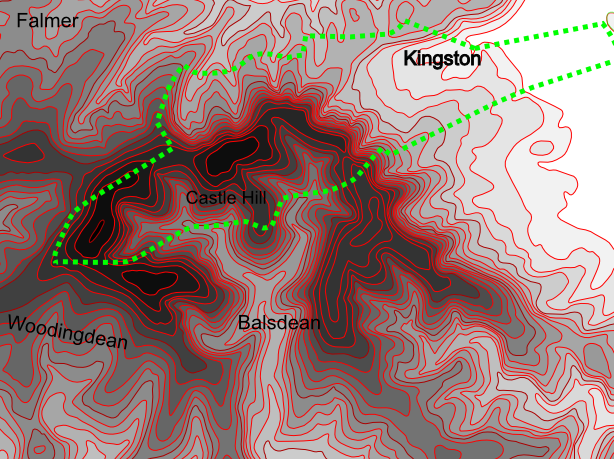
Map of the Downs between Brighton and Lewes: Contour data and Kingston Parish boundary courtesy of OS Maps, traced using Inkscape.Newmarket Farm location. Overlay of old and new O.S. maps and Google Satellite images, produced using Gimp.
I recently found a new website with maps, which was given the fantastic acronym of MAGIC. I am always looking out for (free) online sources for maps. I have always loved maps. And now the abilities of free software – such as Gimp, an Open Source alternative to Photoshop, or Inkscape, an Open Source alternative to Corel Draw – to create transparent overlays, have enabled me to compare changes in the historic landscape that would otherwise have been difficult to do. As an unfunded amateur I have very little money or other resources with which to conduct my researches, so freely accessible maps and related images are always welcome. A few very useful sources that I have found are:
The MAGIC website provides authoritative geographic information about the natural environment from across government. The information covers rural, urban, coastal and marine environments across Great Britain. It is presented in an interactive map which can be explored using various mapping tools that are included. Natural England manages the service under the direction of a Steering Group who represent the MAGIC partnership organisations.
Last but not least in this list, Yeakell and Gardner’s excellent late 18th century maps of southern Sussex.
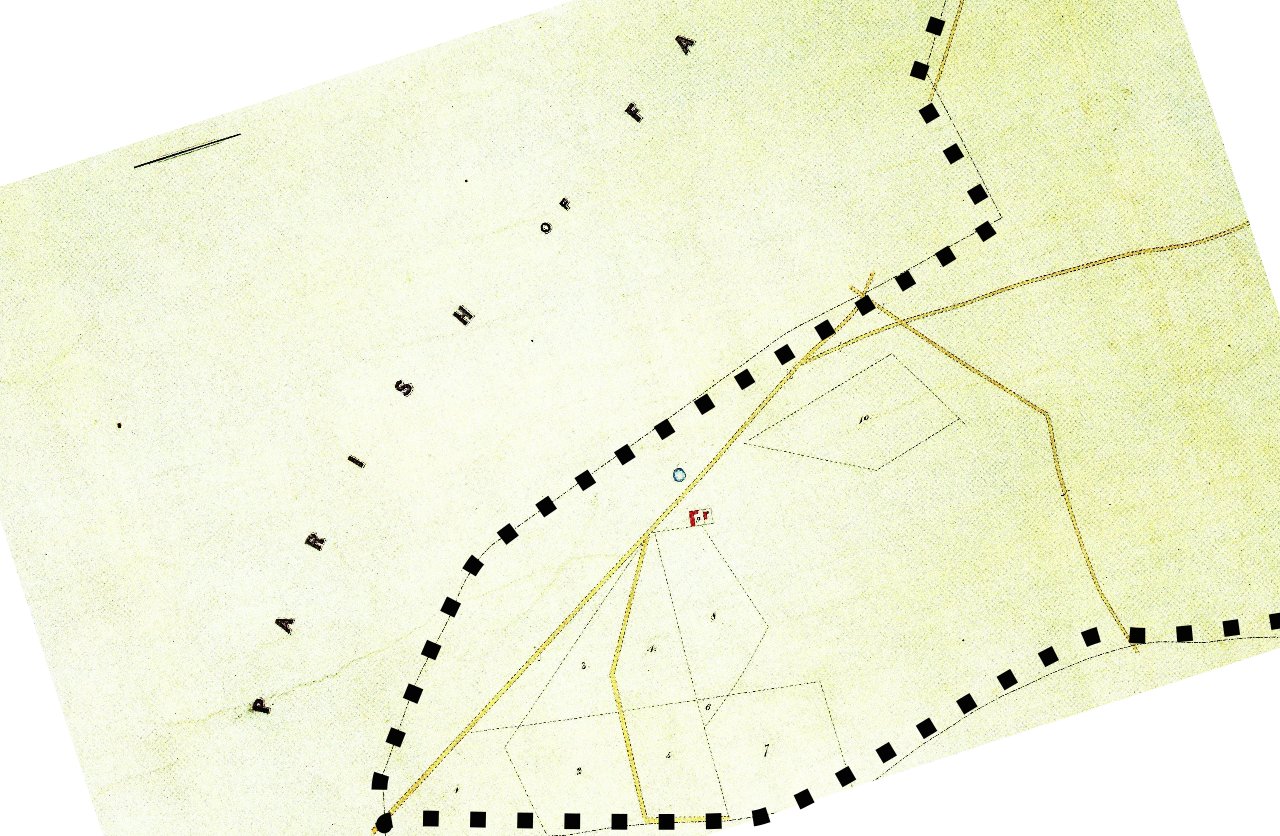
Google Satellite image of Newmarket Farm Dig overlaid with dig plan, produced using Gimp and Inkscape. 1922 farm plan from ESRO.Google Satellite image overlaid with 1830 plan outline from WSRO.Western part of 1830 Kingston Enclosure map (WSRO), overlaid with Kingston Parish boundary (OS maps).Kingston Parish, with contours traced from O.S. map using Inkscape.
Last month I wrote of an exciting oral history project based on Stanmer, which is to provide the basis for a play by Sara Clifford of Inroads Productions that is due to be written. It will be centred around a clash of cultures – ancient and modern – which were very much accentuated during the 1960s with the construction of Sussex University on part of the Stanmer Estate. I jumped at the chance to be involved – helping record a wide range of people’s stories. As I have said before, Stanmer has many connections with my own project about the history of Newmarket Farm.
However, I discovered from Sam Carroll that the discipline of oral history recording is not primarily about producing a record of historical events. It is to capture people’s personal stories. The interviewer – me on this occasion(!) – is supposed to be as invisible as possible and only there to enable the interviewee to tell their personal story as best they can. I initially found this hard to grasp – as an ‘oral historian’ I was not to steer them towards an objective account of (alleged) historical facts – my aim was ‘just’ to record their highly subjective and fallible memories. And I found that really challenging. I wanted to learn about the historical events associated (directly or indirectly) with my own researches about Newmarket Farm – and the person I interviewed (John Gapper) was interested (where possible) in doing just that. However, to remove interview bias, all the interviews were based on the same pre-prepared questions relating to their experiences of living, working, or visiting Stanmer.
This part of the project has now been completed, and about a dozen volunteers each interviewed one of a wide range of people connected in different ways with Stanmer. It was interesting to hear highlights from such a diversity of voices and points of view.
People tell their stories differently to different people. John told his stories to me knowing that I was a local myself, as are both sides of my family – and similarly interested in wildlife and local history. But not everyone has such narrow interests. What would John have told someone who wasn’t local, or interested in rural community traditions, wild flowers, or the consequences of the WW2 training exercises which decimated much of the Stanmer Estate, including the village, house and church? So I had to restrain myself during at least the recording! I wanted to ask him more about what he remembered of the stories told him by the previous generation, whose memories went back 100 years or more, working and living in Stanmer. I wanted to know dates, names, places, events…
Yet I should (and do) know better. Not that it made it any easier! People’s memories are fallible. I know that because I have direct personal (often painful) experience that my own recollections are often partially or occasionally completely wrong. Personal bias is always present. From my studies a few years ago on the philosophy of science I know that subjectivity is always present. This doesn’t mean that we can’t or don’t know anything. It just means that we rely on others to share their subjective experiences and to compare and contrast them with our own. So it is that I have come to believe that ‘objectivity’ is an ideal based on shared collective experience. Multiple subjective experiences of an event or a phenomenon add depth or ‘colour’ to that event, making it richer and more interesting. This, I believe, is the aim of an oral history project. To recognise that people’s memories – however ordinary or extraordinary they may be – can be precious gems. Diamonds may be valuable, but it is their multiple facets that make them sparkle in the light!
Several months ago I contacted Bethan Prosser of Brighton University’s Community University Partnership Programme. I have been looking for support on and off for a while now – both academic and practical. Until recently, apart from some very good meetings with some of their staff nothing has as yet materialized.
A few months ago now, Sam set up a meeting with Sara Clifford of Inroads Productions, Veronica of Zap Art, Peggy and myself to explore the possibilities of creating a community project relating to our own historical researches of the Newmarket Farm and its surroundings. Whilst this was not immediately successful, Inroads Productions has an exciting project new project centred on 300 years of social change relating to the Stanmer estate. They have a Facebook page.
STANMER – ORAL HISTORIES
Local company, Inroads productions, has been awarded R&D funding through the Arts Council England’s Grants For The Arts Scheme to develop Stanmer, a brand new play to be written by Sara Clifford.
This site specific play will explore the history of Stanmer House and its surrounding park, with particular reference to the early 1960s, a time of great social and cultural change, when Sussex University was being built next door.
Mixing eighteenth, nineteenth, twentieth- and even twenty-first- century histories, together with a ‘60s groove, and informed and inspired by the memories of local residents, the play will explore how we approach our history – from stately homes to country parks, from monuments to common land- and asks what is our ‘heritage’? What do we want from it? And to whom does it belong?
It is planned that the play will be produced by Veronica Stephens for Zap Art and Sara Clifford for Inroads Productions in May 2015, as part of the Brighton Fringe, with a professional cast and director, and involving up to 100 local people as participants.
Getting involved:
There will be plenty of opportunities for members of the community to get involved by either contributing their stories and memories or taking part in free oral history training sessions delivered by Brighton University Centre For Research in Memory Narrative & Histories.
ORAL HISTORIES- 50 voices
A key element of the project, will be to work with local residents to collect their memories of the House and park, and particularly the early days of the university, as well as family stories about working at the House. Do you have a story to share? Then please get in touch..
FREE ORAL HISTORY TRAINING
Training in the collection of oral histories will be delivered by Dr Sam Carroll from the University of Brighton Centre For Research in Memory Narrative & Histories. Over four sessions, people will be able to learn about how to conduct interviews, how to use digital recording equipment and how to summarise and transcribe stories. They will be able to contribute to the oral history archive, and take away new skills to learn about their own families and local history.
The sessions will take place on Saturday 4th October (10-1pm); Wednesday 8th October (6-8pm) ( both at the Writers Place); and Thursday October 23rd 5.3- 7.30pm and Thursday November 6th, 5.30 – 7.30 both at Room M57, Grand Parade, University of Brighton.
Would you be interested in taking part ? Then please get in touch..
Dr Sam Carroll
Research Centre Administrator
Centre for Research in Memory, Narrative and Histories
CRD, Faculty of Arts
Grand Parade
University of Brighton
Brighton
BN2 0JY
United Kingdom
















![Landgirl during Second World War disk harrowing. Photograph probably taken at Woodingdean[?] by Brighton Parks & Gardens Dept. Image from The Royal Pavilion and Museums, Brighton & Hove.](https://southdownhill.com/wp-content/uploads/2016/06/ha921612_d01.jpg?w=1000&h=662)
![Fairbairn-Sykes Fighting Knife [2nd Pattern], modified, with scabbard; image courtesy of Imperial War Museum.](https://southdownhill.com/wp-content/uploads/2015/06/fairbairn-sykes-fighting-knife-2nd-pattern-modified-with-scabbard.jpg)