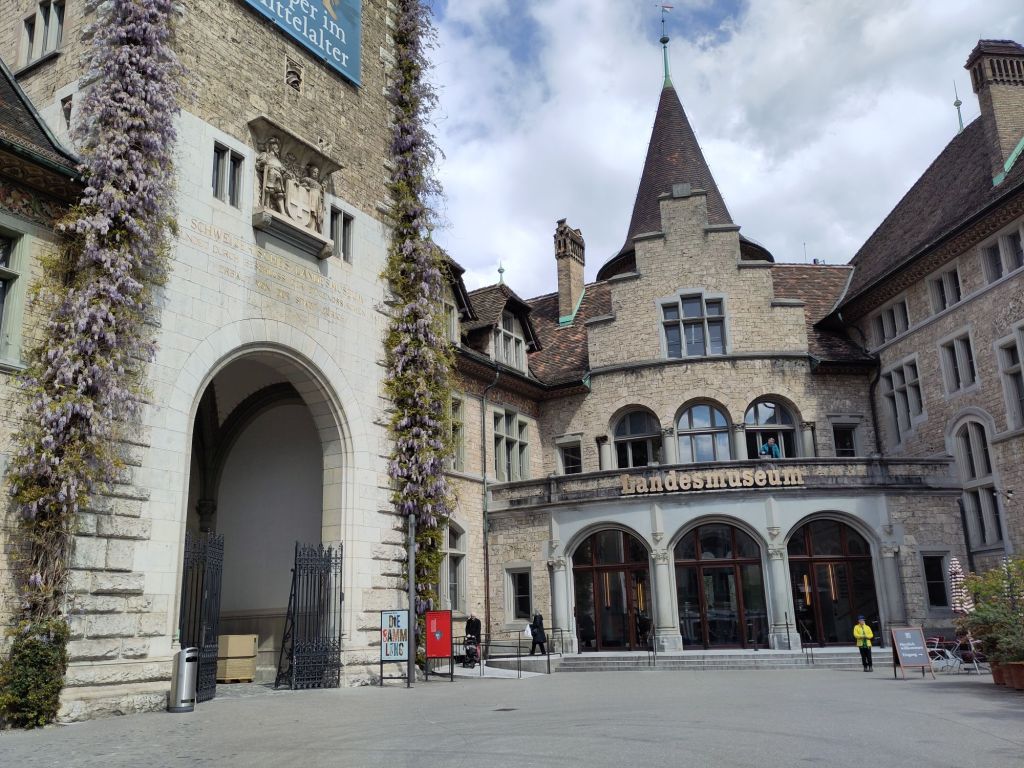
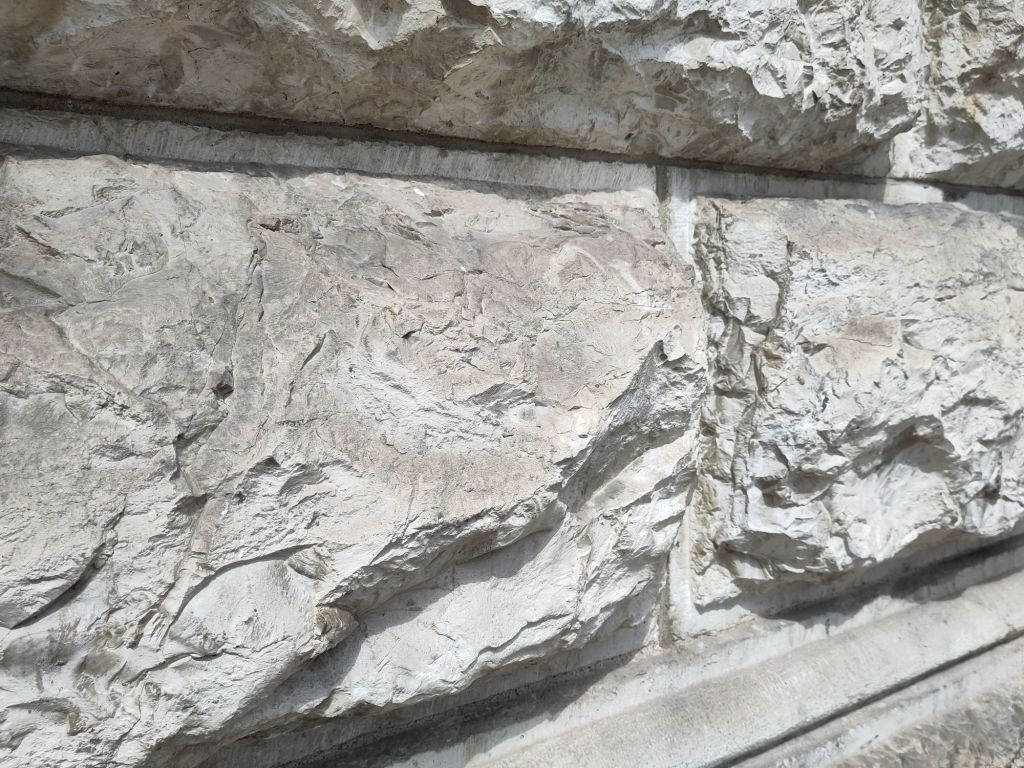
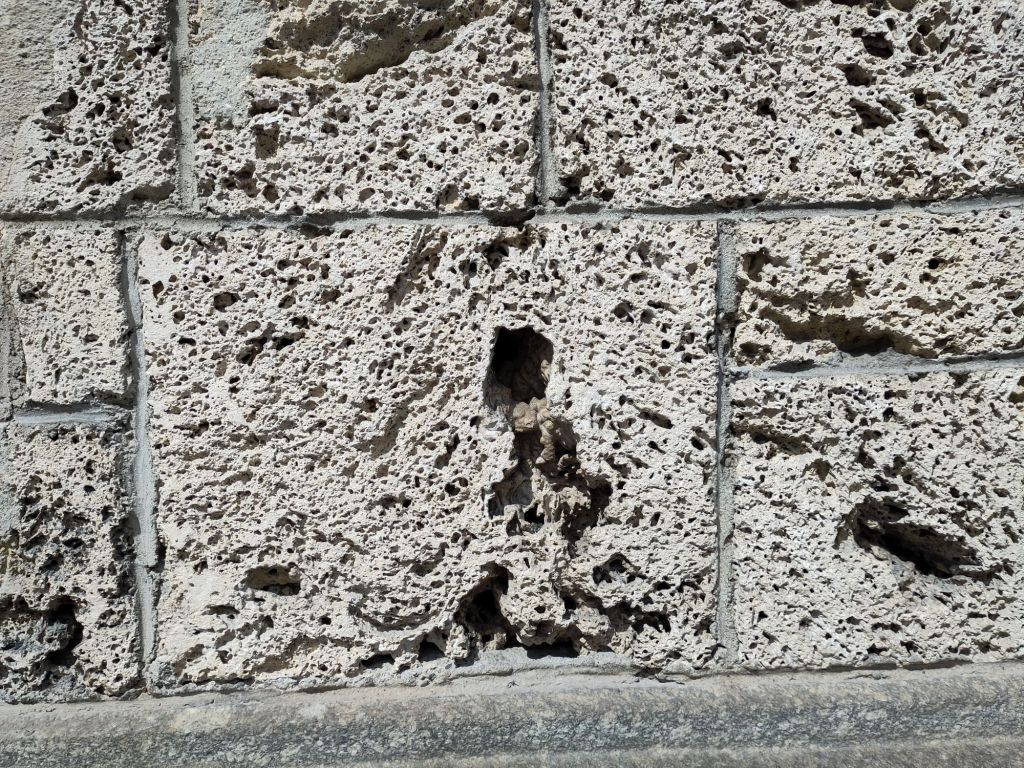
My train in the morning left the Paris Basin and its chalk behind, as I headed eastward into the Swiss Alps. My first change of trains was in Zurich where I observed buildings built of limestone (presumably local). My guess is that it came from the nearby Jura Mountains – a ridge of hills which run along the French-Swiss border. They gave their name to that most famous of geological periods – the Jurassic – made famous by the Hollywood dinosaur films. As you may have guessed I was excited by this!
Chalk and limestone have the same chemical composition but are very different in their form. The photos above show two types of limestone; one, solid and compact, the other was full of cavities. Whilst some limestones are purely inorganic in origin, the majority of them were formed by living organisms which lived in the sea. Their fossilized remains can often be found in both chalk and flint.
One of the reasons for this trip is to better understand the nature of chalk, including its origins. It is technically a very special type of limestone. The limestones of Switzerland were formed under very different conditions to the chalk to west and north (chalk is also found in Germany amongst other places).
However it is the other reason for my expedition of discovery that I will be posting here.
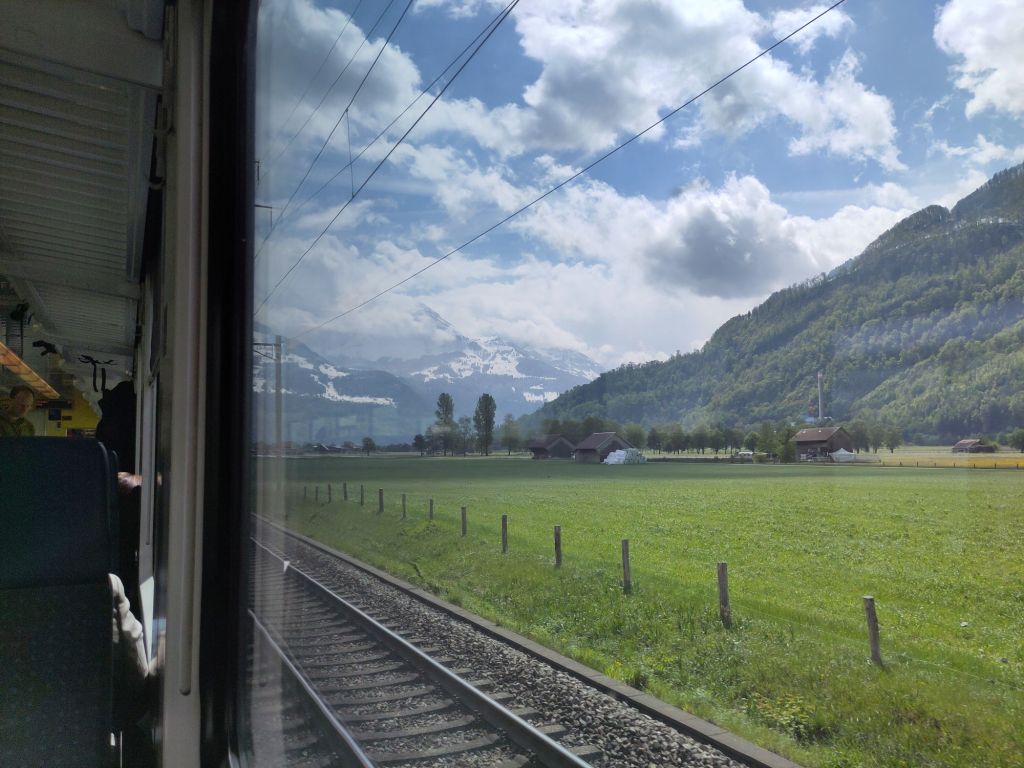
The Swiss Alps are famous, both culturally, scenically and geologically. They are extremely high. Yet some of their highest tops are composed of limestone and thus were formed in a sea. These seabed(s) therefore were somehow lifted up two three kilometres into the air. Somehow (more details later) geological scientists have dated the uplifting to be of the same period as when the gentle folds of the South Downs were also formed.
But enough of the technical detail and let me share a few photos of my journey, uplifted by railway to my destination at the end of the day; Ospizio Bernina, the highest station on a passenger mountain railway, that runs on simple rail, in the World!
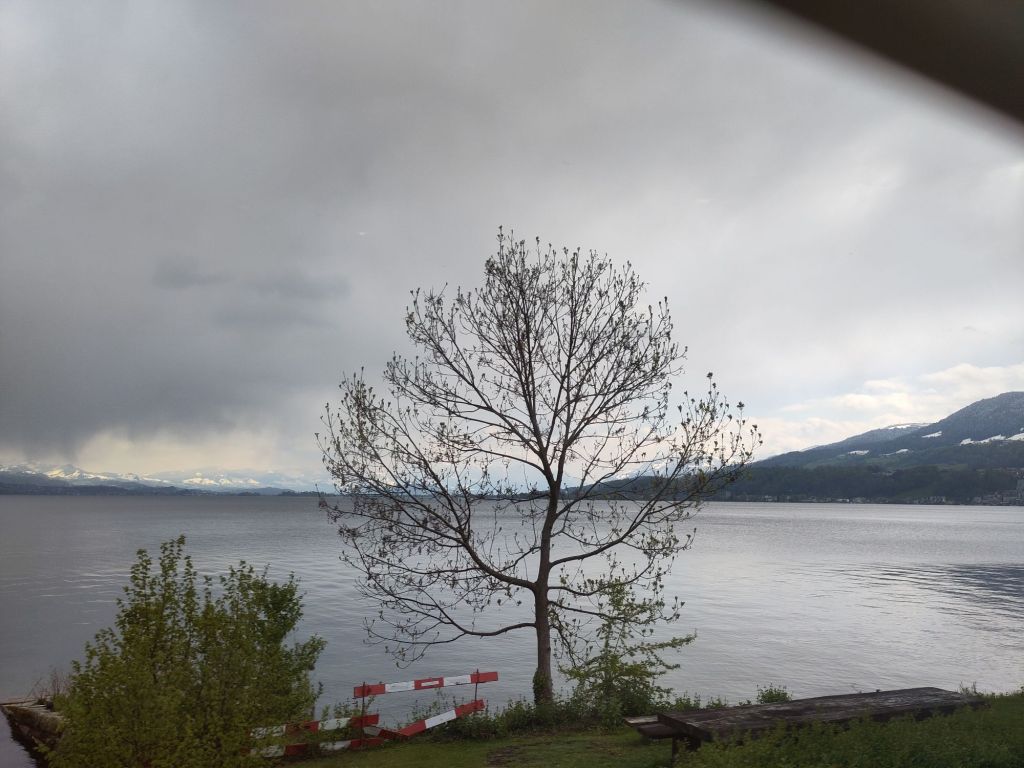

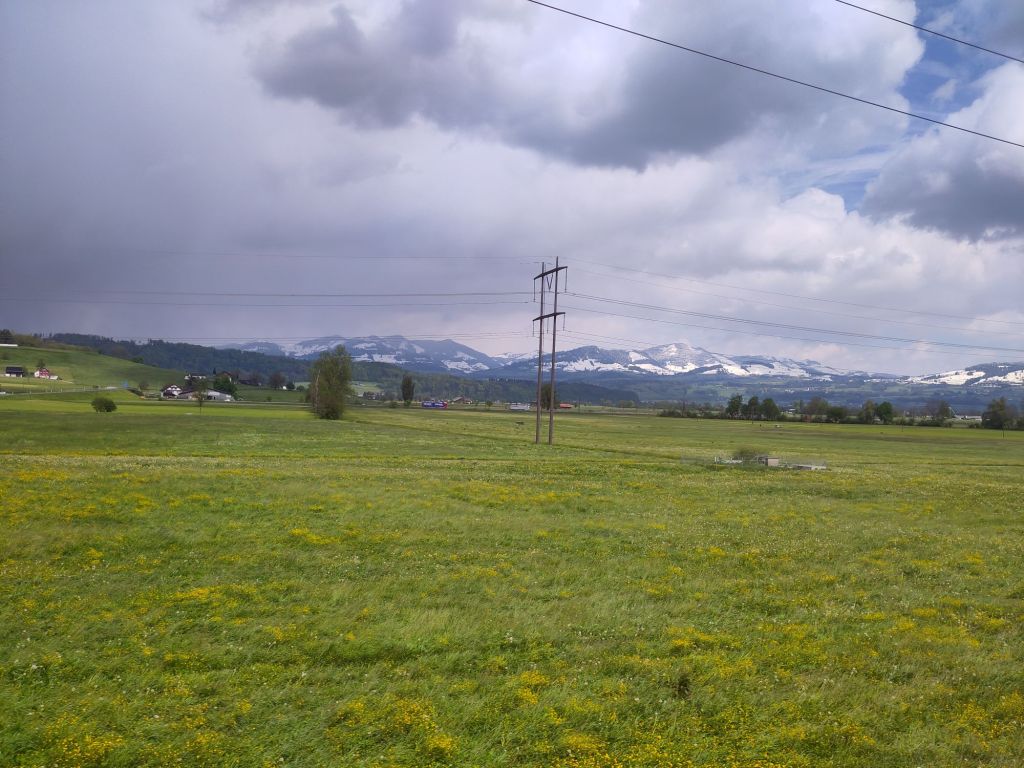
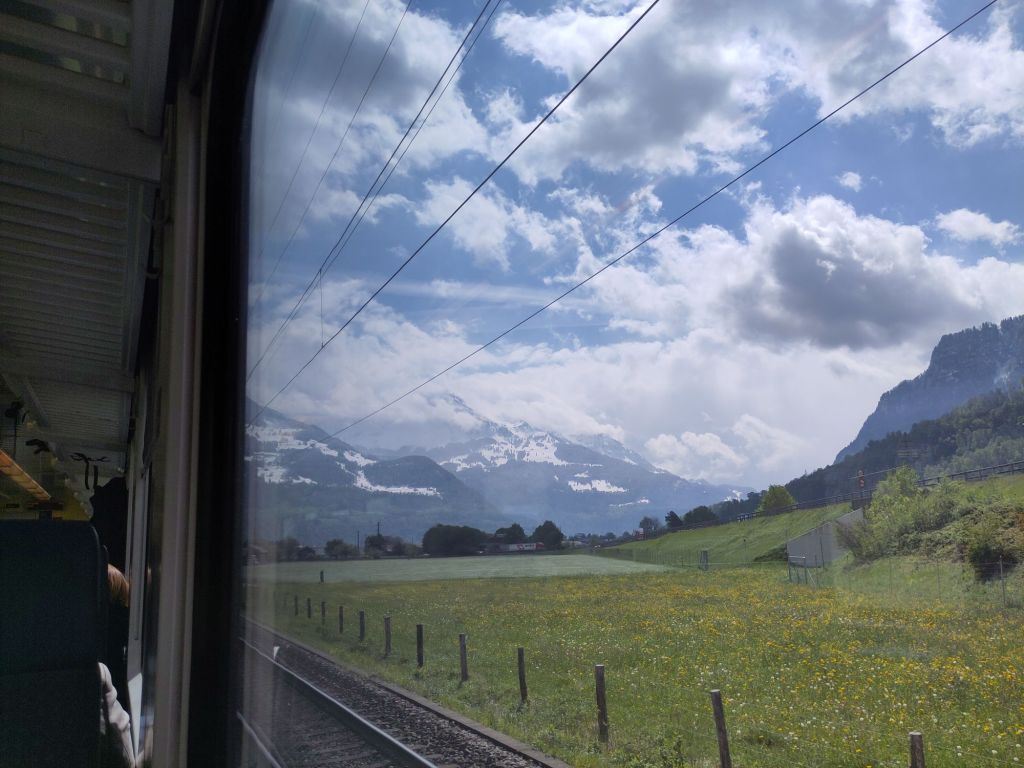
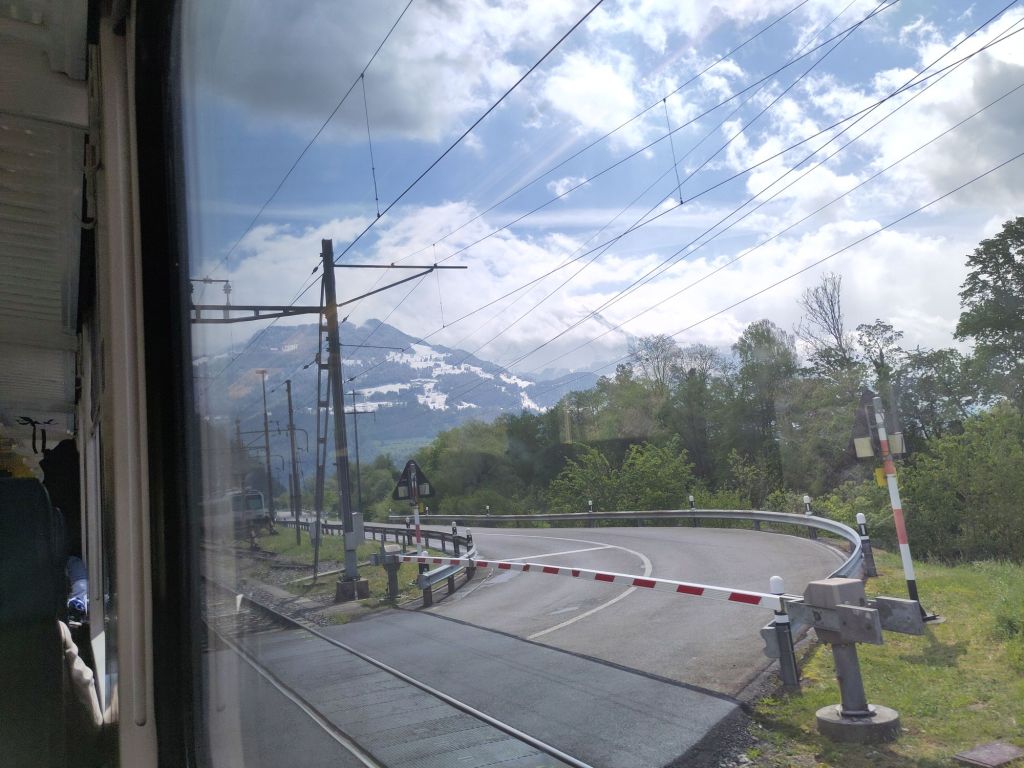

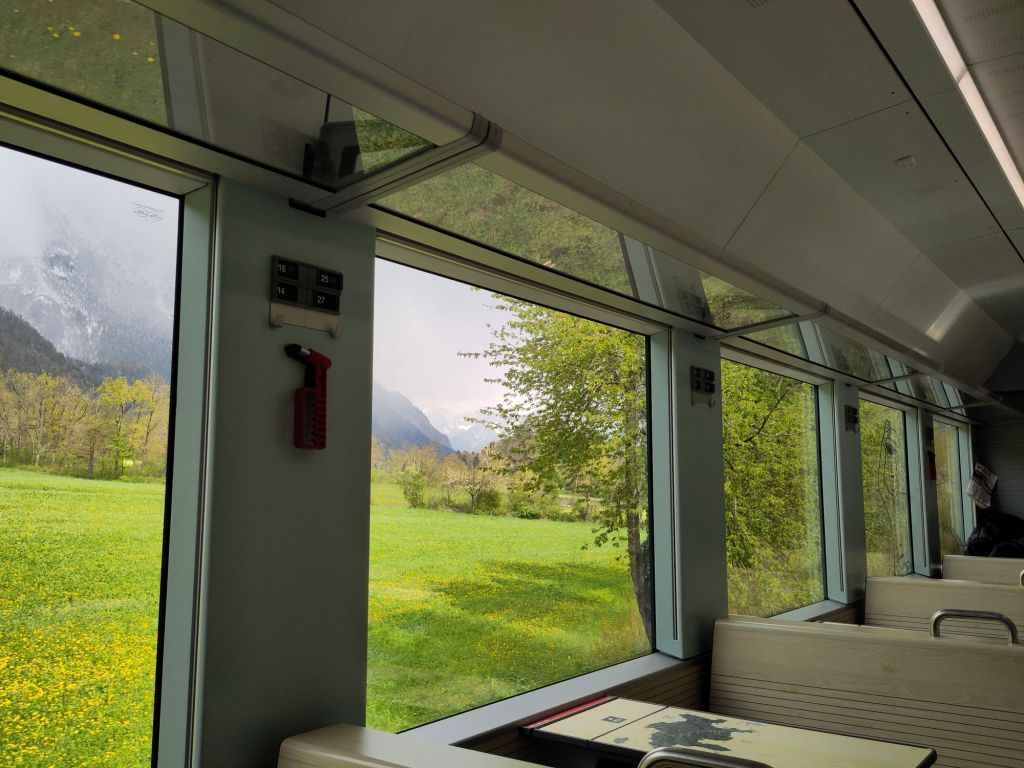
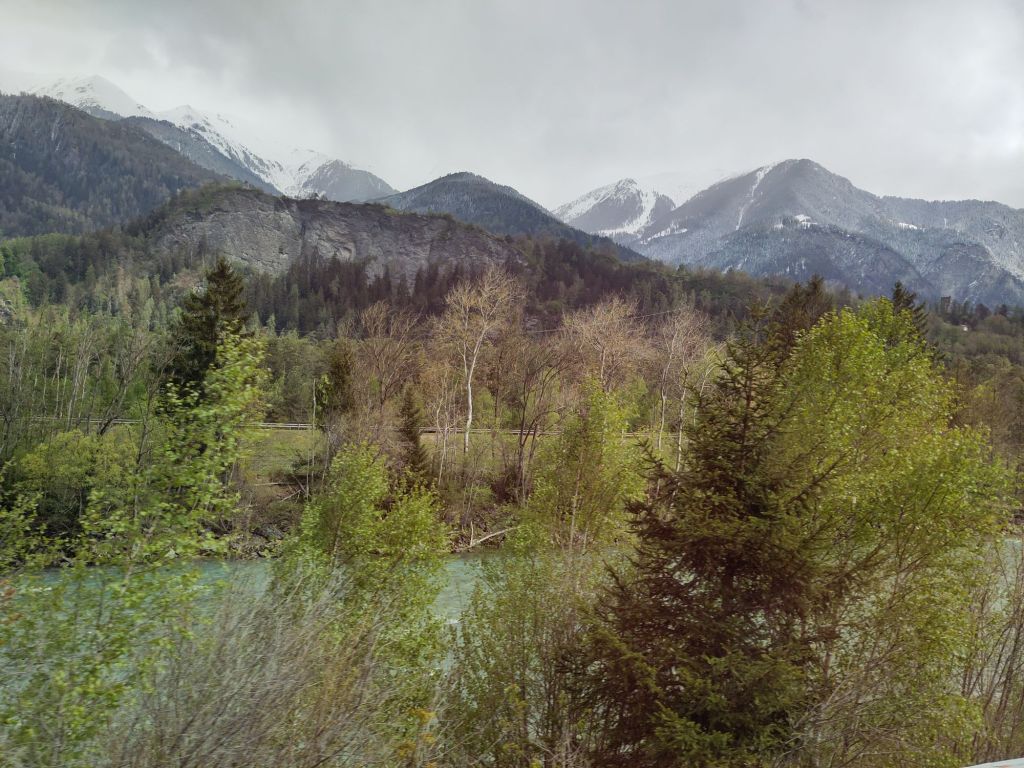

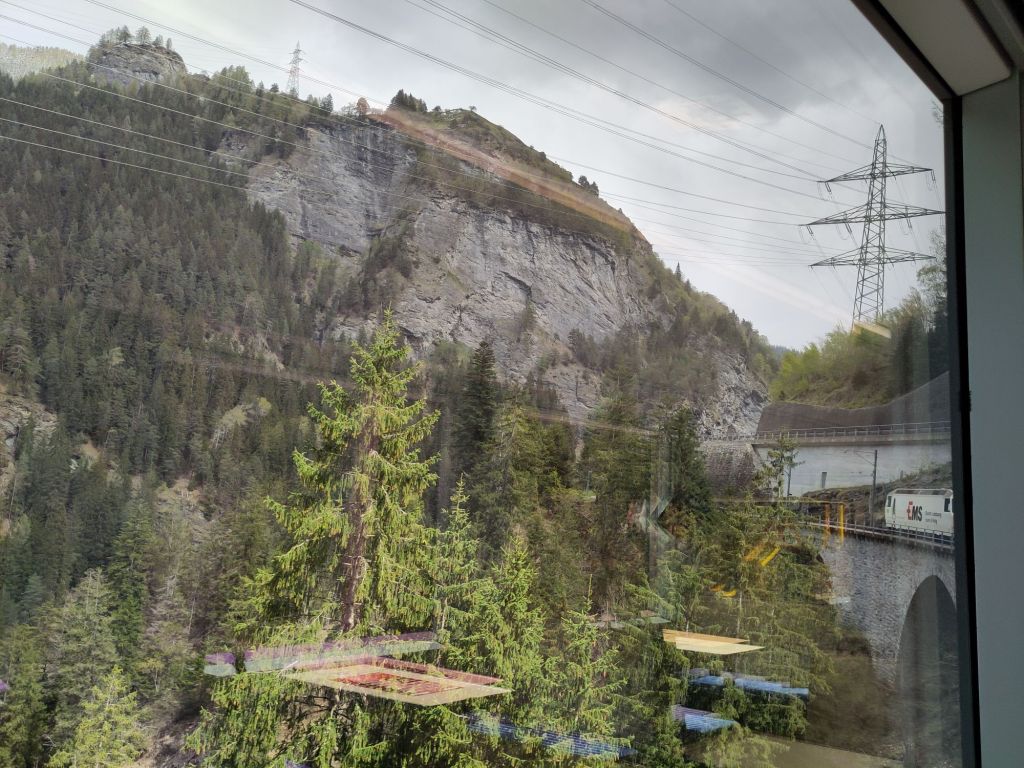
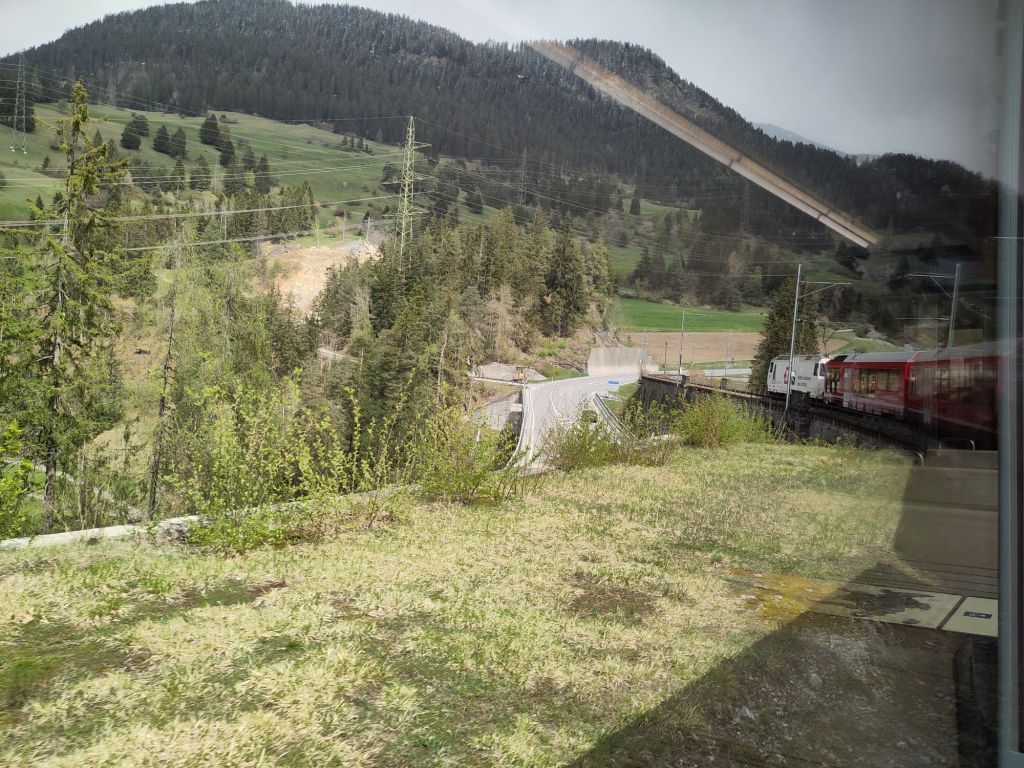


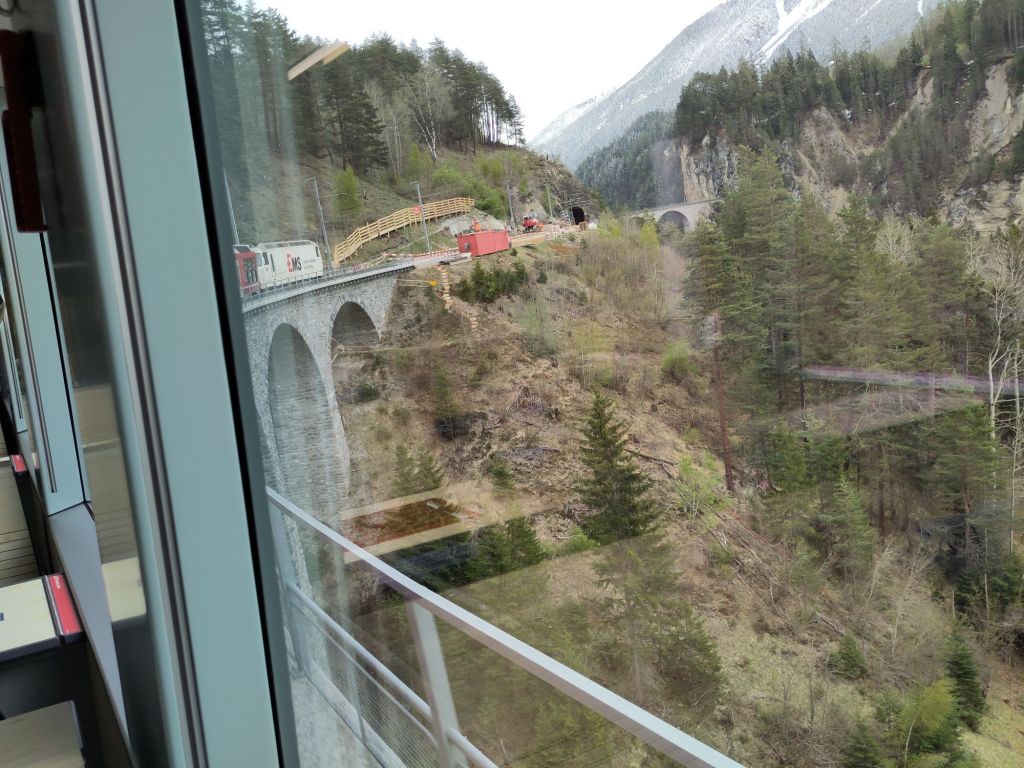
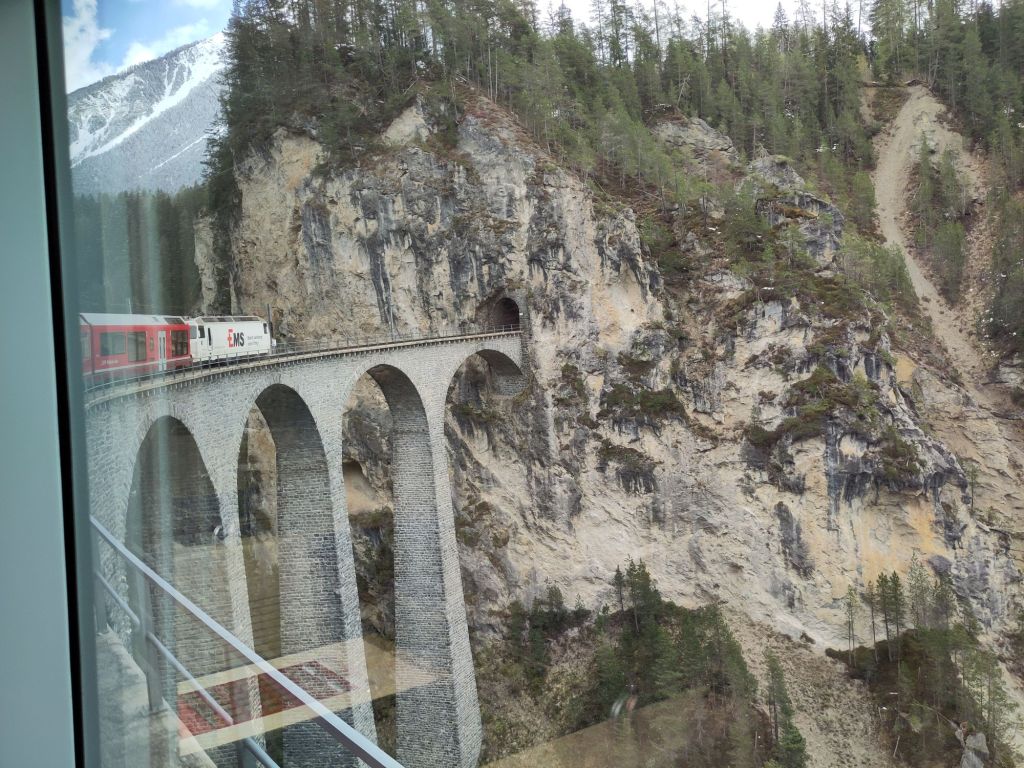
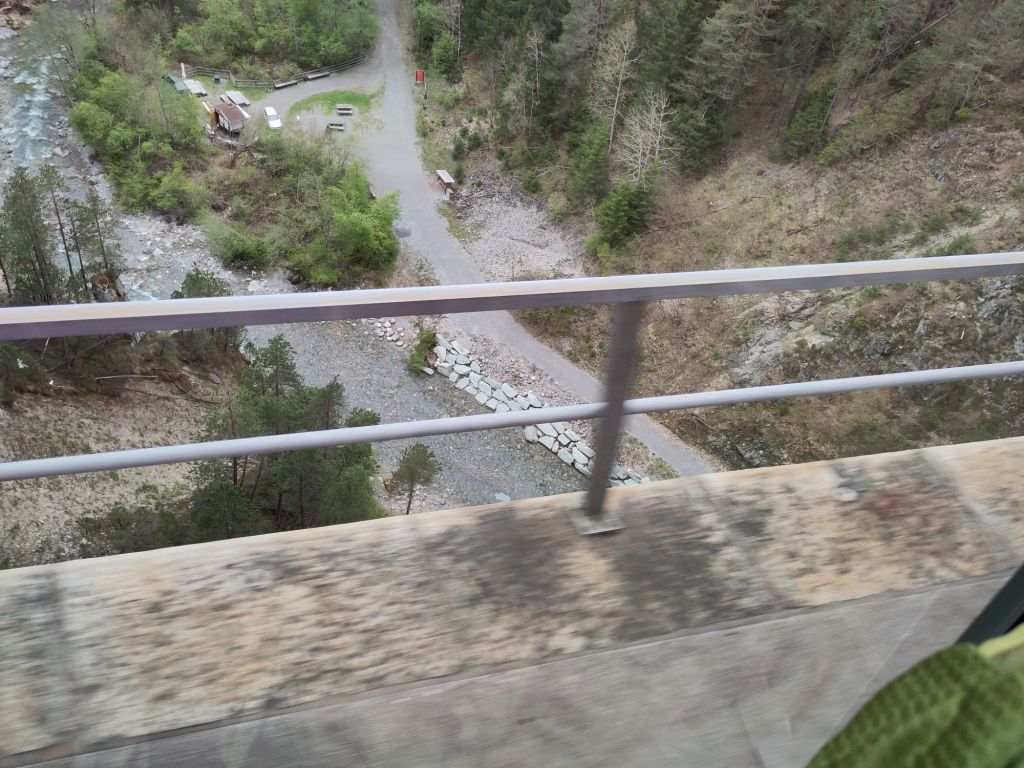
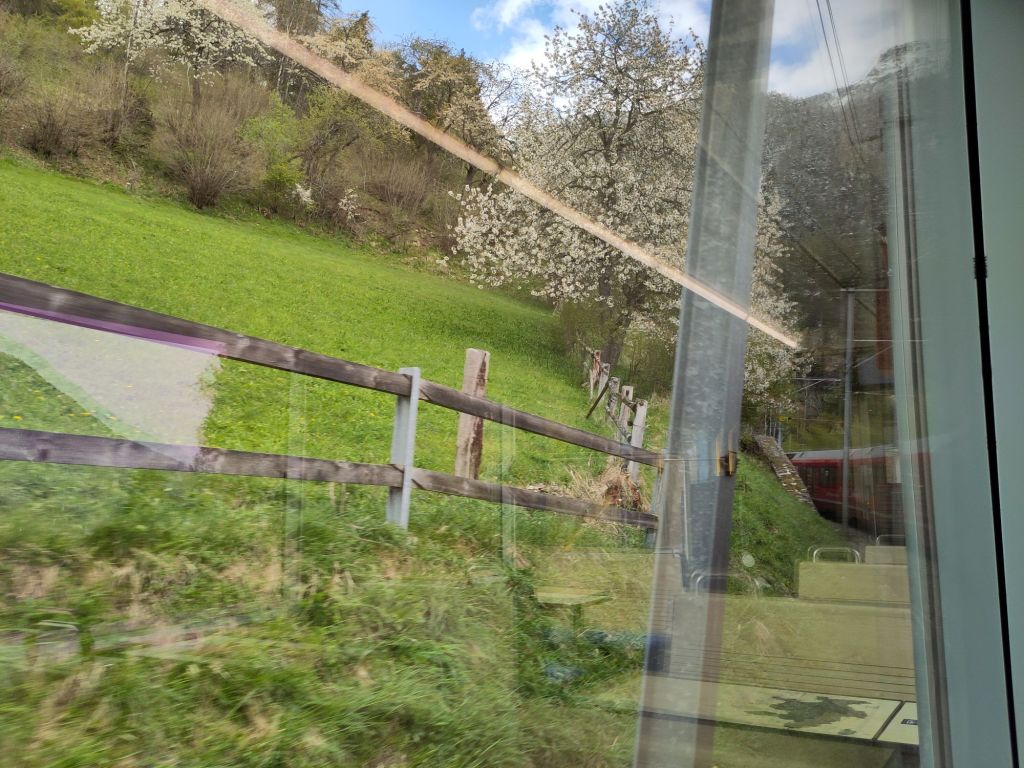
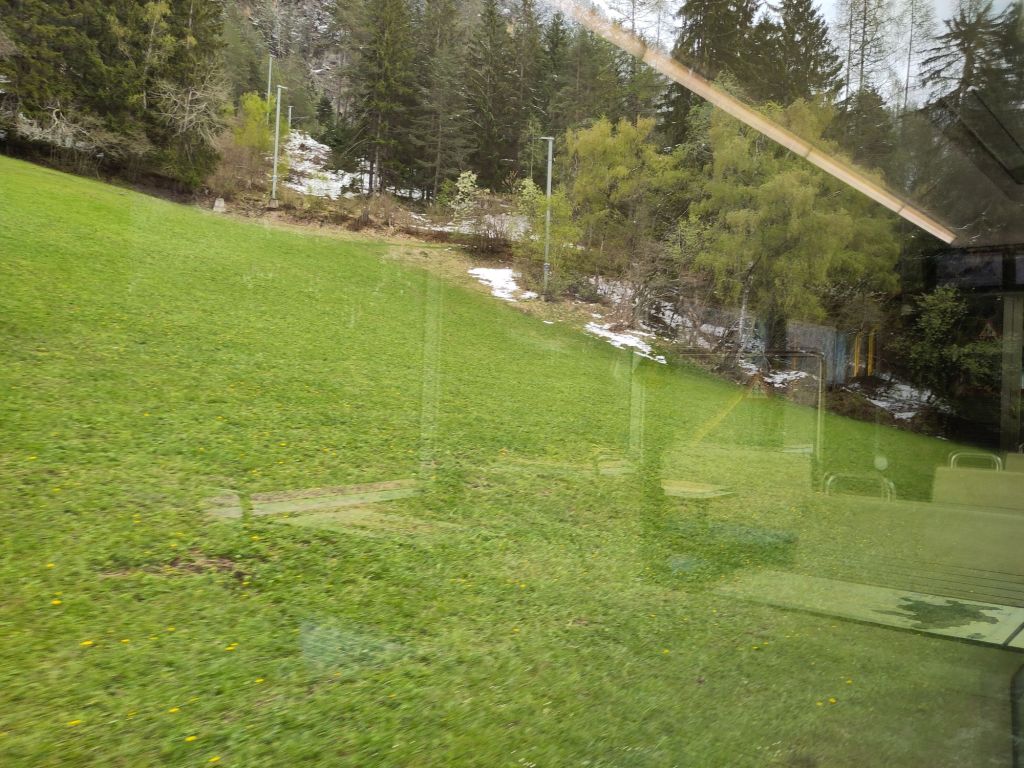

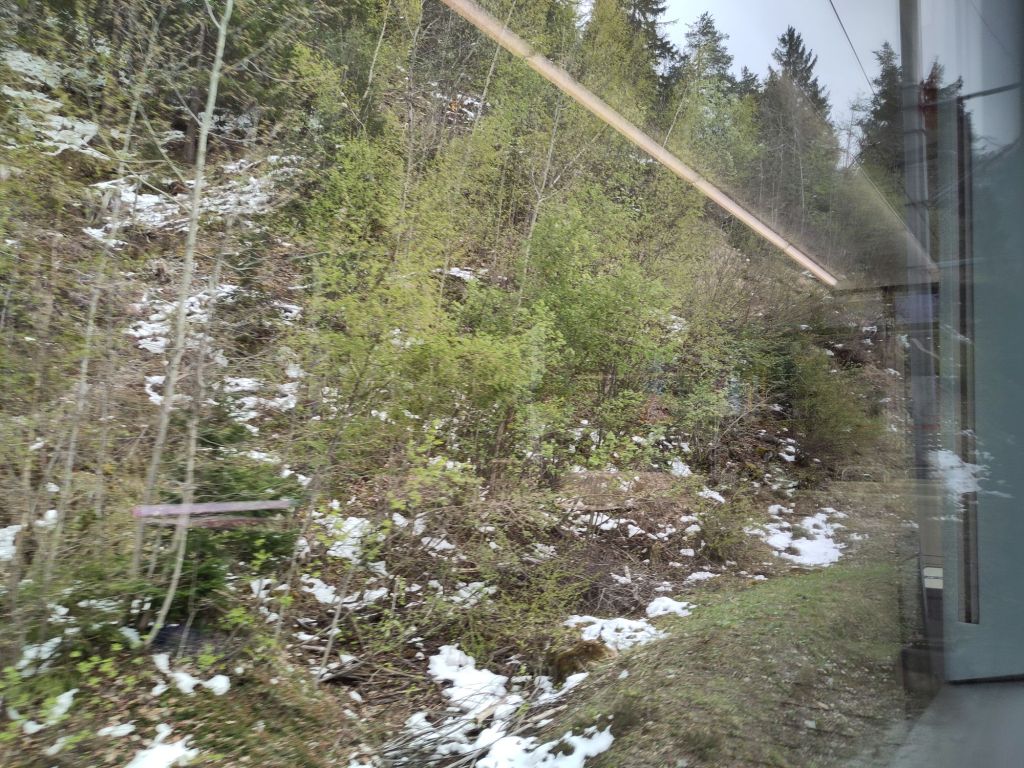
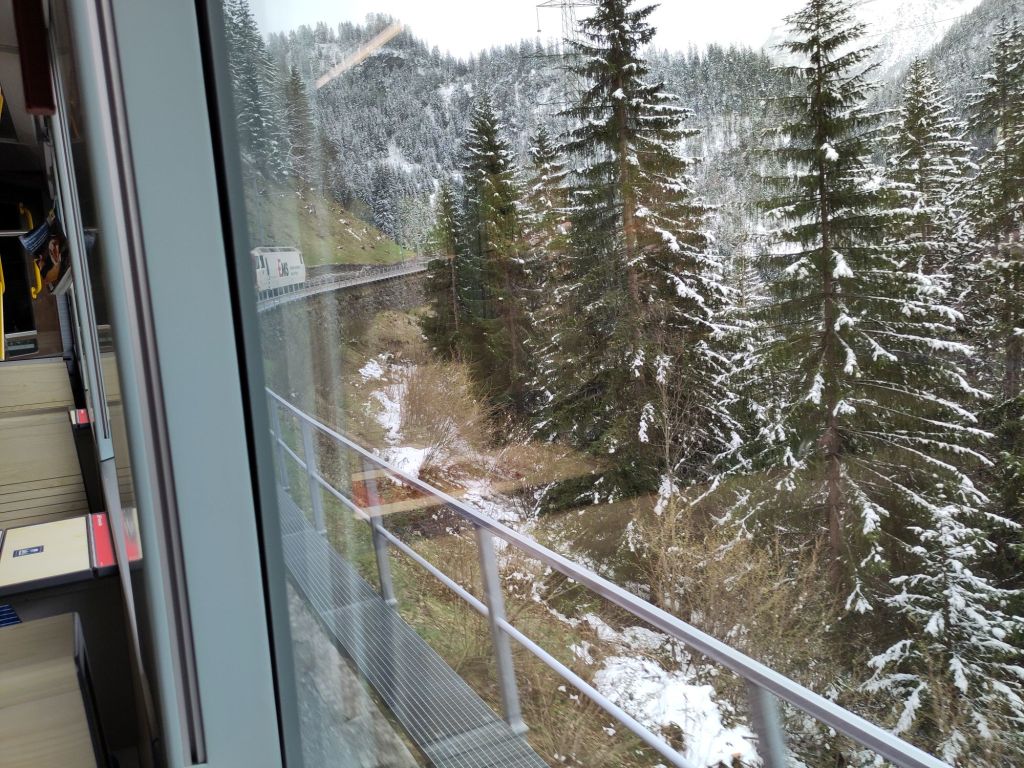


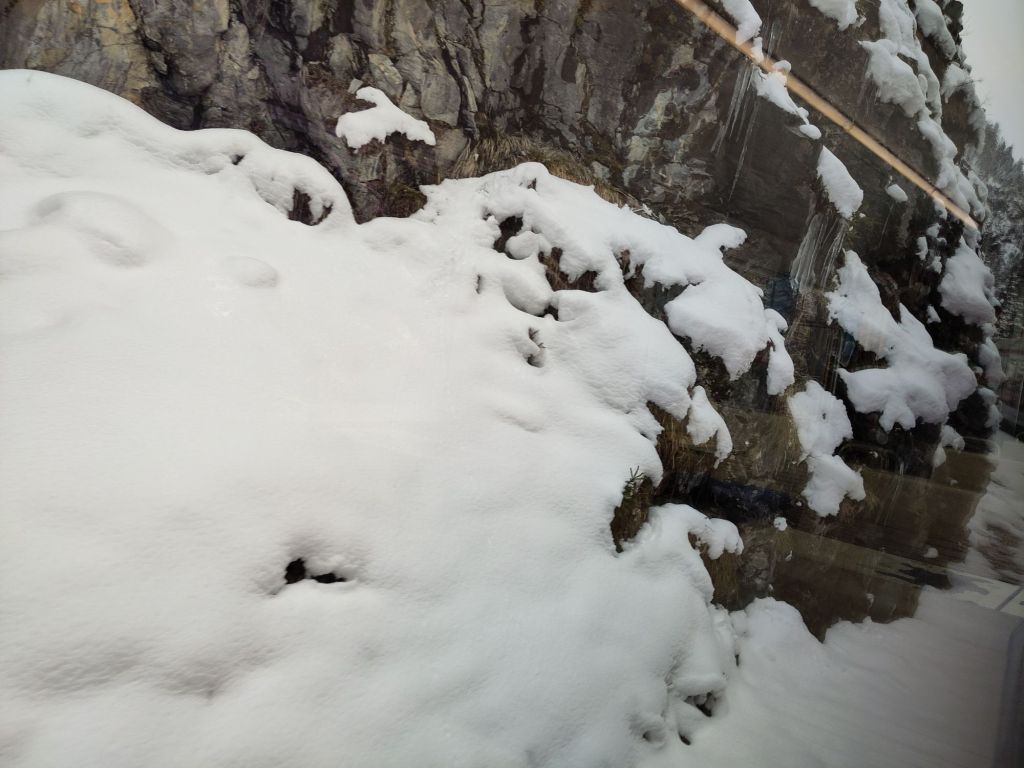
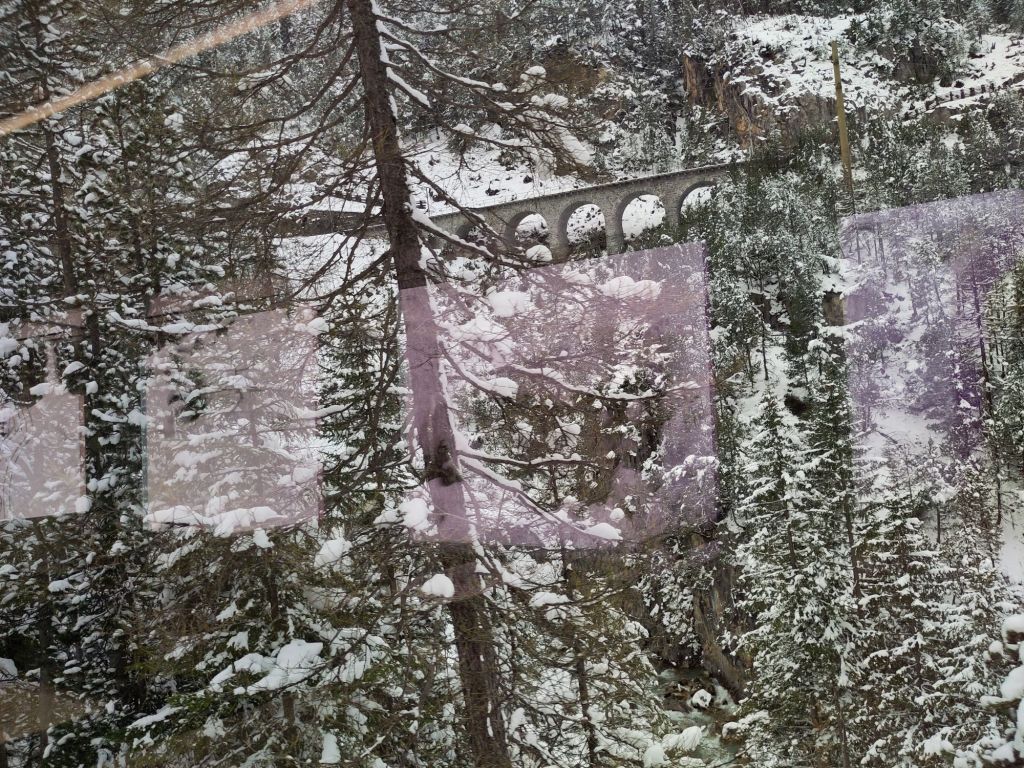
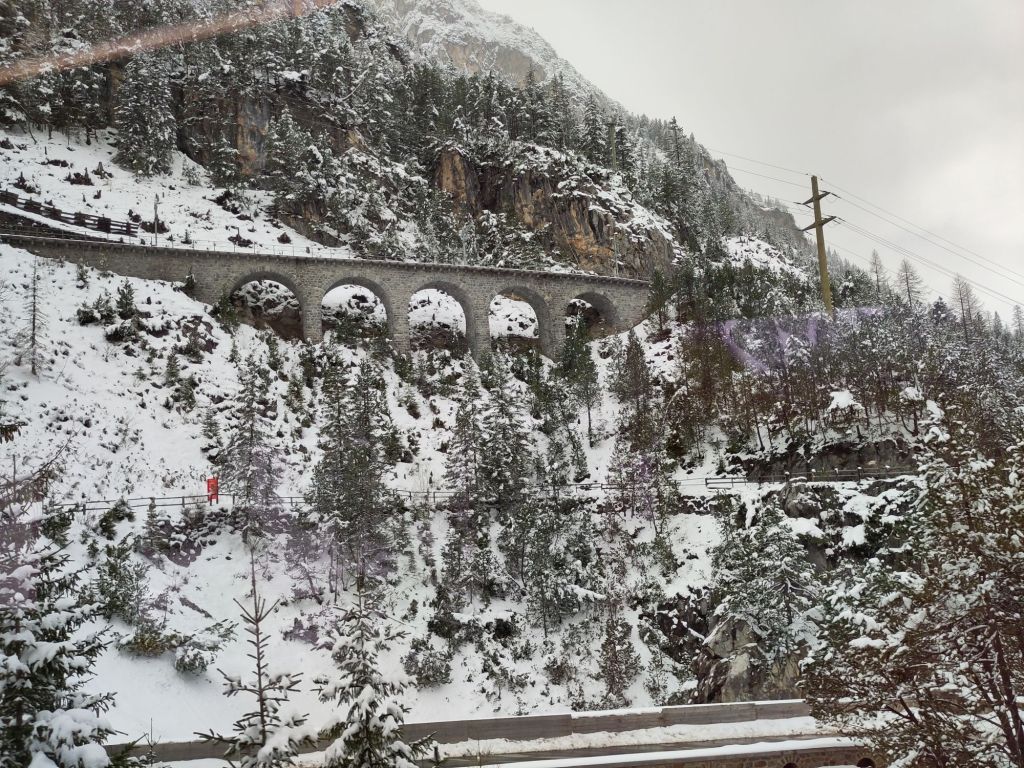

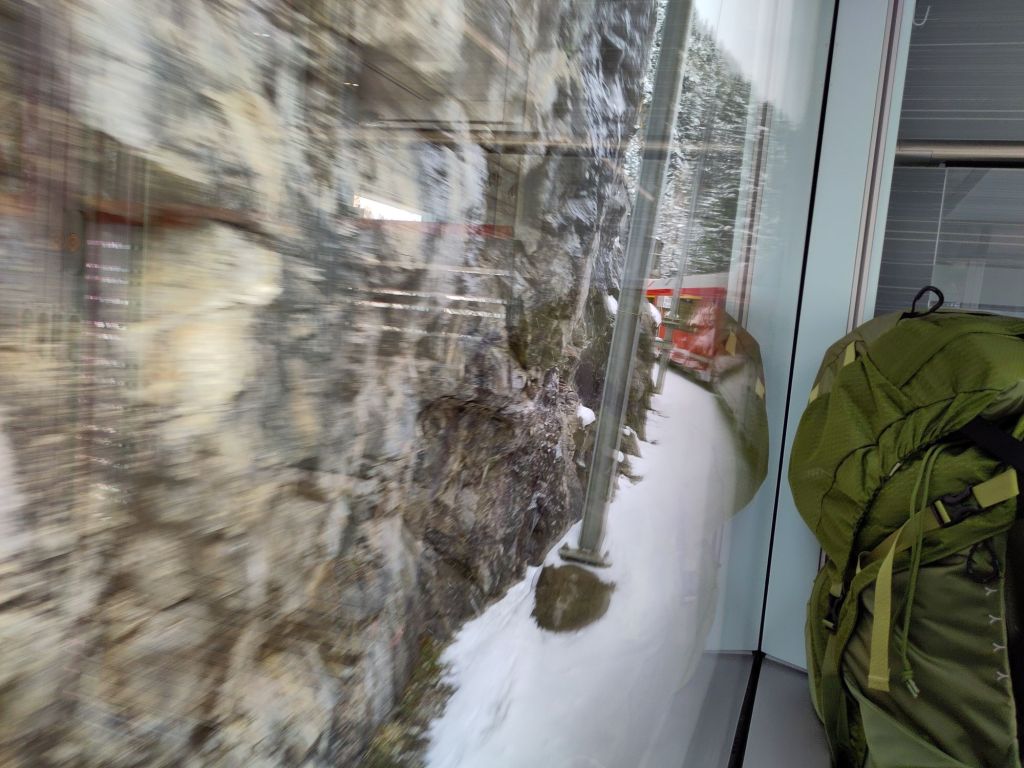
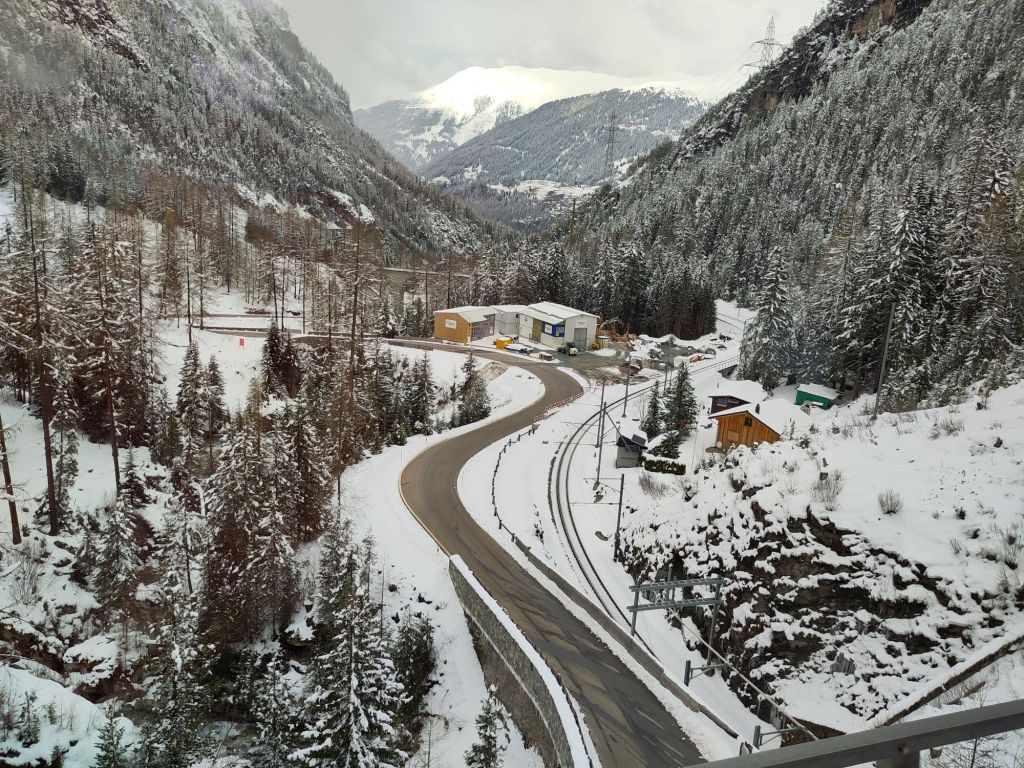
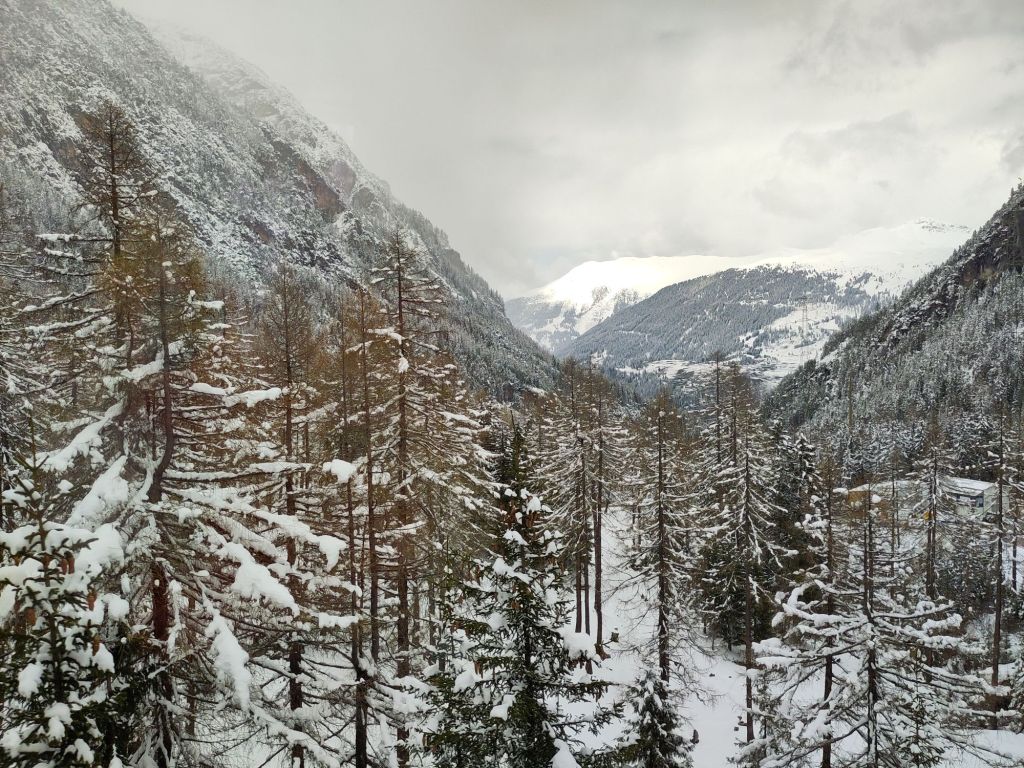
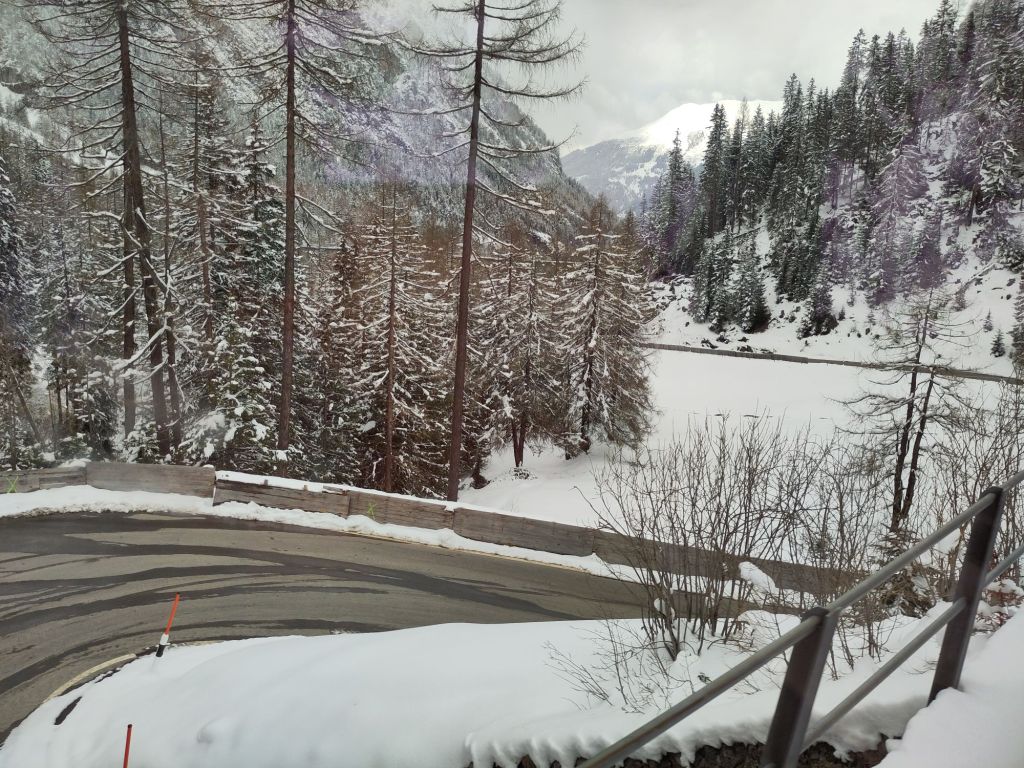
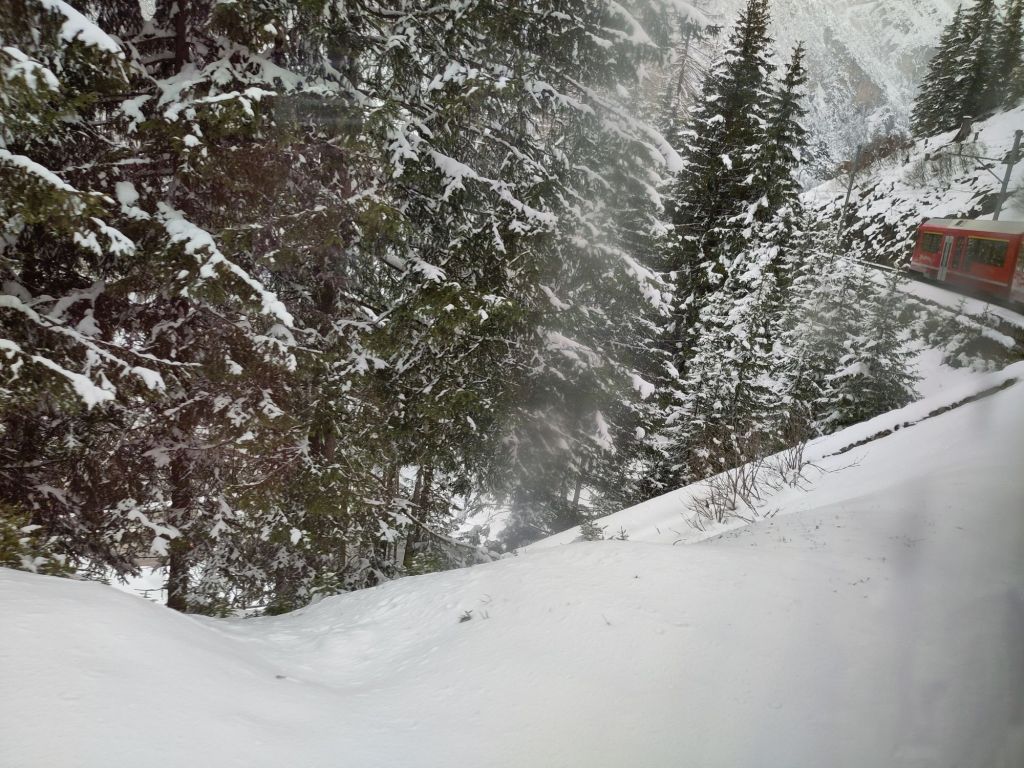
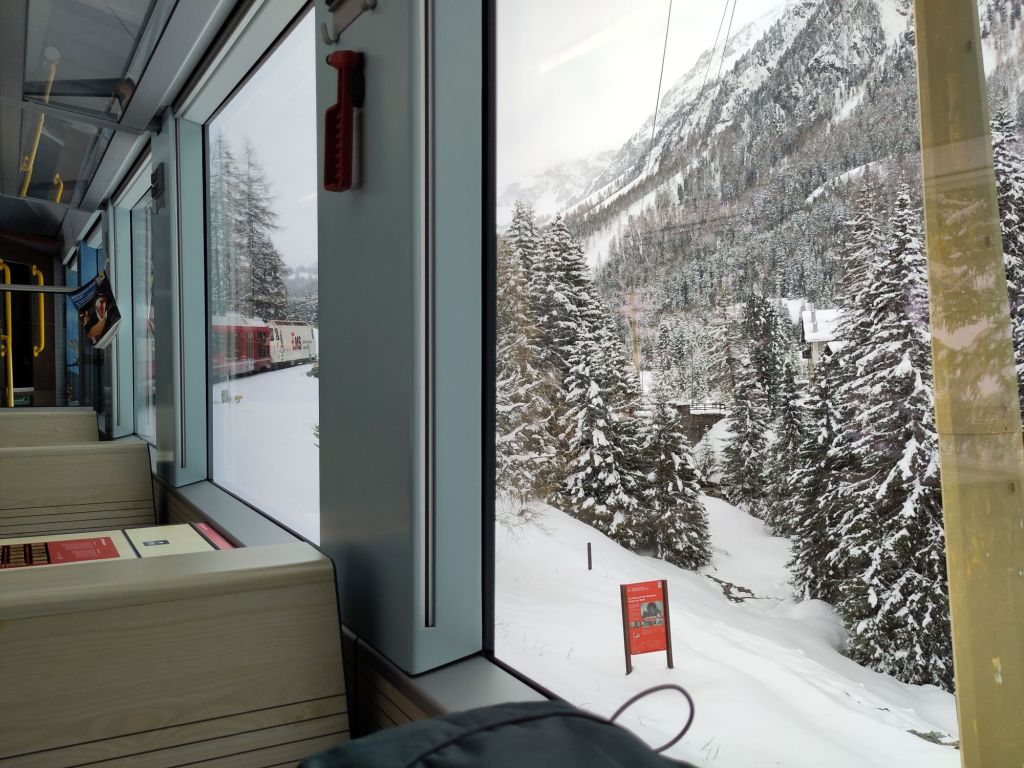
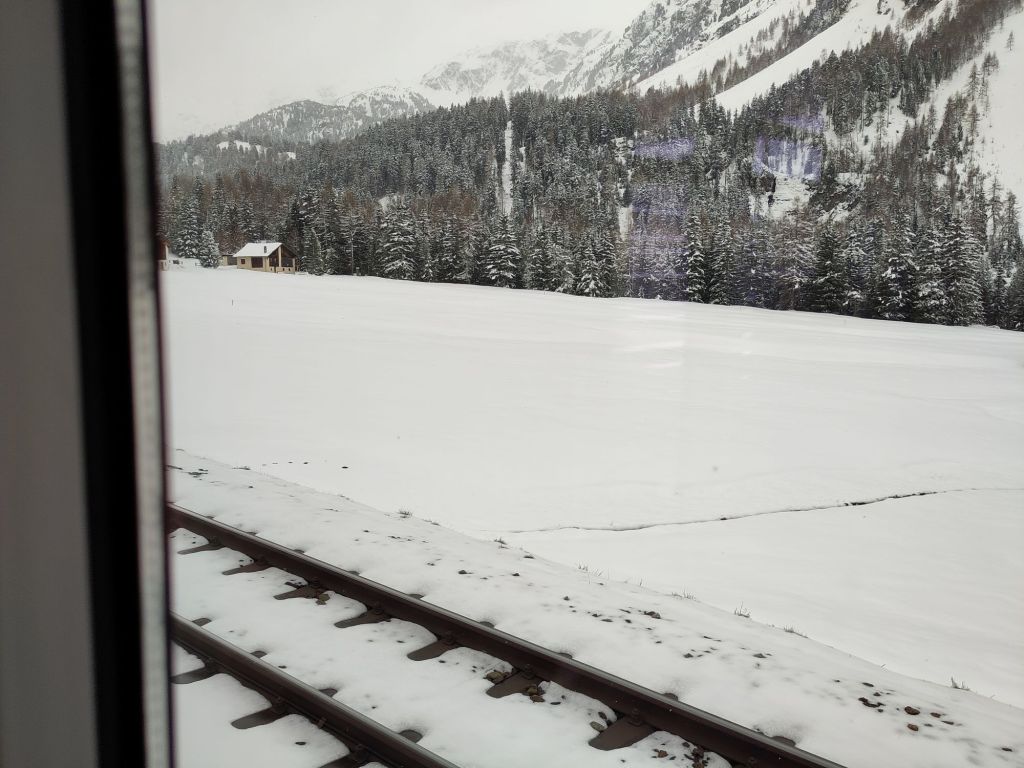
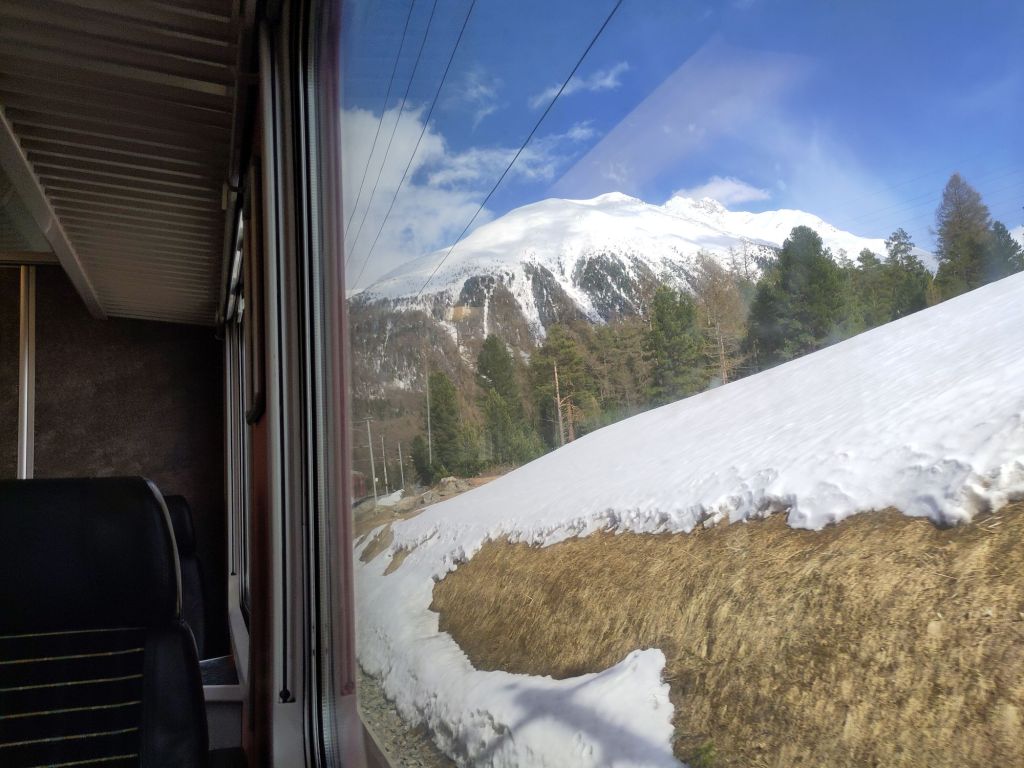

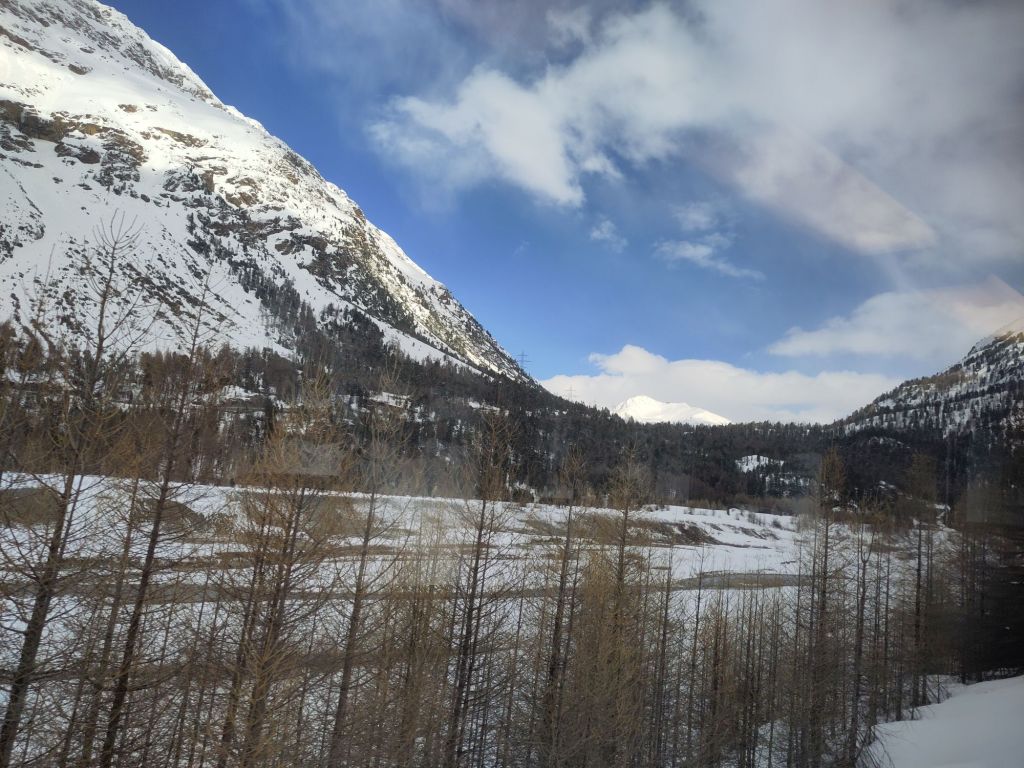
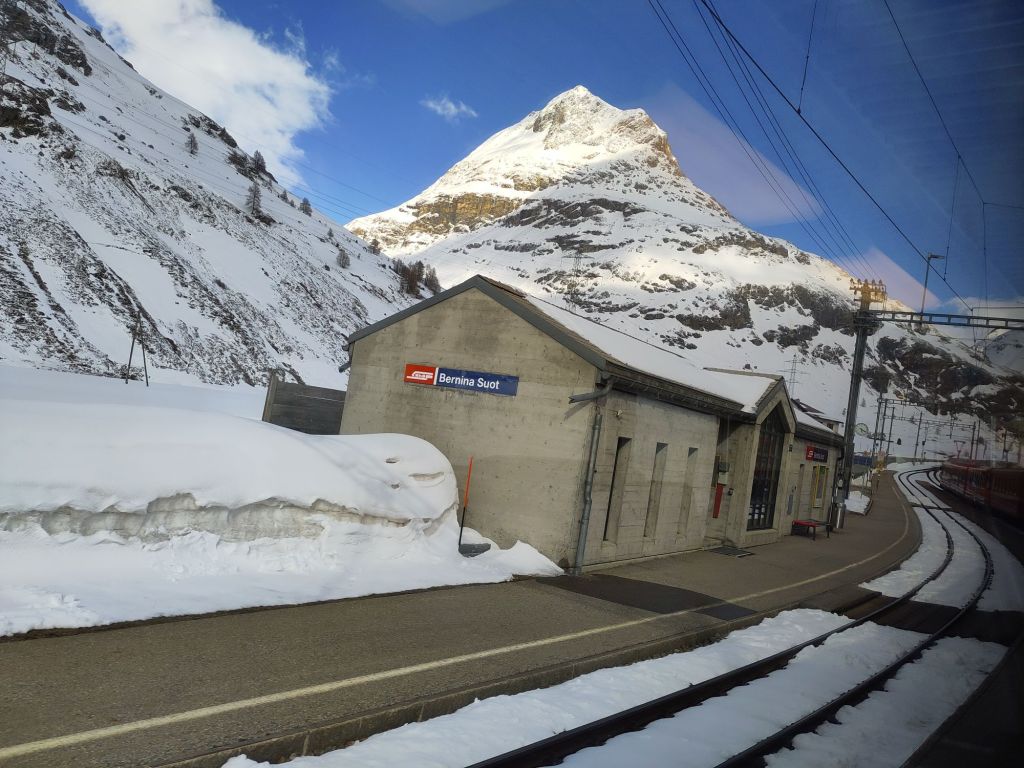
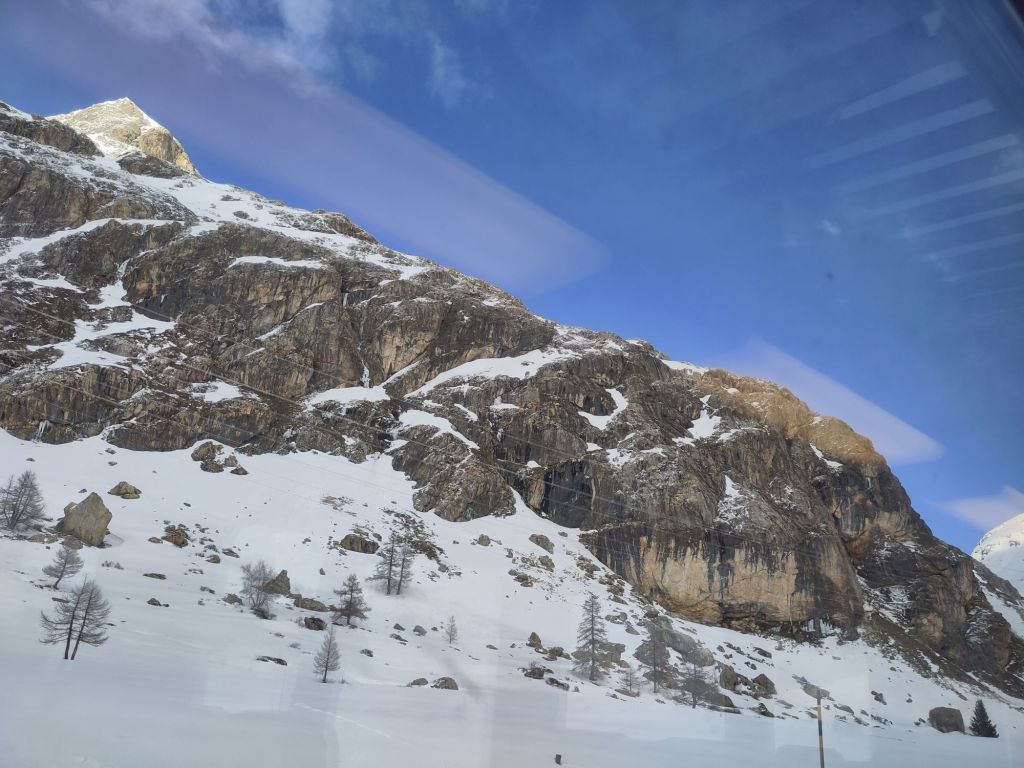

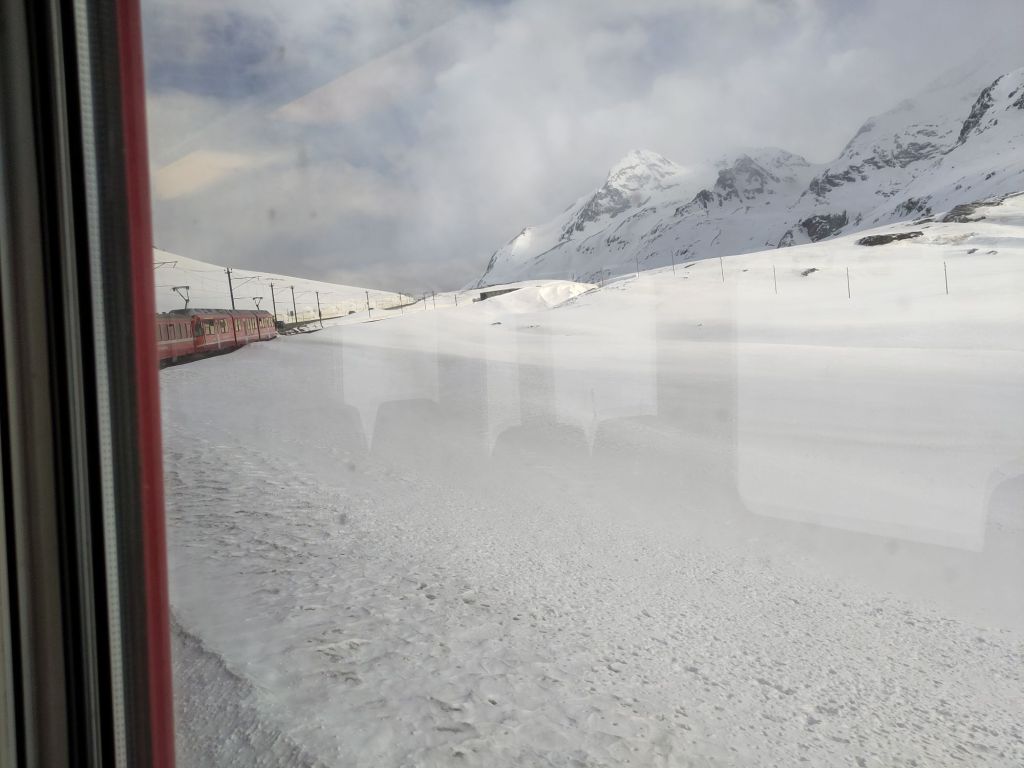
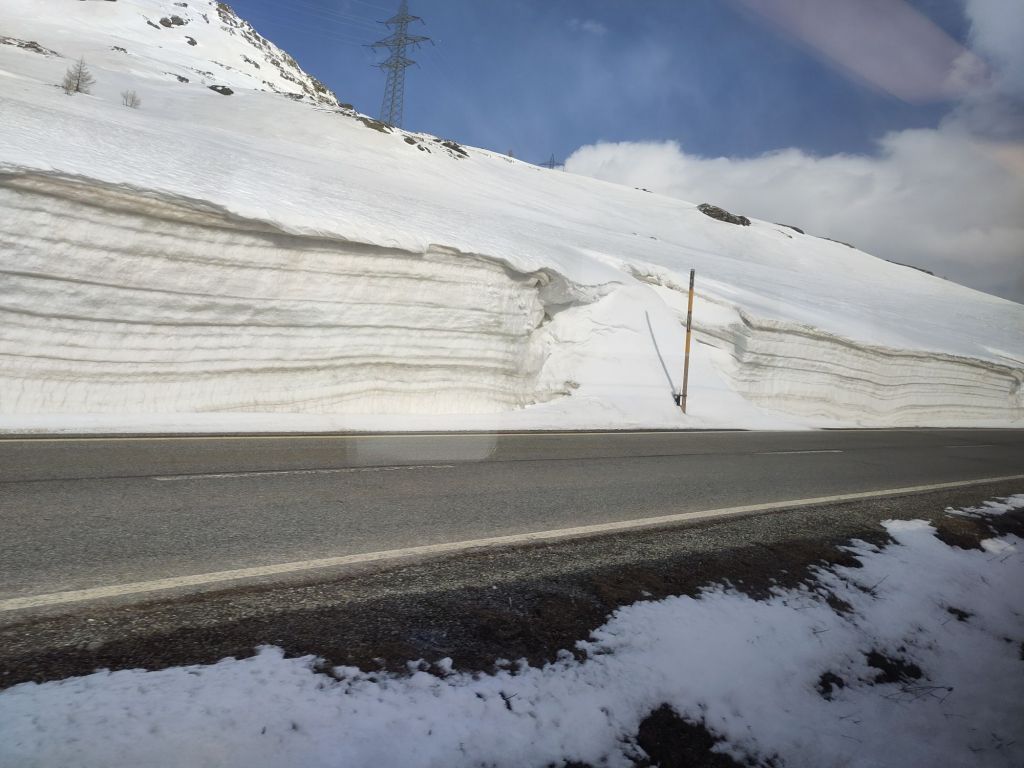
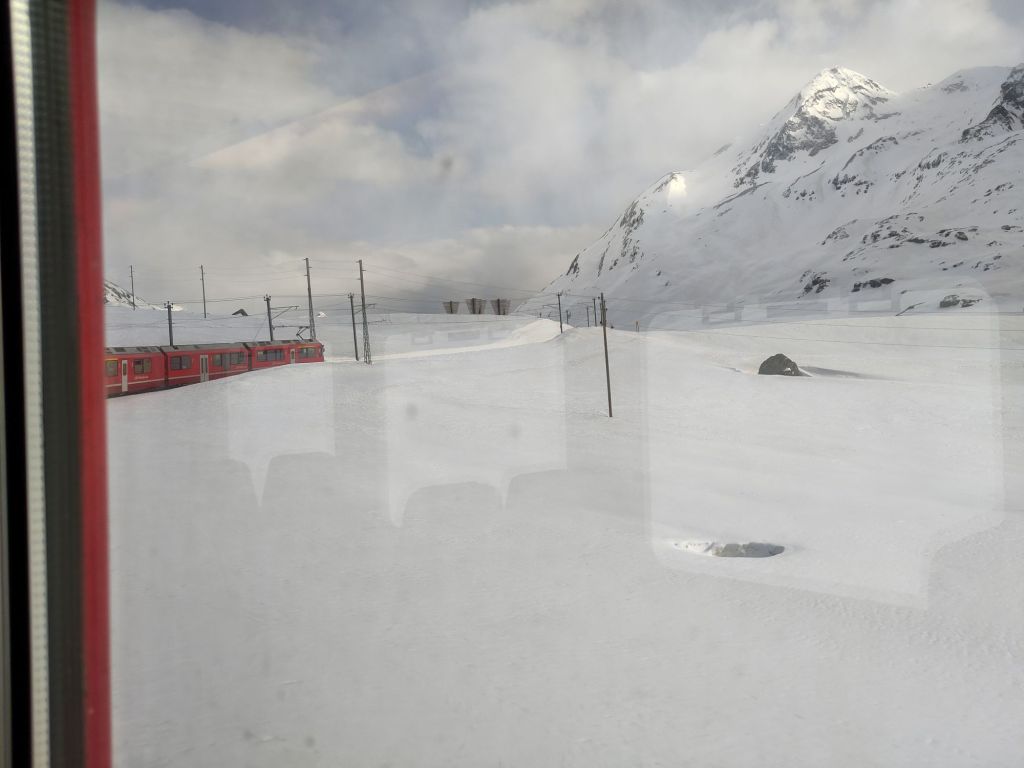


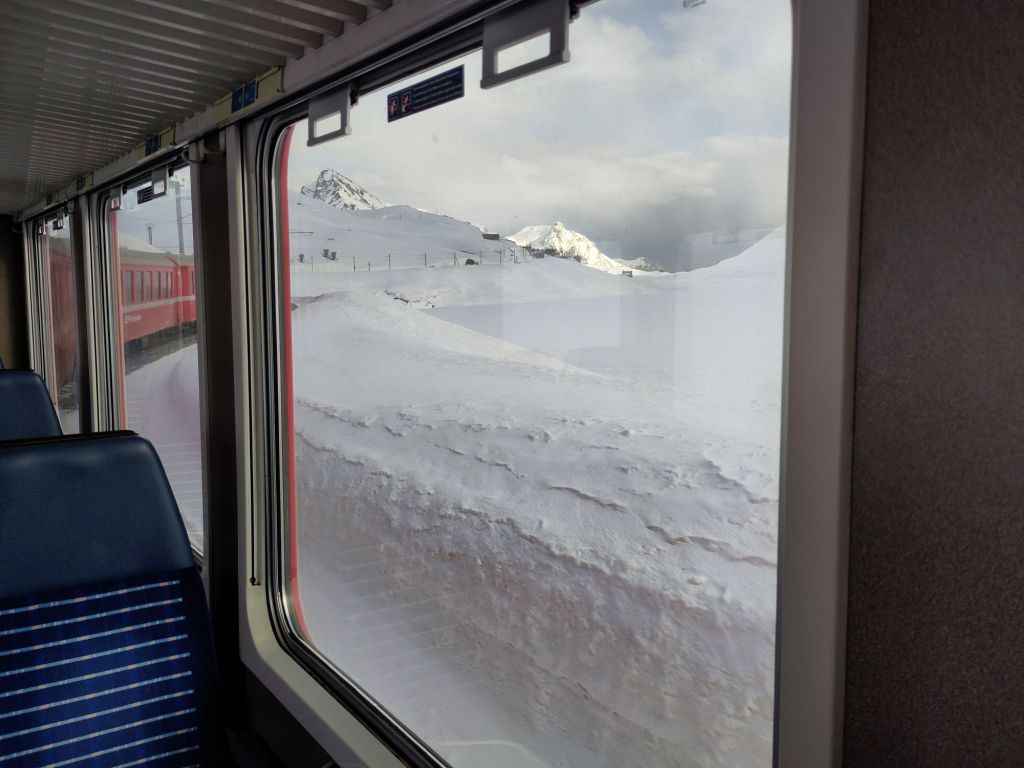
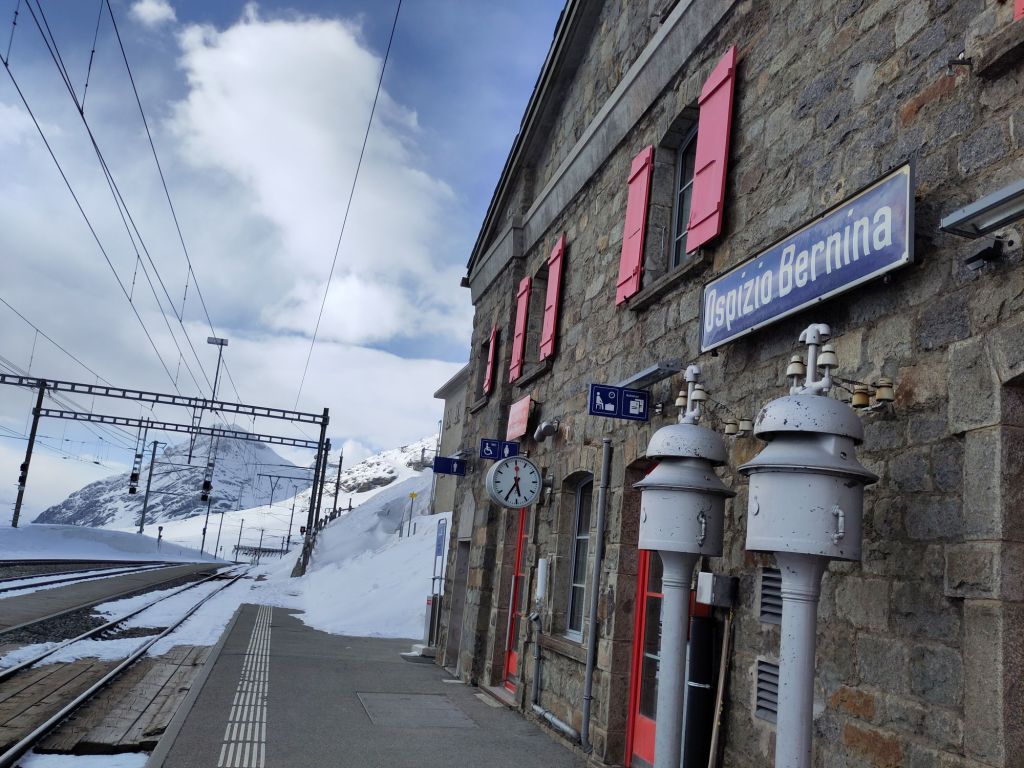
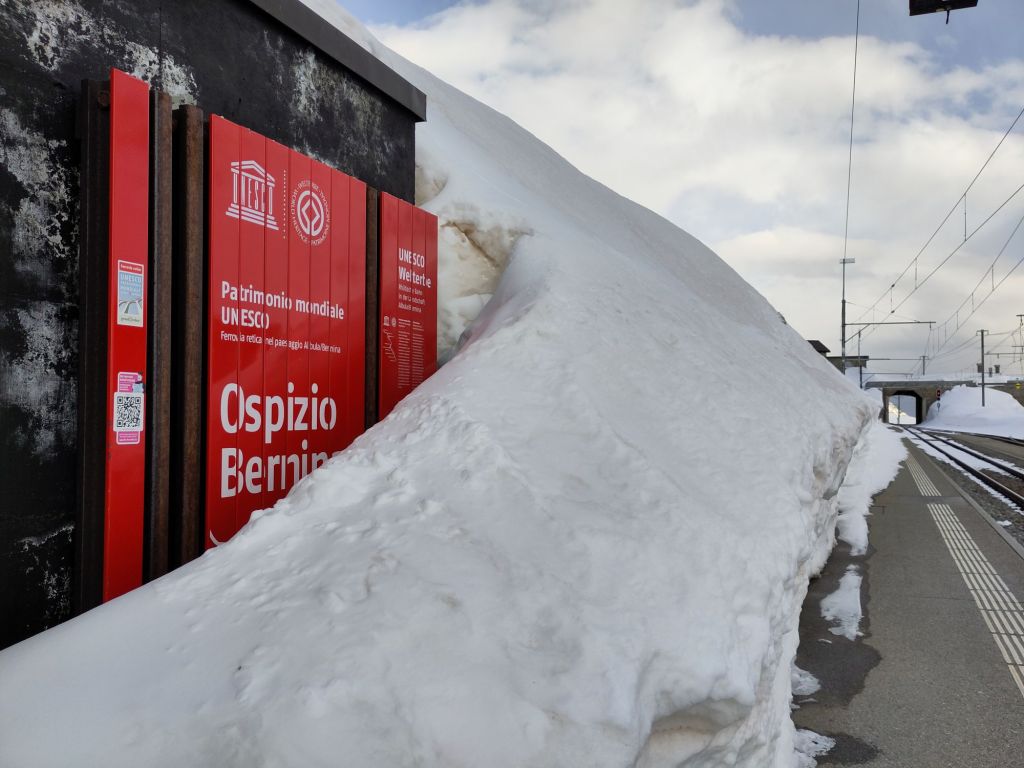
I arrived to a totally deserted, literally freezing station. Ospizio Bernina – 2,253 metres above sea level – is both the highest station and highest point on the Bernina Railway.
It was not at all hospitable. My hotel was normally just an easy 10 minute walk away and 50 metres higher than the station. It might as well have been at the South Pole.
There was no obvious sign of any exit, except for an old set of ski tracks climbing a very steep bank of very deep drifted snow. The temperature was at least minus five plus a strong wind created a painful windchill to any of my exposed skin… To be continued!!
 Newmarket Hill
2 replies on “Chalk: 5. Alpine Limestone Uplifted”
[…] Chalk 3 | Chalk: 5 […]
[…]