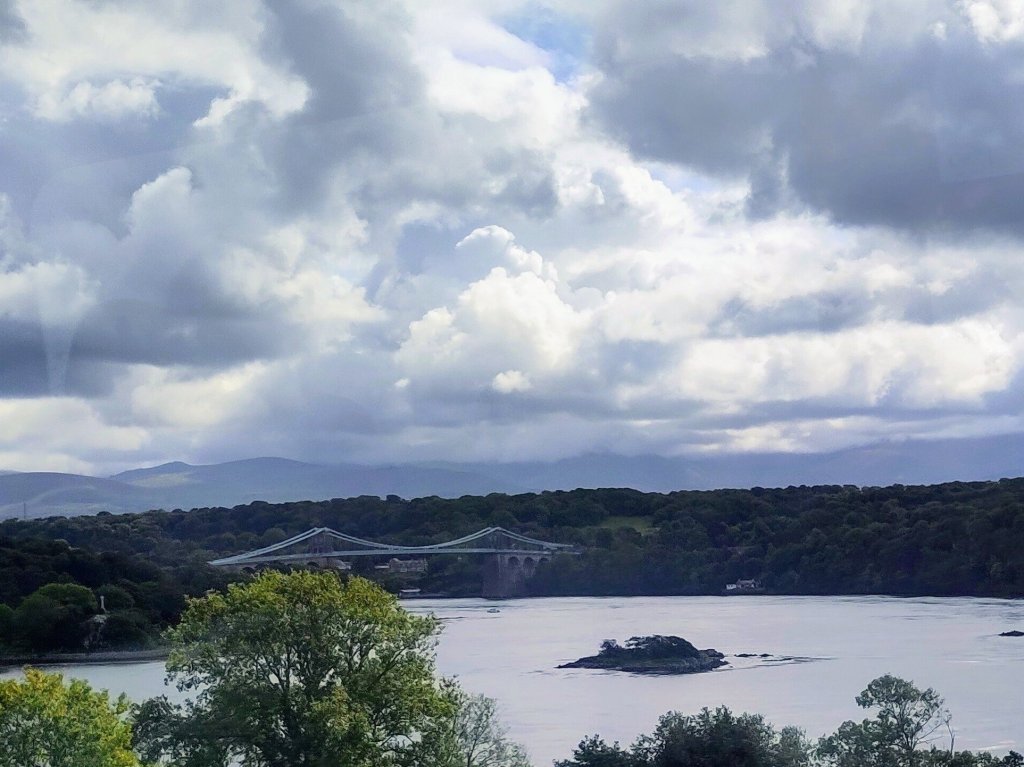
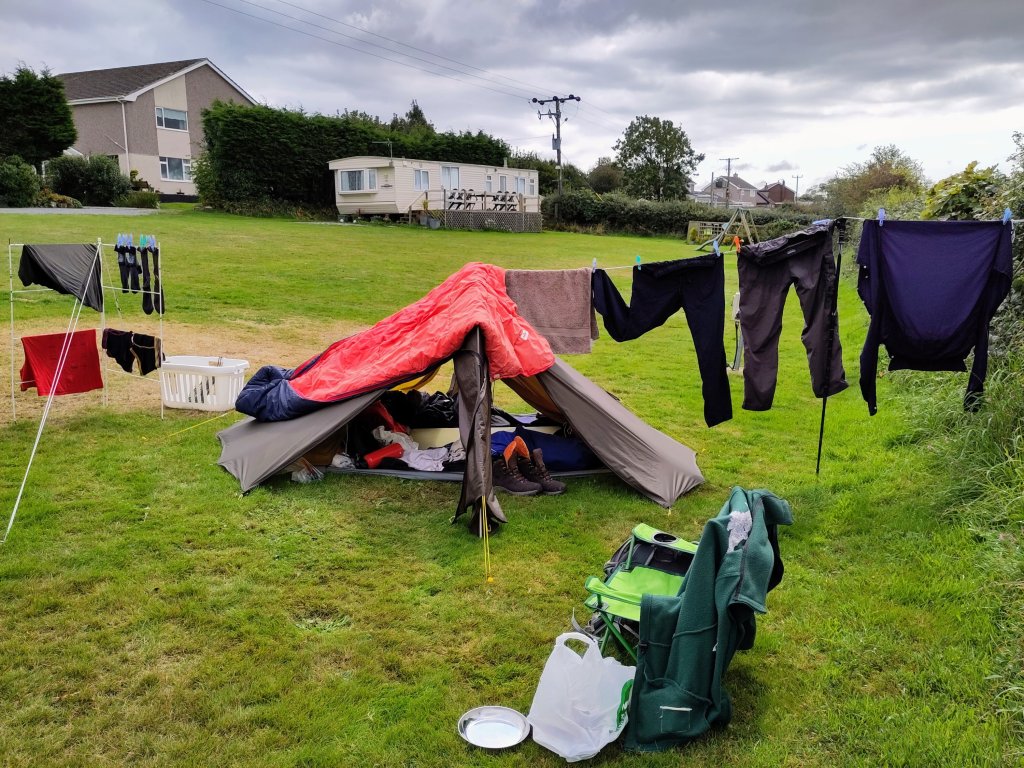
I struggled to pack and to carry all my camping gear, books and digital mobile phones, along with their charger and cables. This process was not helped by my mind being full of new ideas and wonderful memories. But somehow I managed. And I would even do it all again – camping, public transport, the lot! Pushing oneself to the limits – and surviving – can be life affirming. More than anything else, I find that camping and walking connects me with the Earth 🙂
Gaia – Earth, Physis – Nature
Hail, children of Zeus! Grant lovely song and celebrate the holy race of the deathless gods who are for ever, those that were born of Earth [Gaia] and starry Heaven and gloomy Night and them that briny Sea did rear. Tell how at the first gods and earth came to be, and rivers, and the boundless sea with its raging swell, and the gleaming stars, and the wide heaven above, and the gods who were born of them, givers of good things, and how they divided their wealth, and how they shared their honors amongst them, and also how at the first they took many-folded Olympus. These things declare to me from the beginning, you Muses who dwell in the house of Olympus, and tell me which of them first came to be. In truth at first Chaos came to be, but next wide-bosomed Earth, the ever-sure foundation of all the deathless ones who hold the peaks of snowy Olympus, and dim Tartarus in the depth of the wide-pathed Earth, and Eros (Love), fairest among the deathless gods, who unnerves the limbs and overcomes the mind and wise counsels of all gods and all men within them. From Chaos came forth Erebus and black Night; but of Night were born Aether and Day, whom she conceived and bore from union in love with Erebus. And Earth first bore starry Heaven, equal to herself, to cover her on every side, and to be an ever-sure abiding-place for the blessed gods. And she brought forth long hills, graceful haunts of the goddess Nymphs who dwell amongst the glens of the hills. She bore also the fruitless deep with his raging swell, Pontus, without sweet union of love. But afterwards she lay with Heaven and bore deep-swirling Oceanus, Coeus and Crius and Hyperion and Iapetus, Theia and Rhea, Themis and Mnemosyne and gold-crowned Phoebe and lovely Tethys. After them was born Cronos [Harvest, not Chronos (Time)] the wily, youngest and most terrible of her children, and he hated his lusty sire.
Hesiod [The emphasis is mine, to identify Gods and Goddesses]
In Ancient Greek mythology, Gaia was the Earth and mother of all life. Ge-ology is the logos or study of Ge (Ge is another way of saying Gaia or Earth). As far as the Greeks were concerned, every material object was a living spirit. Our apparently inorganic Earth was a living being, an Earth mother. Personally I like the idea that geology may be considered the study of Mother Earth.
I leave it to my readers to choose whether there may be any truth in such ideas. The Ancient Greek word for Nature was physis. From this we have both physicians and physicists, for they considered life – and people – to be an intrinsic part of physics. At Aberdeen University, where I studied, their physics degree course was still called Natural Philosophy.
Earth Story
This ground breaking 8 part television series presented for the first time to the general public how the complexities of Earth’s story were beginning to be understood. It
set out to explore a revolution in our understanding of our planet and its relationship to life…
Ravensbourne University, London.
The early episodes showed:
- Life has only been possible because of plate tectonics;
- Plate tectonics was only possible because of liquid water;
The final episode showed evidence for why:
- The survival of liquid water on Earth may not have occurred without life.
UNESCO: International Year of Planet Earth, Meeting, 11 Feb 2004
Aubrey Manning gave the closing speech on behalf of the United Nations at a meeting to rally support for Governments around the world to fund a coordinated research programme into the Earth Sciences.
He said:
“As a biologist I have been made increasingly aware of the interdependence of Earth and life. Water has existed at surface of the Earth for most of its history. Life first ‘took a hand’ in the evolution of the planet with the emergence of the cyanobacteria. In stromatolites, the formations in which we first recognised them as fossils, they survive today on the west coast of Australia. Other forms are still widespread and it was these organisms that first began to use light energy from the sun to make complex molecules and generate that (once) toxic element, oxygen….”
“But life as we generally understand it – multicellular life – really got going perhaps about 700 to 800Ma ago. We first see it in what has become known – slightly misleadingly – as the ‘Cambrian explosion’. Since then, global tectonics have had a major effect on its development….”
“With his concept of Gaia, James Lovelock recognises that, interacting with life, many planetary processes are homeostatic in their outcome. Unlike some of his more mystical disciples, he knows the Earth is not ‘alive’, but such processes are like those of a living organism. Hence the planet is certainly resilient, and as Lovelock points out, nothing humans can do will affect Gaia’s ultimate fate. What we can influence is the more pressing question (for us) of whether the human race can continue to inhabit Earth in a happy and constructive way.”
“Here surely is a unifying cause that can help us to lift our eyes from the pressing demands of the everyday. They must receive our attention but not, surely, our whole attention. We must, as a species, address broader horizons. The International Year of Planet Earth is of fundamental importance because it will appeal to everyone’s enlightened self-interest.”
“For those who would argue that everything has a price – then the economic value of the services provided by our planet – clean water, clean air, fertile soils and so forth – have a clear and quantifiable monetary value. A recent study has calculated that that value is three times the total gross national products of all the nations of the Earth. Our planet will continue to provide this bounty, free, forever – so long as we take care of it.”
“For me, it is, to me, a wonderful thought that so many countries can come together under the umbrella of the United Nations and become involved in this process of encouraging the responsible stewardship of our planet. There are huge educational opportunities here. The work of geoscientists has revealed how our planet ‘works’, and there is much wonderful science to be conveyed here in an approachable way. The general principles are certainly not difficult to understand. It will not be easy to bring home to everyone the importance of our responsibility for our planet.”
“The human race’s ingenuity and intelligence effectively put us in charge. As the International Year’s prospectus ‘The Earth in our hands’ says in its very title. We must recognise this, and restrain our future exploitation of this heritage. But it is quite counterproductive to overemphasize problems. There is so much that is positive to communicate. Good science is both fascinating and effective. It can reduce hazards and suggest solutions. But beyond the science, education about the Earth must help in the appreciation of how beautiful our planet is.”
“All of us … can see how beautiful the world is – and that is the way to involve the public. We must feel for our planet; appreciate its beauty, and feel a personal sense of hurt if it is damaged, or treated unsustainably. Outreach must be a process of engendering love – a love of our common home. Notwithstanding plate tectonics and Gaia, there can surely be no more grand or unifying theory, than that which says we all share a common home.”
“Of course, from time to time, the Earth will continue to deal us some pretty tough cards. There will be other earthquakes and floods and huge eruptions – and we can mitigate the effects of those through better understanding how our planet works. But whatever future trials lie in store, the Earth is our only home and deserves our love….”
Big day for International Year, International Year of Planet Earth 2007-2009.
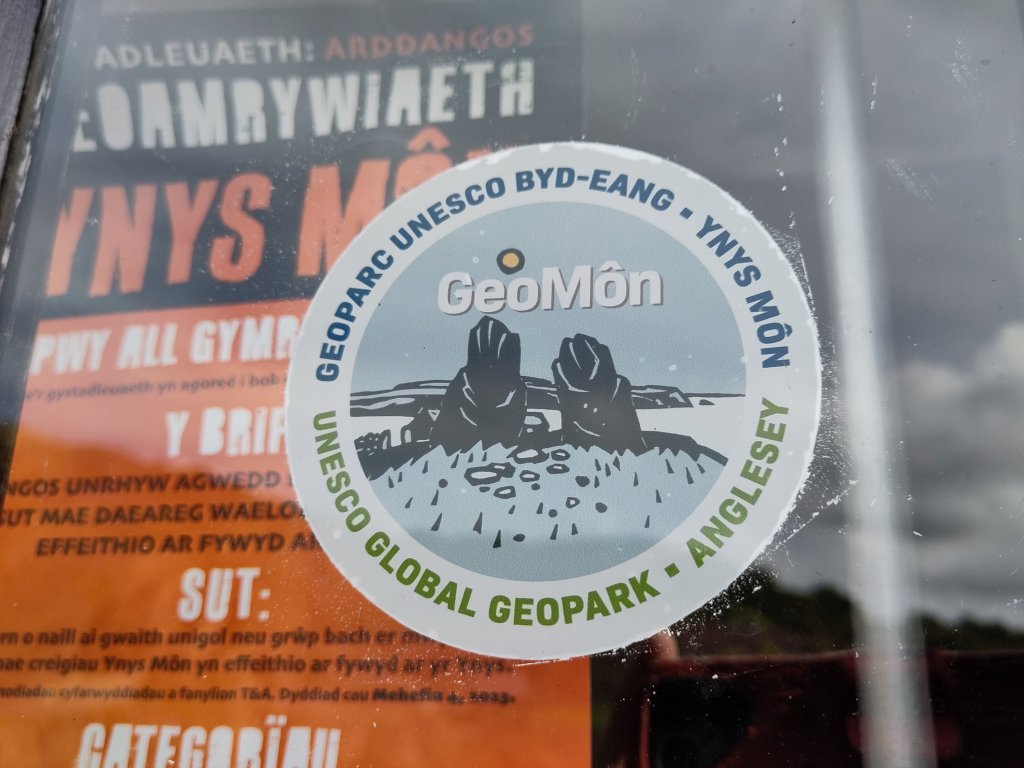
GeoMôn UNESCO Global Geopark
GeoMôn GeoPark – WALES – UK
Website: http://www.geomon.co.uk/
People on a Plate, Plates on a Planet
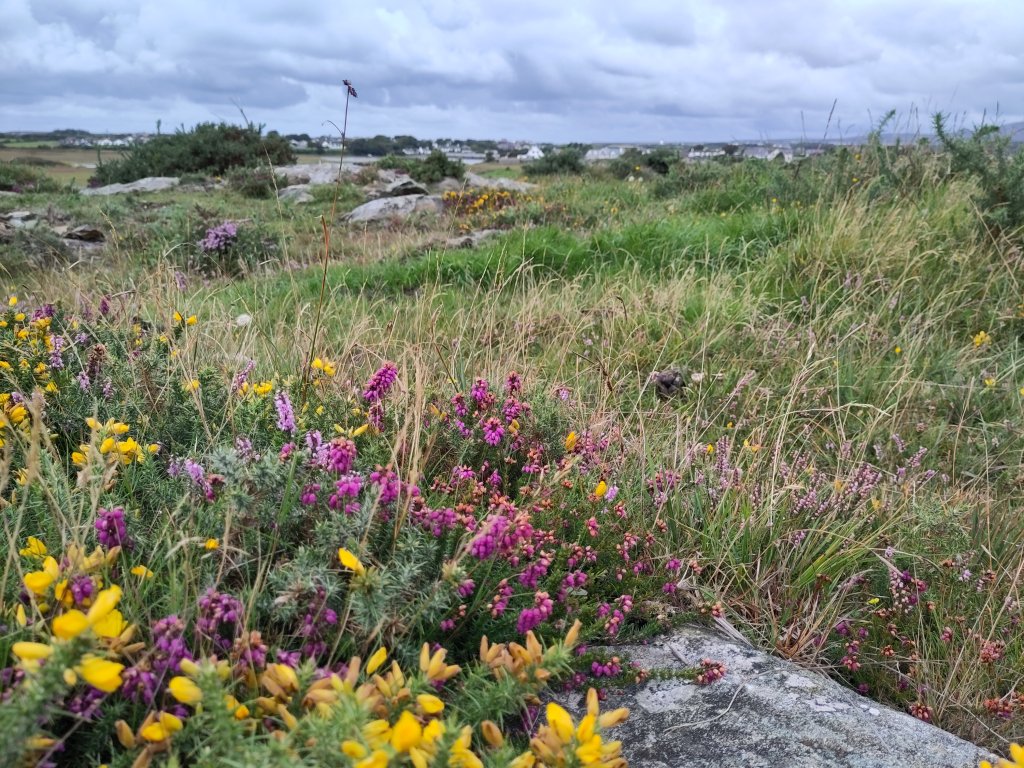
The beautiful Isle of Anglesey lies off the west coast of Wales, UK. It is Wales’ largest offshore island (715 sq km) and has over 200 km of spectacular coastline. Known as Ynys Môn in Welsh, around 67,000 people make their home on the Island. The local culture is very distinctive, with around 60% of the population using Welsh as their first language.
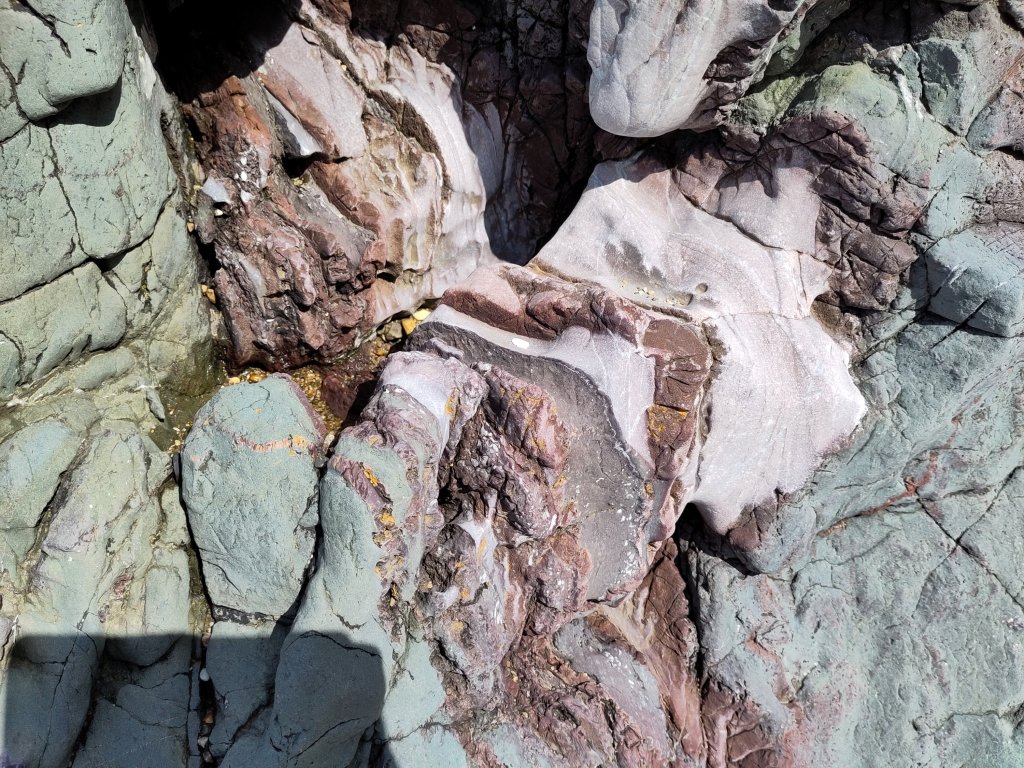
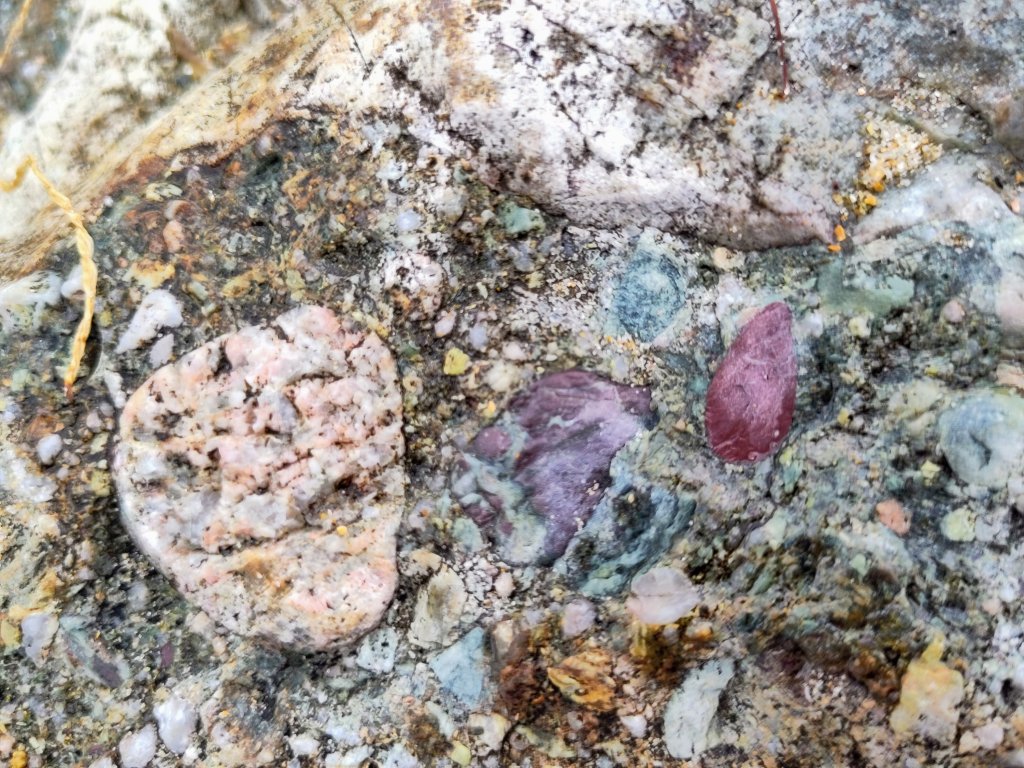
The island is world renowned for its amazing, diverse tectonic geology. South Stack with its world class folding and faulting has been a controversial site for many years, having been first identified as the oldest Precambrian rock then the youngest and now said to be from the Cambrian period. It is a mecca for students and schools who come here to study folding and faulting as well as examining the evidence for the birth of theAtlantic [I didn’t have time to visit]. Llanddwyn Island, on the west Anglesey coast, boasts that it is a small, but complete Oceanic Plate, with the famous Pillow Lavas at its eastern end, derived at a Precambrian constructive plate margin…. Then the world type site for melange is located at the island’s western end, with its jumble of brilliantly-coloured exotic rocks, exhumed from a deep ocean trench at a destructive plate margin. These rocks can explain the history and origin of the Earth.
… Sir Kyffin Williams R.A., whose work is shown in a new gallery dedicated to him [Oriel Ynys Môn, the municipal art gallery and museum]…. was a founder member of the Geopark and its first patron. His great uncle, Sir Andrew Ramsay, was the second Director General of the British Geological Survey of Great Britain and a ‘Father’ of Welsh Geology.
Anglesey, with its amazing tectonic origin, encapsulates the origin of the Earth and its importance within our planetary system.
GeoMôn GeoPark – WALES, 2013.


Back in Brighton – Future Geology Explorations
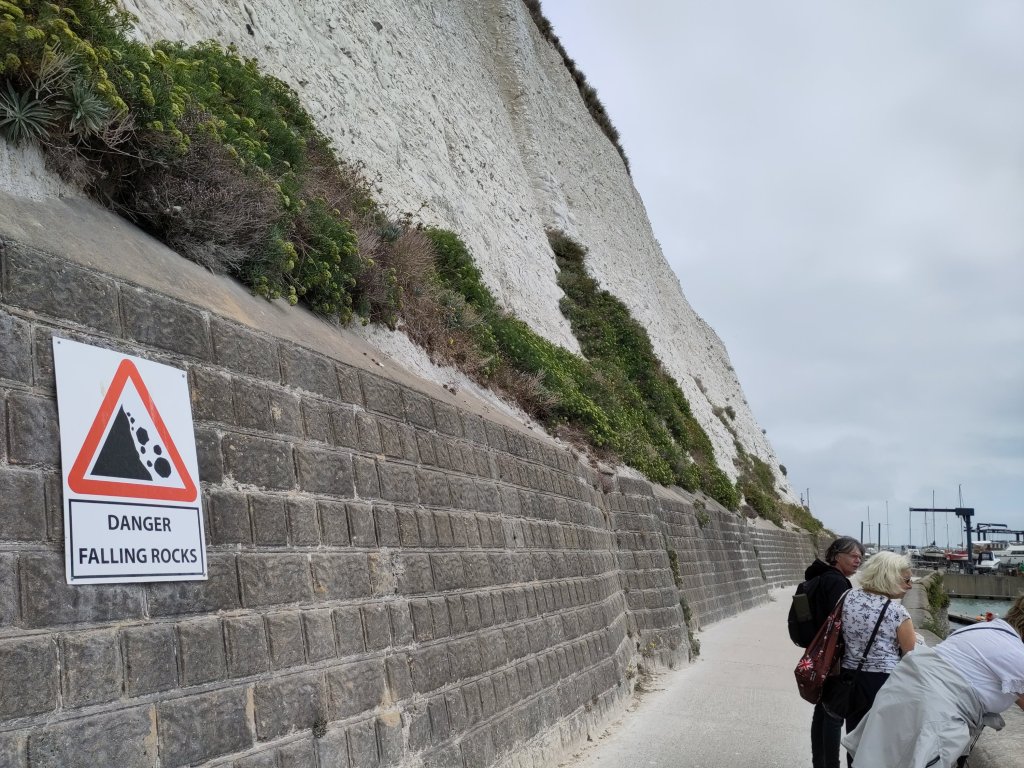
Chalk 🙂
Limestone – of which chalk is a particular example – has proven to be an exceptionally important rock for the history of this planet. It is well worth exploring, for it has very much influenced the character of our South Downs landscape and the lives of those who lived there.
To better understand chalk, I therefore hope to go on geological study trips across the wider Sussex Downs. To better understand how the South Downs were uplifted by the consequences of tectonic activity, I hope to visit Switzerland and Italy which is where the tectonic activity in question actually occurred.
As a result of my findings during my Anglesey trip, I particularly want to deepen my knowledge of limestone both in general and in particular. It is not a coincidence that, when speaking of the greenhouse effect in geological history, it was the chalk cliffs of the South Downs that Professor Aubrey Manning visited. Watch this space!
<- Ancient Geology 8.2: Tropical ‘Coral’ Atolls and Life Changing Stromatolites
 Newmarket Hill
2 replies on “Ancient Geology 9: Returning Home”
Thank you for taking us all on such a fascinating trip and for spending so much time and thought in sharing it with us all. Wonderful!
[…] Ancient Geology 9: Returning Home -> […]